.avif)
.png)
.avif)


Content
12 Ways Hyperliquid Users Can Save on Flights and Hotels

If you're trading on Hyperliquid, you're likely accumulating USDC. Closed positions settle there directly, and most of it just sits. What fewer people think about is how easily that USDC can pay for travel at rates below retail, without touching a bank, a centralized exchange, or a fiat conversion.
The savings come from two places. Before you leave, booking hotels through a crypto platform instead of Booking.com can cut accommodation costs by up to 30%. On the ground, a crypto debit card funded from your USDC removes foreign transaction fees at every terminal. On a $3,000 trip, both together make a real difference.
Why Hyperliquid Users Have a Travel Advantage
Hyperliquid settles positions in USDC natively. That means there's no conversion step between closing a trade and booking a hotel. On most other platforms, you'd convert to fiat, pay a withdrawal fee, wait for a bank transfer, and then book. That chain doesn't exist here.
If you're also holding HYPE, any token appreciation increases your effective travel budget without needing to sell more.
For accommodation specifically, CoinBooking accepts BTC, ETH, USDT, and other assets that Hyperliquid users already hold or can convert to in seconds, and books hotels at rates below retail across 2,000,000+ properties in 190 countries.
on Flights and Hotels
How Hyperliquid Users Can Save on Flights and Hotels
1. Book Hotels and Flights with CoinBooking
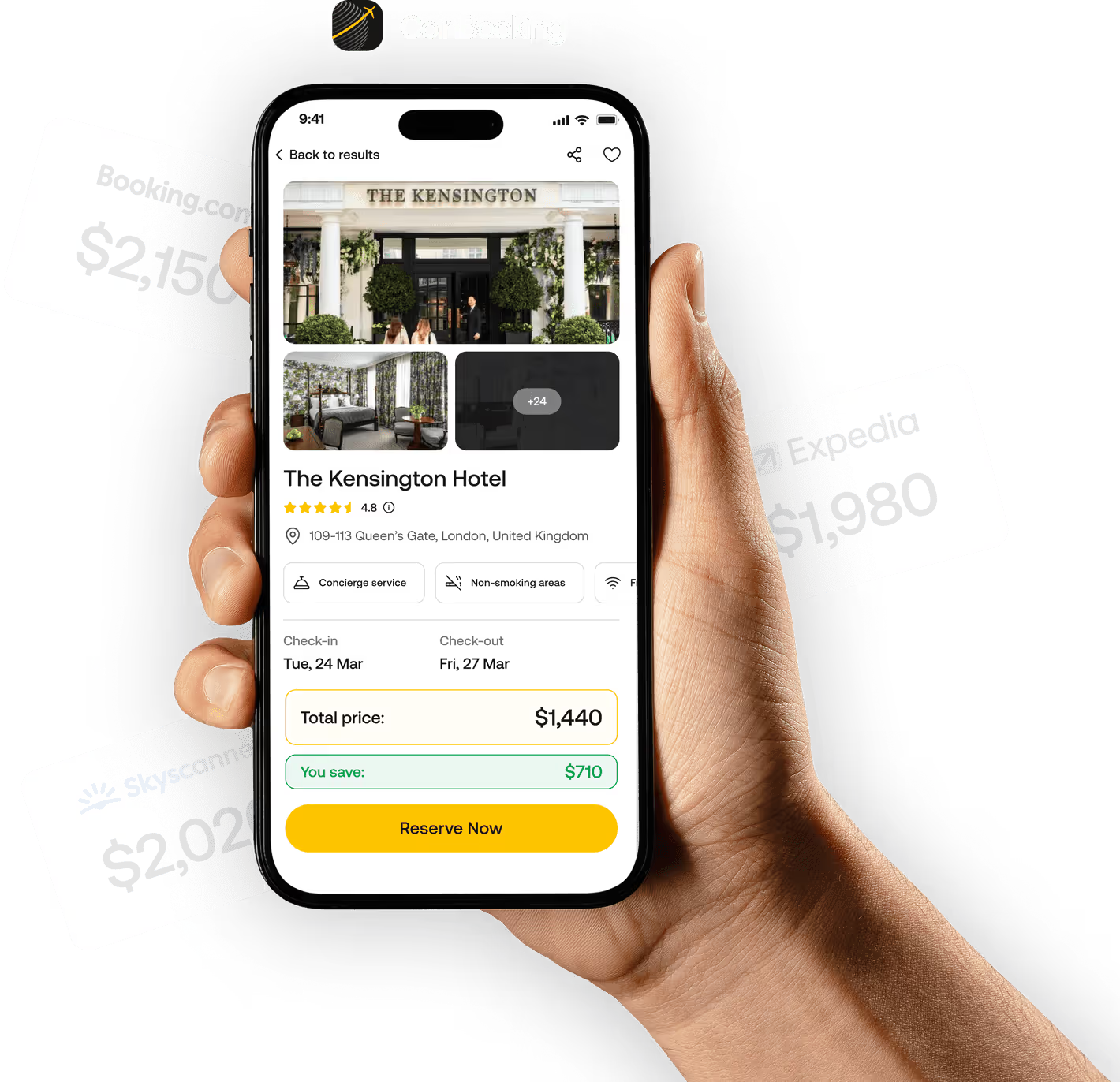
The highest-impact move before any trip is booking hotels and flights through CoinBooking. It’s a Dubai-licensed travel platform that prices hotels and flights at up to 30% below Booking.com and Expedia across 2,000,000+ properties in 190+ countries. They accept USDC, USDT, BTC, ETH, and 200+ other assets directly at checkout. USDC from a closed position pays for the booking without the need to off ramp.


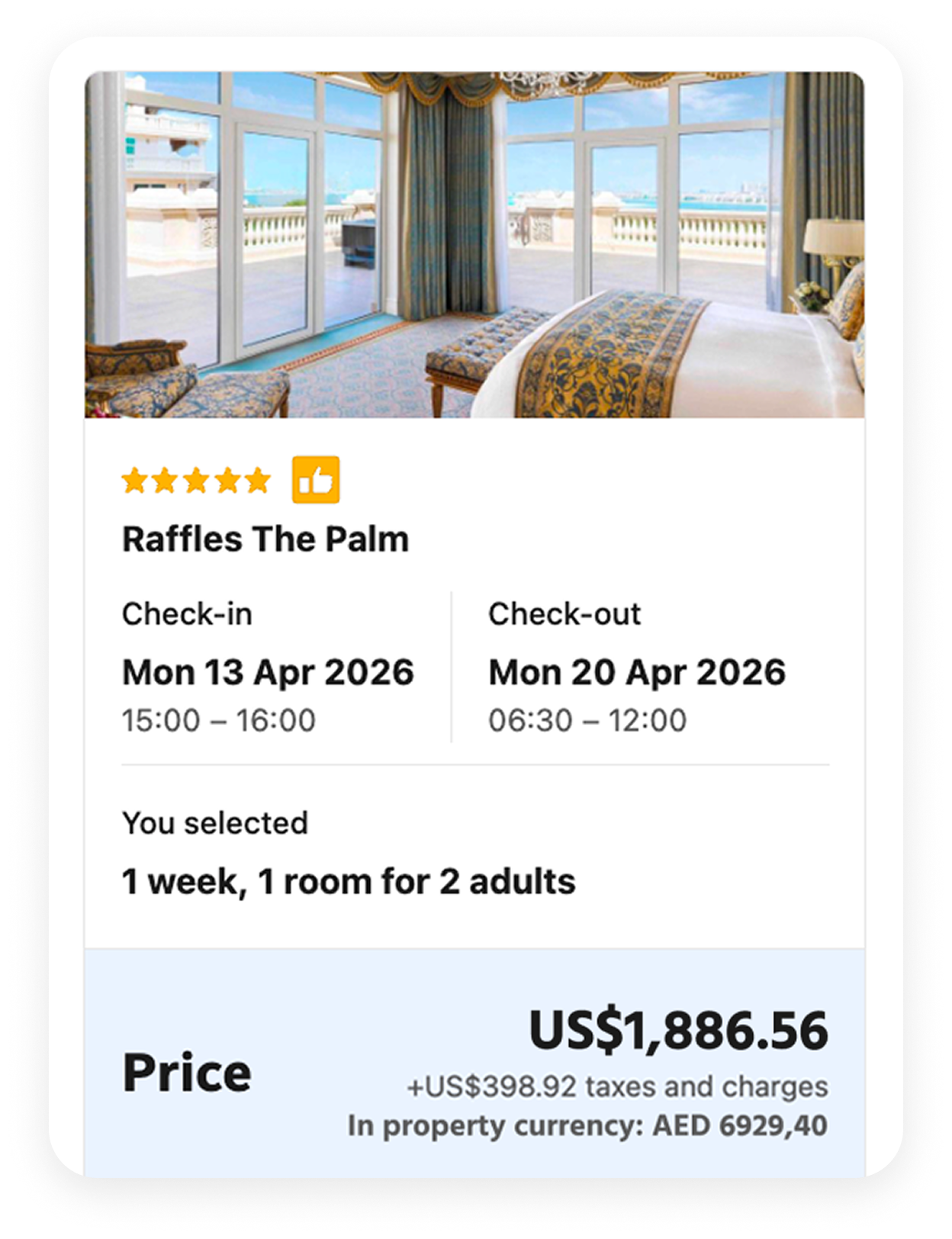
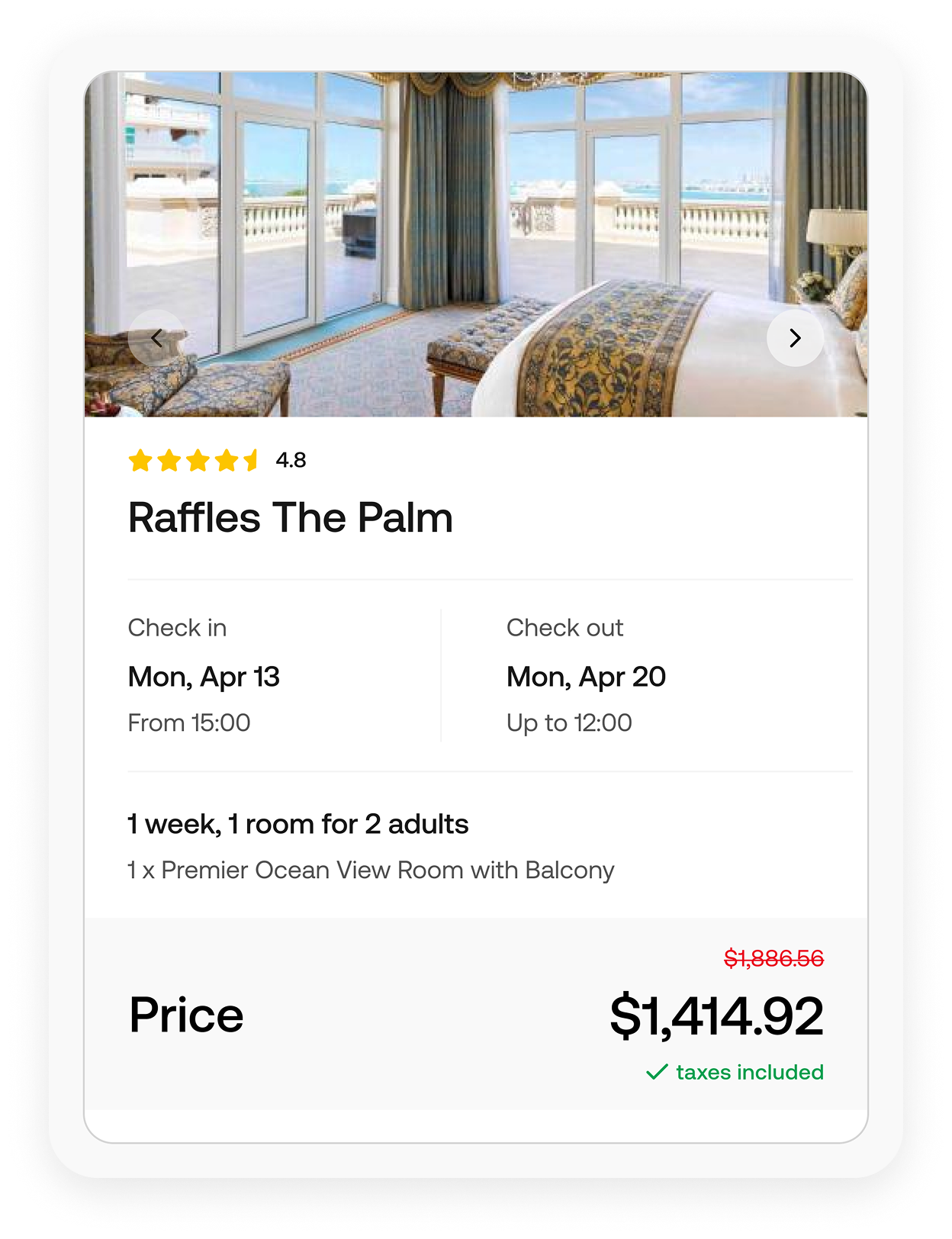
On a $400 hotel night, 30% off is $120 saved. On a stay of five nights, that’s $600 returned to your account. Visa, Mastercard, Google Pay, and Apple Pay are also accepted.
Just $870 Cheaper.

%201.png)
your first booking.
New users get $25 off their first booking.
Uphold users apply the same first step. Here's how the workflow looks from their side.
2. Convert HYPE Trading Profits to Stablecoins Before Booking
This is a risk management move as much as a savings move. A trader who plans a trip three months out and holds the travel allocation in HYPE rather than USDC is exposed to token price movement between now and the booking date. If HYPE drops 30% in that window, the travel budget drops with it.
The fix is to convert the intended travel allocation to USDC or USDT on Hyperliquid at the time the trip is planned, not at the time of booking. The dollar value is locked the moment the conversion happens. The rest of the portfolio stays in HYPE and keeps working. Hyperliquid's native USDC settlement makes this a single on-chain step with no bridge or intermediary required.
3. Use a Crypto Debit Card to Spend on the Ground
A crypto debit card funded from a Hyperliquid USDC withdrawal converts holdings to local currency at the point of sale and works at any Visa or Mastercard terminal. Cards from Crypto.com, Bybit, and Wirex all support USDC funding and offer cashback of between 1% and 5% on purchases. For a trader who already holds USDC in a Hyperliquid account, loading the card requires one withdrawal and no bank transfer.
On the ground, the card handles hotels, restaurants, transport, and retail across most markets without foreign transaction fees. Higher card tiers unlock airport lounge access and travel insurance. The card is the on-the-ground complement to a CoinBooking hotel booking: one handles the accommodation cost before arrival, the other handles everything after.
4. Bridge Profits to a Spending Wallet Before Your Trip
Hyperliquid operates on its own L1 with USDC as the native settlement currency. Before a trip, it is worth bridging a portion of the travel allocation to a more widely compatible wallet like MetaMask or a hardware wallet, from which it can be loaded onto a crypto debit card or sent directly to a booking platform.
The bridge from Hyperliquid to Arbitrum or Ethereum takes minutes and carries a small fixed fee, far below what a bank wire would cost on the same amount. Setting up the spending wallet before the trip rather than mid-trip avoids making transfers under time pressure. The travel allocation sits ready to deploy the moment it is needed.
5. Lock In Prices With Stablecoins Before They Move
Flight and hotel prices respond to demand, seasonal patterns, and how far ahead a booking is made. A Hyperliquid user who spots a good rate can convert HYPE or other volatile holdings to USDC immediately and use that to lock in the price before it moves. Holding the travel fund in stablecoins after conversion removes both the asset volatility risk and the timing risk from the equation.
Most crypto-native booking services including CoinBooking accept USDC directly, which means the path from a converted position to a confirmed hotel room is a single transfer with no additional steps. The rate is locked, the booking is confirmed, and the rest of the portfolio continues to trade.
6. Use Perpetual Profits to Fund a Dedicated Travel Budget
Rather than treating travel as an unplanned draw on trading profits, setting a fixed allocation rule creates a travel fund that builds predictably without disrupting the trading account. The simplest version: convert a set percentage of every closed profitable position to a designated travel USDC balance. At 5% of profits, a trader closing $10,000 in gains adds $500 to the travel fund per month without noticing the draw.
The travel fund sits in USDC, earns nothing while idle but loses nothing to volatility, and is immediately deployable into a CoinBooking hotel booking or a crypto debit card load when the next trip comes up. Keeping it separate from the trading account removes the temptation to redeploy it.
7. Avoid Centralized Exchange Withdrawal Fees When Cashing Out for Travel
The conventional route for converting trading profits into travel spending runs through a centralized exchange: withdraw from Hyperliquid, send to a CEX, convert to fiat, withdraw to a bank account, and then book travel. Each step carries a fee: the network transfer fee, the CEX withdrawal fee, the fiat conversion spread, and potentially a foreign transaction fee at the booking stage.
Routing through CoinBooking or a crypto debit card skips that entire chain. USDC from Hyperliquid goes directly to the booking platform or the debit card. No CEX withdrawal fee, no fiat conversion, no bank account required. For a user converting $2,000 of travel spending from USDC, the difference between the two routes can easily reach $40 to $80 in avoided fees.
8. Set Price Targets for Conversions Around Upcoming Trips
Hyperliquid traders are already accustomed to setting entry and exit targets around market conditions. The same discipline applies to converting HYPE to USDC ahead of a travel booking. Converting during a period when HYPE is trading at a strong level locks in more purchasing power for the travel budget than converting at a low point.
Setting a price target for the conversion rather than converting reactively or at a fixed date means the travel budget benefits from the same systematic approach applied to every other position. A limit order to convert a fixed HYPE amount to USDC at a target price executes automatically when the level is hit, without requiring active monitoring around a booking deadline.
9. Use DeFi Yields to Build a Passive Travel Fund
Hyperliquid users who provide liquidity through HLP or earn yield elsewhere in the DeFi ecosystem can designate a portion of those returns as a travel allocation. Converting a set share of weekly or monthly yield into USDC on a regular schedule builds a travel fund over time without drawing down any principal position.
The result is that travel spending is funded by passive returns on capital already deployed rather than by selling core holdings. For active traders, this approach keeps the travel budget entirely separate from the trading account and funded by yield that would otherwise compound back into the same positions.
QuickSwap users build the same passive travel fund from a different yield environment. Here's how that works.
10. Stack Savings Across Multiple Crypto-Accepting Booking Platforms
CoinBooking is the primary platform for hotel and flight bookings at rates below retail, but stacking it with other crypto-accepting services captures additional savings on specific parts of a trip. CheapAir has accepted Bitcoin since 2013 and covers a broad range of flight inventory. Travala offers hotel bookings with its own loyalty rewards in AVA tokens on top of standard rates.
The approach is not to split accommodation across platforms, but to use each one for what it prices most competitively: CoinBooking for hotels and flights where the 30% below-retail discount is the primary saving, and other platforms for specific routes or ancillary bookings where they offer a clear price advantage. Comparing before committing takes minutes and the combined saving compounds across a full trip.
11. Use HYPE Appreciation to Upgrade Your Travel Tier
HYPE token appreciation between a trip's planning date and its execution date can meaningfully increase the effective travel budget without any additional capital input. A user who sets aside 100 HYPE for a trip when HYPE is trading at $30 has a $3,000 travel allocation. If HYPE reaches $45 before the booking is made, the same 100 HYPE covers $4,500 in travel spending.
The practical application is to denominate the travel allocation in HYPE rather than in dollars at the planning stage, and convert to USDC closer to the booking date if the token has appreciated. The upgrade might mean a better hotel category, a business class seat on a long haul route, or an extended itinerary that was out of reach at the original budget. The trading account funds the upgrade without any additional draw.
12. Refer Friends to Hyperliquid and Use the Rewards for Travel
Hyperliquid's referral programme credits the referrer with a share of the referred user's trading fees for a set period. For active traders with a network in the DeFi and perpetuals community, referral income can generate a meaningful secondary income stream that builds alongside regular trading activity.
Designating referral income as a travel allocation means the travel fund grows from existing relationships without any additional capital or trading activity. The referral rewards accumulate in USDC, sit in the travel allocation, and deploy into a CoinBooking booking or a crypto debit card load when the next trip arrives. The trading account is untouched.
Minswap users run the same referral-to-travel approach. Here's how the numbers stack up.
Frequently Asked Questions
1. Can Hyperliquid users book hotels directly with USDC?
Yes. CoinBooking accepts USDC directly at checkout alongside USDT, BTC, ETH, and 100+ other cryptocurrencies. Because Hyperliquid settles positions natively in USDC, there is no additional conversion step between a closed position and a confirmed hotel booking. The transfer completes in minutes with no bank account required. New users get $25 off their first booking.
2. What is the most direct way to convert Hyperliquid profits into travel spending?
Withdraw USDC from Hyperliquid and transfer it directly to CoinBooking for hotel or flight bookings, or load it onto a crypto debit card for on-the-ground spending. Both routes skip the CEX withdrawal fee, the fiat conversion spread, and the bank transfer delay that the conventional route adds. The USDC settles at the destination in minutes.
3. How much can a Hyperliquid user realistically save on a trip?
Booking through CoinBooking instead of Booking.com or Expedia saves up to 30% on accommodation. A crypto debit card removes the 1 to 3% foreign transaction fee on every purchase. Converting to stablecoins before booking removes currency conversion spreads. A user who applies all three on a $3,000 trip can realistically save $400 to $600 depending on the destination and booking timing.
4. Is it safe to send USDC from Hyperliquid to a travel booking platform?
Sending USDC to a licensed travel platform carries the same counterparty considerations as any other on-chain transfer. CoinBooking operates under a Dubai financial licence. Before making large travel purchases through any platform, confirm it holds the appropriate financial licenses in your jurisdiction. Keep the transfer amount proportional to a single booking rather than sending the entire travel fund in one transaction.
5. Does it make sense to hold HYPE for travel rather than converting to stablecoins immediately?
It depends on the time horizon. Holding HYPE for a trip several months out exposes the travel budget to token price movement. If HYPE appreciates, the budget increases. If it drops, the budget shrinks. Converting to USDC at the time of trip planning locks the dollar value and removes that uncertainty. Most traders convert the travel allocation to stablecoins when the trip is confirmed and let the rest of the position run.
6. Can Hyperliquid referral rewards cover a full hotel stay?
For traders with an active referral network, yes. Hyperliquid credits referrers with a share of referred users' trading fees for a set period. In an active trading environment, referral income from a handful of active traders accumulates into a meaningful USDC balance over weeks or months. Designating that income as a travel allocation means the hotel booking is funded by existing relationships rather than by drawing down the trading account.


You optimized your portfolio. Now optimize your travel costs.
Book hotels and flights for up to 30% less with CoinBooking.

Yaryna Dobrianska is a Dubai-based business and technology writer with a background in fintech and digital services. She covers cryptocurrency adoption, cross-border payments, and the practical realities of spending digital assets across emerging markets.
Her work at Polkastarter focuses on making Web3 accessible, breaking down how crypto moves through real-world financial systems, from payments infrastructure to on-chain adoption trends.
Your last hotel booking cost 30% too much. Never again.
.avif)
Your last hotel booking cost 30% too much. Never again.