.avif)
.png)
.avif)


Content
Top 10 Cheaper Alternatives to Travala

Since it started back in 2017, Travala has pretty much become the go-to name for crypto travel. And it’s easy to see why. They’ve got a massive setup; over 2.5 million places to stay around the world, 600 airlines, and tons of activities. Their revenue nearly doubled from $59.6 million to over $103.3 million in just a year, and about 80% of those bookings are made straight with crypto. People using the site love to spend, too, averaging over $1,200 a trip.
It makes sense because paying for trips with crypto is officially a huge trend. The global crypto travel market was valued at $1.2 billion in 2024 and is expected to grow to $8.7 billion by 2033. At the same time, global crypto ownership has reached 741 million users, while 14% of all crypto transactions worldwide happen in tourism.
But even though Travala is huge, a lot of travelers are running into the same frustration: token-gated “great deals” and crypto premiums - charging 10-15% extra just for using crypto - pushing final prices higher than Booking.com. To get a marginally better price on Travala users have to jump through a number of hoops: staking their native AVA token just to unlock basic discounts. Your funds are completely frozen while you're a member, and if you ever want to cash out, you have to wait 7 to 14 days and instantly lose all your perks.
Here is the deal. Web3 users shouldn’t be paying more just for using crypto. When a platform advertises one price and charges another at the checkout, that's false advertising - especially when crypto is the primary payment method.

The good news is that Travala isn't the only option. There are platforms out there that offer cheaper alternatives without token-gated walls or hidden markups. CoinBooking, for example, offers up to 30% lower rates on hotels and flights than those found on Booking.com or Expedia, with no token staking required.
Let’s dive into 10 cheaper, simpler alternatives to Travala that keep crypto travel actually worth it.
What is Travala?
Back in 2017, Travala started with a pretty straightforward goal: to make it possible to book hotels and flights with crypto, without it feeling like a science experiment. Fast forward to today, and it has become the biggest crypto travel platform out there, with over 2.2 million properties in 230 countries, connections to 600+ airlines, 400,000+ activities, and 50,000+ car rental locations worldwide.
Using it is not complicated. You type in where you want to go, set your dates, browse what comes up, and pay. A confirmation lands in your email, same as any other booking site. The crypto and blockchain side of things runs in the background, and you do not need to understand any of it to use the platform.
The problem shows up at checkout. An additional 10-15% crypto premium gets quietly added to the final price, pushing the total above what was advertised.
Since Travala pulls its listings from major suppliers, including Booking.com and Expedia, the crypto payment markup makes the final price not competitive to the Web2 alternatives, effectively penalizing the Web3 users who actually want a real-world utility from their crypto holdings. For anyone trying to spend crypto directly, the best-price guarantee turns out to be more of a marketing gimmick than a reality.
Even with the AVA Smart Program - Travala's loyalty system - the cashback doesn't bring prices down enough to make crypto payments genuinely advantageous. But with few alternatives for spending digital assets on real-world purchases, many users accepted the deal anyway just to get some value out of their holdings.
That's no longer the case. There are better options now, and users can actually get their money's worth when spending crypto on travel.
Why Look for Cheaper Alternatives to Travala?
While Travala is a solid platform, there are better and cheaper alternatives. If you’ve spent any time looking at their actual booking process, you’ve probably noticed a few quirks that make comparison shopping a really smart move. Here is why more travelers are looking elsewhere.
1. The Crypto Markup
Using Travala looks simple enough on the surface. The issue appears once you’re about to make a payment: Travala quietly adds a 10-15% crypto premium to the final price. This pushes the total above what was advertised and, in most cases, above what you'd pay for booking the exact same room on Booking.com or Expedia.
For a platform focused on crypto payments, charging extra for using crypto is a strange approach as it penalizes the users it was specifically built for. The best-price guarantee Travala markets sounds compelling until you factor in the markup. At that point there is no good reason for using the platform over a mainstream Web2 booking sites, unless your only goal is finding somewhere, anywhere, to spend crypto.
2. The AVA-Gated Pricing Problem
If you just sign up for Travala normally, you get a basic 1% back in AVA tokens on your bookings. That’s a nice little bonus, but it won’t exactly fund your next vacation. To unlock marginally better discounts, you have to climb their "Smart Program" tiers by staking massive amounts of AVA, specifically in brackets of 500, 2,500, 5,000, or 10,000 tokens.
Here’s the catch: Travala actually sources its massive inventory directly from mainstream giants like Booking.com, Expedia, and Agoda, layering its crypto payment tech on top. Even if you are staking tokens to unlock those special VIP tiers, the best rates you see are usually identical to what you’d find on standard travel sites anyway. Everyday crypto users don't want to buy a platform token just to end up paying standard retail rates.
3. Token Volatility Risk
Staking a platform-specific coin introduces a whole different kind of stress - market volatility. AVA behaves like a typical mid-cap cryptocurrency, meaning it experiences frequent 30-day price swings between 20% and 60%. If the value of the token drops significantly while your funds are locked up, the loss in your portfolio can easily wipe out any money you saved on hotel discounts.
To make things trickier, your tokens have to stay frozen for as long as you want to keep your discount tier. If you decide to pull your money out, Travala triggers a 7- to 14-day cooling-off period. During those weeks, you instantly lose all your membership perks, and you're stuck watching the market move without a clean, instant exit.
The financial risk here is real. Back in April 2021, AVA hit an all-time high of $6.48. Today, it trades at around $0.25, a massive drop of roughly 96% from its absolute peak. If a traveler bought thousands of dollars' worth of AVA at higher prices, they took a massive capital hit that no amount of travel cashback could ever fix.
4. Scope Gaps & Specialized Competitors
Travala has worked hard to expand its reach, but it still has a smaller property footprint and lower brand recognition than the traditional booking giants. Travelers often find that the platform’s selection for local tours, activities, and attractions is noticeably thinner than what you get on dedicated platforms like Viator or GetYourGuide.
Even when it comes to basic flights and stays, some users have pointed out on Trustpilot that traditional setups, like Booking.com's Genius loyalty program, can actually beat Travala's prices. Other times, booking your flights directly with individual airlines simply gives you more flexible options and better support than going through Travala’s interface.
to Travala
Top 10 Cheaper Alternatives to Travala
1. CoinBooking
If you want a direct replacement for Travala that keeps your crypto travel cheap and completely stress-free, CoinBooking, offering up to 30% lower rates on hotels and flights than those found on Booking.com or Expedia, is the hands-down winner. While Travala is a massive platform, it comes with a premium price tag; its standard rates can easily run 10% to 15% higher than regular sites unless you buy into their token-staking ecosystem.


CoinBooking fixes this issue right from the start. Not only CoinBooking offers the lowest rates in the market but also supports payments of more than 200 cryptocurrencies, including Bitcoin and USDT. For additional flexibility, traditional payment methods such as Visa, Mastercard, Apple Pay, and Google Pay are also available. The platform grants you access to over 2 million hotels and flights across 190+ countries, including destinations often not fully accessible on other travel platforms due to geo-blocking.
Users with wallet balances above $25,000 also receive additional perks. One of them is a free CoinBooking Concierge Access, which includes a dedicated travel specialist who can search for and negotiate even better deals.
Just $870 Cheaper.

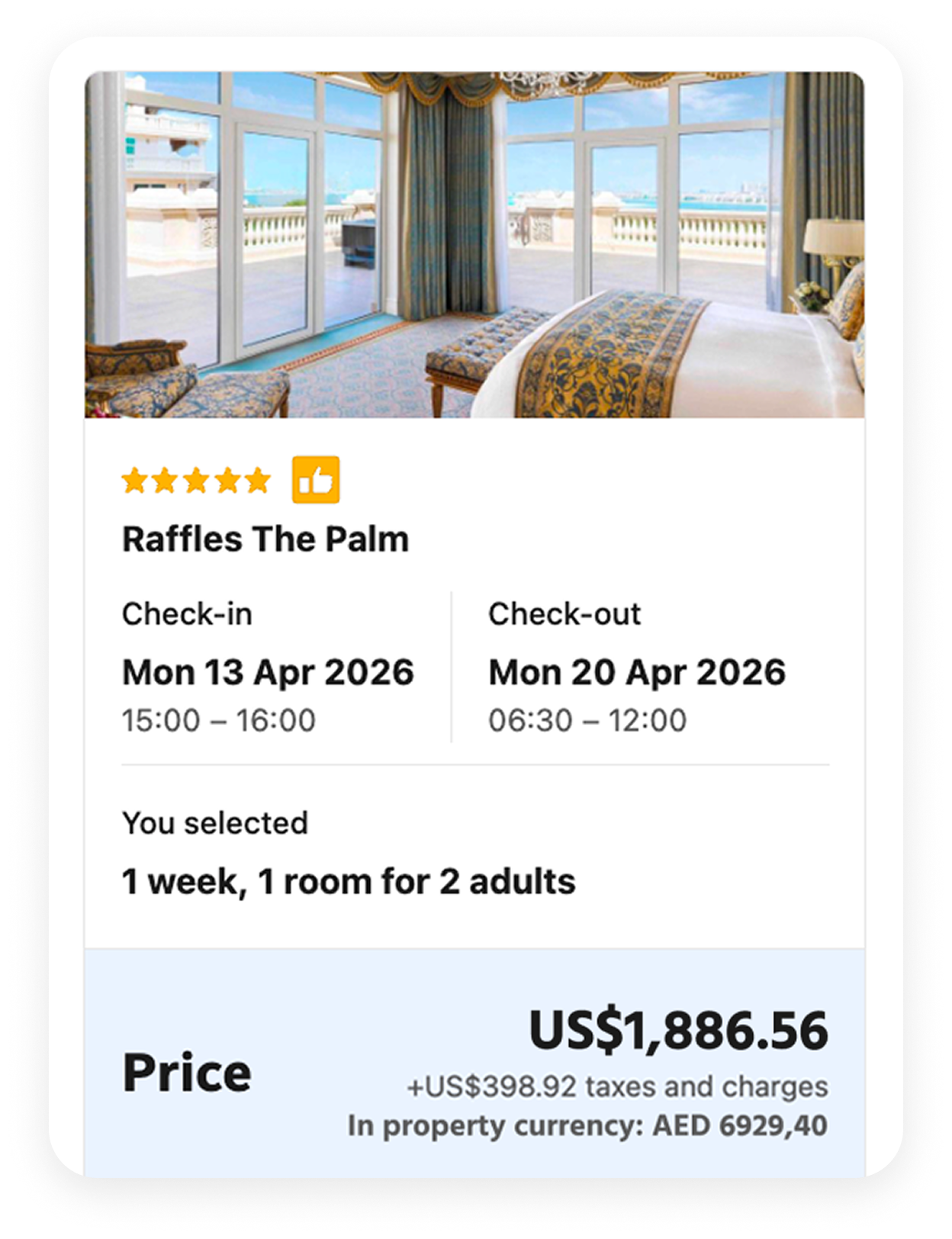
%201.png)
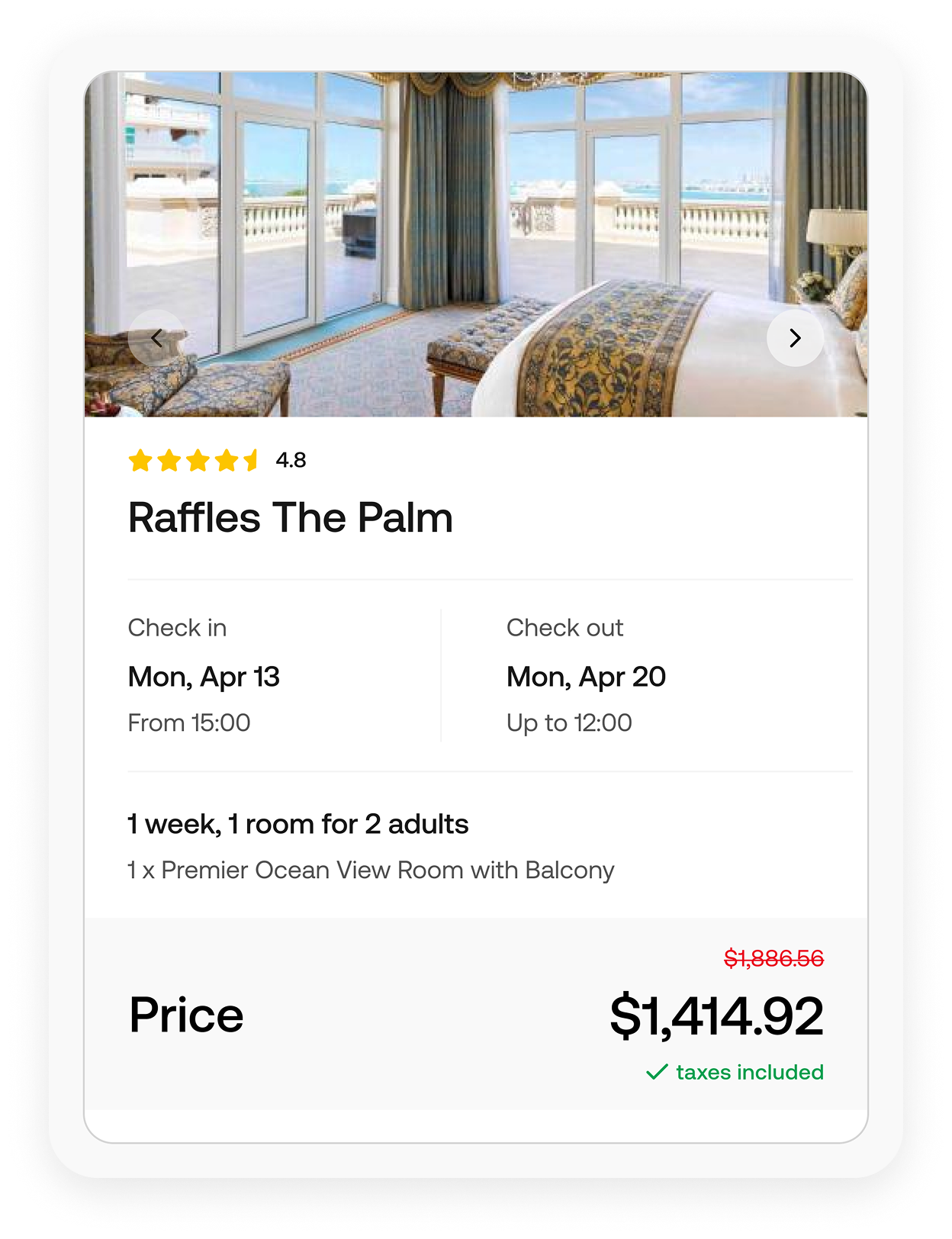
your first booking.
The real game-changer here is that absolutely no platform token is required. You don't have to join a complicated crypto club or buy a native token just to get a fair price. You simply pay with your favorite digital assets with zero hidden fees. It is easily the best replacement if you just want to spend your crypto and save cash without the Web3 drama.
2. LockTrip
LockTrip feels a bit different from most crypto travel platforms because the whole idea behind it is simple: cut out the middlemen and make hotel bookings cheaper. Instead of charging hotels the heavy commissions you usually see on platforms like Booking.com or Expedia, LockTrip connects travelers more directly to suppliers and passes those savings along to users. The company claims discounts of up to 60%, although many travelers report more realistic savings of around 20% compared to Booking.com.
The platform gives access to more than 2.1 million hotels and properties across 190+ countries. You can pay with regular bank cards, popular cryptocurrencies, or the platform’s LOC token.
What makes it stand out against Travala is that you do not need to buy or stake tokens just to unlock the better prices. Using LOC can give an extra 5% off, but the main discounts are already available to everyone. It also offers a handy “Book Now, Pay Later” option for travelers who want to lock in a good rate before paying. Just keep in mind that LockTrip currently operates strictly as an accommodation booking platform. They do not offer flight bookings on their website or app.
3. CheapaAir
Before Travala existed, before crypto travel was even a concept anyone took seriously, CheapAir was already doing it. In November 2013, the company became the first US-based online travel agency to accept Bitcoin for flight bookings. Hotels followed a few months later in 2014. At the time, the crypto travel space had exactly one player, and it was them.
Today, the platform accepts Bitcoin, Ethereum, Litecoin, Bitcoin Cash, and Dogecoin via BitPay, covering flights, hotels, and car rentals across 500+ airlines. Booking works exactly like any standard OTA; search, select, pay, done. There is no native token to buy, no staking tier to unlock, and no loyalty program to enrol in. Crypto is simply a payment option, not a prerequisite for a better price.
A couple of features stand out. Price Drop Payback™ refunds up to $100 in travel credit if your fare drops after booking. Flexible changes are available up to 24 hours before departure, with optional cancellation protection on top.
CheapAir was founded in 1989, before Expedia, before Kayak, before the internet as most people know it. That is 35+ years of operating history, which no crypto-native platform can come close to matching. For US-based travelers, especially, that track record carries weight.
4. Travorio
Travorio is quietly building something worth paying attention to, which made it in our list.
The platform gives you access to 5 million+ hotel properties and 750+ airlines, all payable in 100+ cryptocurrencies: Bitcoin, Ethereum, USDT, Solana, and more. No extra fees for paying in crypto beyond the standard blockchain network cost, which varies by coin. When you confirm a booking, the USD price locks in at that moment. Whatever the market does after that is not your problem.
The thing that genuinely sets Travorio apart is how it handles payments. It is currently the only crypto travel platform that combines cryptocurrency with Buy Now, Pay Later. Through integrations with Sezzle and PayPal Pay Later, you can split your booking into four equal interest-free payments, putting down just 25% upfront while your reservation is secured immediately. That kind of flexibility does not exist on Travala, or most other platforms in this space. It also works for event tickets, concerts, sports, festivals, you name it.
There is no native token here, no staking, no tier you need to reach before the platform treats you fairly. You pay in the crypto you already hold and get your booking. Simple.
However, Travorio is still relatively new. The review base is small, and it does not carry the operating history that platforms like CheapAir or Destinia do. It shows promise, but it is still building its track record.
5. XcelTrip
XcelTrip has been around since 2016, which actually makes it older than most crypto travel platforms people talk about. The basic idea is simple: book your hotels, flights, and car rentals using the crypto you already hold, without converting to fiat first.
The inventory is substantial, over 2.3 million hotels and 450+ airlines across 70+ countries. What separates it from the crowd is the sheer breadth of coins accepted. Beyond the usual Bitcoin, Ethereum, and USDT, you can pay with Shiba Inu, Dogecoin, XDC, Polygon, Litecoin, Dash, and Verge. If you're sitting on altcoins and want to actually spend them on something real, XcelTrip is one of the few places that genuinely lets you do that.
There's also a Bargain feature that lets you negotiate directly with hotels for additional discounts, something you won't find on Travala or Booking.com. Car rentals are available in 70+ countries, and the XcelPay wallet lets you top up mobile plans across 900 carriers in 190+ countries as a side benefit.
It's a smaller platform than Travala, and the native XLAB token has lost most of its value, so the cashback program isn't what it once was. But as a straightforward place to spend crypto on travel without needing to buy a specific loyalty token first, it gets the job done.
6. Destinia
Destinia is not a crypto startup. It is a 24-year-old travel agency based in Madrid that decided, back in January 2014, to accept Bitcoin before almost anyone else in Europe was thinking about it. That makes it the first European OTA to do so, a distinction it still holds today.
The platform covers flights, hotels, car rentals, train tickets, airport transfers, and full holiday packages across 500,000+ properties and 600 airlines, available in 30+ languages. It serves 2 million clients and sits among the five largest online travel agencies in Spain. This is a real, established business, not a platform that appeared last year with a whitepaper and a token.
On the crypto side, it accepts BTC, ETH, BCH, XRP, LTC, USDC, BUSD, GUSD, and PAX. No native token, no staking, no tiers. You pick your crypto at checkout, pay, and get your confirmation. By 2018, nearly 7.3% of Destinia's customers were already paying in Bitcoin, a number that meant something at the time.
It holds a 4.5 Trustpilot rating across 9,700+ reviews. Hotel bookings are consistently well reviewed. Flight bookings have drawn some complaints around customer service responsiveness, so it is worth keeping that in mind, depending on what you are booking.
For crypto holders who want a mainstream, full-service travel platform without a loyalty token standing in the way, Destinia is one of the more straightforward options on this list.
7. Vaccaya
Vaccaya is a crypto travel platform that's been in the making since 2021, built by a team with real hospitality roots in Europe. The CEO, Peter Mulder, runs the Peerkesbos Horeca Group across the Netherlands, Spain, Germany, France, Austria, Italy, and the Dutch Antilles, so unlike a lot of crypto travel projects, there's an actual industry background behind it.
The platform lets you book flights, hotels, car rentals, and activities using Bitcoin, Ethereum, and 100+ other cryptocurrencies. It pulls inventory from hundreds of aggregated sources worldwide, so the coverage is meant to be global rather than limited to a regional network. Every booking earns you $VACAY tokens, which can be used for discounts on future travel, particularly on luxury hotels and beach resorts, which seem to be the platform's sweet spot.
It's a newer platform than Travala and still finding its footing. The $VACAY token has had limited market activity, and independent user reviews are hard to come by right now. But if you're interested in a crypto travel platform with a European hospitality angle, especially for bookings across continental Europe and the Dutch Antilles, it's worth keeping an eye on as it develops.
8. Booking.com + Crypto Debit Card
Though Booking.com does not accept crypto directly, if you already hold a Crypto.com Visa or Bybit Mastercard, you do not need it to.
Both cards convert your crypto holdings to fiat automatically at the point of payment, no manual off-ramping, no separate steps. You load the card with BTC, ETH, USDT, or whatever you hold, and spend it anywhere Visa or Mastercard is accepted. That includes Booking.com, which happens to have the largest hotel inventory of any OTA on the planet, 28 million+ accommodations across virtually every country in the world.
Stack that with Booking.com's free Genius loyalty program and the numbers get interesting. Level 1 is instant, just create an account and get 10% off select stays for life. Level 3, reached after 15 bookings over two years, gets you up to 20% off. Bybit adds up to 10% cashback on hotel and flight spending on top of that. No staking tier required for the base rate.
The tradeoff is honest: you are paying retail OTA prices, not wholesale. A platform like CoinBooking will beat Booking.com on base rates structurally. But if you already have the card and the Genius status, this combination works without changing anything about how you travel.
9. Expedia
Expedia stopped accepting crypto directly back in 2018 and has not brought it back since. But the same workaround that works for Booking.com works here too; load a Crypto.com Visa or Bybit Mastercard with BTC, ETH, USDT, or whatever you hold, and spend it at Expedia like any normal card.
What you get in return is one of the most complete travel platforms on the planet. Over 3.5 million lodging properties, flights on virtually every major airline, car rentals, holiday packages, and cruise bookings, all under one account that also spans Hotels.com and Vrbo. That breadth is genuinely hard to match.
The One Key loyalty program ties it all together. It is free to join, and from the first booking you are earning OneKeyCash, up to 2% back on hotels, car rentals, and packages. Silver status unlocks 15% off select hotels. Gold gets you 20% off plus room upgrades. Bundle a hotel and flight and the discount can reach 30%.
Stack that with 2–10% cashback from a Bybit card on travel spending, and you are putting together real savings without touching a single crypto-native booking platform.
10. Bitcoin.Travel
Bitcoin.Travel is not trying to be Travala. It is not a full booking platform where you search, pay, and get a confirmation all in one place. What it is, and has been since July 2011, is the oldest and most established Bitcoin travel directory on the internet.
The way it works is straightforward. You use it to find hotels, flights, car rentals, tours, and activities from providers around the world that accept Bitcoin and other cryptocurrencies. It then connects you through to the relevant provider to complete the booking. Think of it less like Booking.com and more like a well-maintained map of the crypto travel ecosystem, one that has been updated and maintained for 14 years.
It currently covers 50 cryptocurrencies including BTC, ETH, USDT, BNB, XRP, Dogecoin, and Cardano. Pricing shows in milli-bitcoins alongside fiat for easy comparison. There is no native token, no staking, and no loyalty tier, the directory itself charges nothing.
The honest limitation is that your actual booking experience depends entirely on whichever provider you get redirected to. But as a starting point for finding who accepts crypto across the full travel stack, nothing has been doing it longer.
Which Travala Alternative Should You Actually Use?
Every platform on this list has something going for it. LockTrip cuts commissions. CheapAir has 35 years of history. Destinia is a real European OTA that happens to accept crypto. Booking.com and Expedia have unmatched inventory. Bitcoin.Travel has been mapping the crypto travel ecosystem since 2011.
But if you came here because you are tired of Travala's misleading best-price guarantee or AVA token requirement and you want to book hotels and flights with crypto at genuinely cheaper rates, with no new token to buy, no staking period to sit through, and no lock-up risk, there is one platform that solves all three of those problems at once.
CoinBooking is the one we keep coming back to.
CoinBooking offers rates that come in up to 30% below what you see on Booking.com and Expedia. The savings are not a reward. They are structural. They exist on every search, for every user, from day one and no token is needed to unlock them.
You pay in the crypto you already hold. BTC, ETH, USDT, or any of 200+ supported cryptocurrencies. If you prefer Visa, Mastercard, Apple Pay, or Google Pay, those work too. The price you see is the price you pay.
The coverage is serious, 2,000,000+ hotels across 190+ countries, including markets most platforms skip entirely like Russia and China, plus flights on every major airline. And it is regulated. CoinBooking is a Dubai-licensed travel broker operating under VARA, which in a space full of here-today-gone-tomorrow platforms, is a detail worth caring about.
Travala built the blueprint for crypto travel. CoinBooking improves on the one part that frustrated the most people, the price, and the accessibility of actually great deals.
If you want to spend your crypto on travel and actually spend less, that is where to start.
FAQs
What Are the Best Cheaper Alternatives to Travala for Crypto Travel?
The strongest token-free alternatives are Travorio, CheapAir, LockTrip, and CoinBooking. Travorio and Travala both accept 100+ cryptocurrencies, but Travorio offers lower service fees, instant confirmations, and Buy Now Pay Later options that Travala does not. LockTrip claims savings of up to 60% by removing intermediaries entirely. CoinBooking, a Dubai-licensed broker, gives you up to 30% lower rates not typically available on public booking sites, and passes those savings directly to users. None require you to hold a native token to access their best prices.
How Does Travala Compare to Booking.com in Price and Features?
Travala sources its inventory directly from Booking.com and Expedia via API, then layers its crypto payment tech on top. While that setup gives it a wide selection: 2.2 million properties across 230 countries, 600+ airlines, and 400,000+ activities, the crypto markup at checkout means final prices often end up higher than what you'd pay on Booking.com directly. The best-price guarantee Travala markets turns out to be more of a marketing line than a reality for most crypto users.
Do You Actually Need AVA Tokens to Get Discounts on Travala?
Effectively, yes. Signing up normally gets you a basic 1% back in AVA tokens, not enough to make a meaningful difference. To unlock marginally better discounts, you have to stake AVA in brackets of 500, 2,500, 5,000, or 10,000 tokens. Your funds are completely frozen for as long as you want to keep your discount tier, and if you cash out, you face a 7 to 14-day cooling-off period and instantly lose all your perks.
Which Crypto Travel Platforms Let You Book Without Holding Any Platform Token?
Several strong platforms are fully token-free. Travorio, CheapAir, and Alternative Airlines accept standard cryptocurrencies without any proprietary token requirement. Bitcoin.Travel accepts 50+ coins via BitPay and GoCoin with zero lock-in. Cryptorefills partners with Duffel, an IATA-accredited flight provider, to create bookings directly with airlines, payable in Bitcoin, USDT, USDC, and Ethereum, with no KYC required. CoinBooking accepts 200+ cryptocurrencies with no native token in its model at all. These platforms give you genuine crypto-native checkout without exposure to any single token's price volatility.
How Does CoinBooking Compare to Travala?
The two platforms serve different models. CoinBooking is a licensed travel broker based in Dubai, integrated with the same global travel networks powering the platforms you already use, offering 2M+ hotels across 190 countries at up to 30% less than Booking.com rates, with 200+ cryptocurrencies accepted. Its supply partners include Expedia, IATA, DNATA, RateHawk, and TBO. Travala, by contrast, is a fully live platform that closed 2025 with $113 million in gross revenue, added global car rentals via CarTrawler in early 2026, and now has Skyscanner, KAYAK, and Trivago integrations.
Is Travala Actually Cheaper Than Booking.com and Expedia in Practice?
Not for most crypto users. Since Travala pulls listings from Booking.com and Expedia and adds a 10-15% crypto premium at checkout, the final price is typically higher than booking directly on those platforms. Even with the AVA Smart Program cashback, the savings don't bring prices down enough to make crypto payments genuinely advantageous, unless you're willing to stake significant amounts of AVA and absorb the volatility risk that comes with it.


You're one step away from saving up to 30% on every trip.
Join 15,000+ on the waitlist.

Yaryna Dobrianska is a Dubai-based business and technology writer with a background in fintech and digital services. She covers cryptocurrency adoption, cross-border payments, and the practical realities of spending digital assets across emerging markets.
Her work at Polkastarter focuses on making Web3 accessible, breaking down how crypto moves through real-world financial systems, from payments infrastructure to on-chain adoption trends.
Stop comparing. Start saving up to 30% on every trip.
.avif)

Stop comparing. Start saving up to 30% on every trip.