.avif)
.png)
.avif)


Content
The Collecting Boom, Measured: eBay's $1.36 Billion Half and Heritage's Record Year

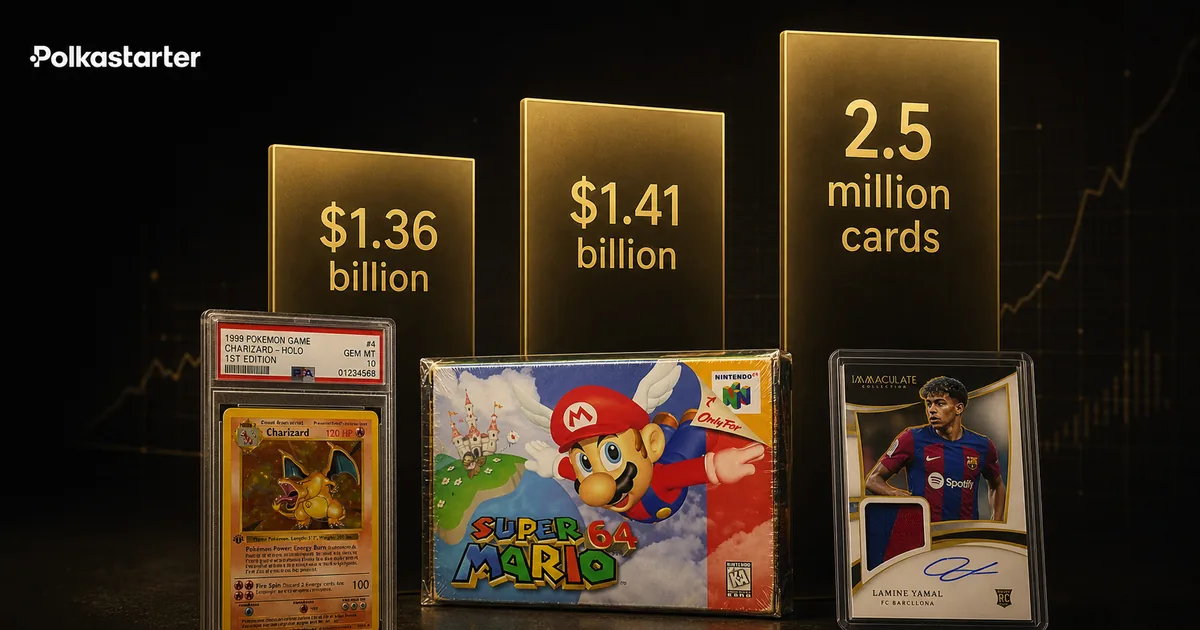
The collecting boom stopped being a feeling and became a data set this month. eBay moved $1.36 billion in sports card singles in the first half of 2026, the first billion-dollar first half ever. Heritage Auctions posted a record $1.41 billion half. And PSA graded a record 2.5 million cards in June while its queue still sits at 11 million. Here is the boom in hard numbers, what it means, and the caveats the hype posts skip.
The Three Numbers
- $1.36 billion. Sports card singles sold on eBay in the first six months of 2026, up 40 percent from the previous six months' $967 million, and the first time the platform crossed a billion dollars in a first half. That is liquidity, not hype, singles changing hands one card at a time.
- $1.41 billion. Heritage Auctions' record first half across collectibles, sports, and popular culture, the reporting around it noting that collecting is getting broader, not just bigger.
- 2.5 million cards. PSA's record June grading output, up 74 percent year over year, against a backlog still around 11 million cards with the cheap tiers paused, the full story is in our PSA backlog breakdown.
And a fourth for the collection: industry reporting puts retro gaming around $4.18 billion in 2026, its own record year, covered in our retro gaming renaissance piece.
The Boom Is Broadening
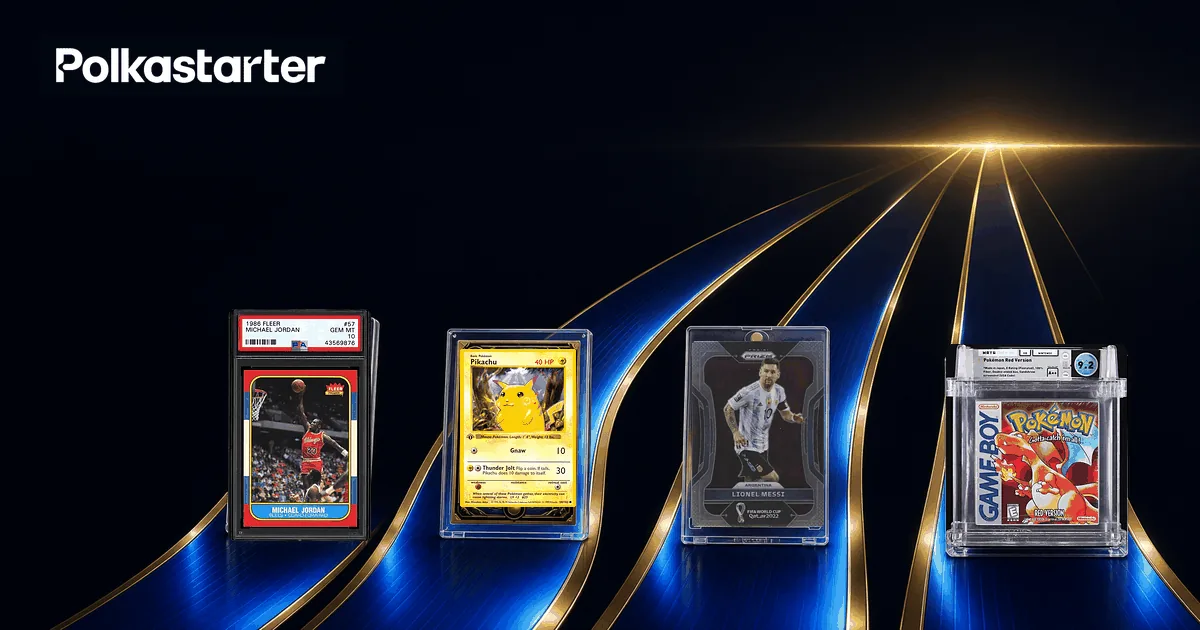
The most important word in the Heritage reporting is broader. This is not one hot category, it is several at once. The 2026 World Cup set off the biggest soccer card summer on record, with the all-time grails mapped in our most valuable soccer cards guide. Pokemon's launch weeks sell out in minutes and its 30th anniversary lands in September, the all-time chase list is in our most valuable Pokemon cards guide. Sealed games set records at Heritage while physical media heads toward its endpoint. Every lane of the hobby posted growth in the same six months, and the infrastructure, grading, auctions, marketplaces, is straining to keep up. That last part is the tell, demand outrunning infrastructure is what a real boom looks like.
What the Numbers Mean for Collectors
- Liquidity is real. A billion-plus in singles per half means the exit door is wide, cards and collectibles are easier to sell at fair prices than at any point in the hobby's history.
- The on-ramp is crowded. Record demand means launch-week sellouts, grading queues, and premiums on hot product. The patient plays we keep documenting, restocks, post-launch price troughs, buying already-graded, all exist because of this exact imbalance.
- Broadening means options. The boom is not just basketball rookies or just Charizards, soccer, retro games, and TCG are all liquid lanes now. Collect the lane you actually love, the data says they are all real markets.
The Honest Caveats
- Booms breed hype, and hype breeds fakes. Record demand is exactly when counterfeits, resealed products, and too-good-to-be-true listings multiply. Verification discipline matters more in a boom, not less.
- Rising tides fall too. The hobby has had corrections before, and a 40 percent growth rate is not a law of nature. Buy what you love at prices you can hold through a cycle, not what a chart promises.
- Records are the ceiling, not the average. Billion-dollar halves and million-dollar grails coexist with $5 commons and $20 cartridges. The boom raises the top hardest, the median card is still a modest thing.
- Sold data is still the only truth. In a hot market, asking prices inflate fastest of all. Recent sold listings, always.
Frequently Asked Questions
How big is the trading card market in 2026?
The measurable slices are record-sized. eBay alone moved $1.36 billion in sports card singles in the first half of 2026, up 40 percent, Heritage Auctions posted a record $1.41 billion first half across collectibles, PSA graded a record 2.5 million cards in June, and industry reporting puts retro gaming around $4.18 billion for the year. Every major lane of the hobby grew in the same six months.
Is the collecting boom sustainable?
The demand signals are real, record sales volume, record grading submissions, and broadening across categories rather than one hot lane. But the hobby has corrected before, and growth rates like 40 percent do not continue forever. The honest approach is collecting what you love at prices you can hold through a cycle, pricing on sold data, and treating records as the ceiling rather than the promise.
What does the boom mean if I am starting to collect now?
Two things at once. Liquidity has never been better, more buyers and sellers means fairer prices and easier exits. And the on-ramp is crowded, hot product sells out at launch, grading queues are long, and hype premiums are everywhere. The patient plays win, buy restocks at list instead of scalper prices, buy post-launch price troughs instead of launch-day peaks, and consider already-graded cards instead of joining the grading queue.
Where to Go From Here
The boom is measured now, a billion-plus in singles, a record auction half, a grading machine at full tilt, and every lane rising at once. The playbook stays the same as ever, collect what you love, price on sold data, and let the impatient pay the premiums. And if you are picking a lane, the Polkastarter marketplace covers rare cards and premium video games in one place, with crypto payments across more than 10 chains and a free Lootbox when you sign up.
News content, market figures are the cited organizations' published numbers for the periods stated, past growth does not predict future prices, and nothing here is investment advice.
Sources
.png)


Ilknur Gubel is a social media manager at Polkastarter. Ilknur has spent the past four years working as a project manager, marketing manager, and social media strategist across Web3. She has held marketing and project management positions at several crypto companies, including Polygen, Nitro League, Kaizen.Finance, and ChainPort.
At Polkastarter she has covered trading card releases, collectible market pricing, and how token holders can spend crypto on real cards and videogames.
Based in Istanbul, Ilknur earned a bachelor's degree in sociology from Istanbul Aydın University.
You can connect with her on LinkedIn for more information.