Rare cards and sealed games built for collectors.

Explore Polkastarter
hims
πŸ‘€
☰
Content

How Does PSA Grading Work? Step-by-Step Card Grading Guide

Published
June 23, 2026
Updated
June 23, 2026

Here is the full path a card takes, from your desk to a graded slab.

Create an account and declare value. Set up a PSA account and enter each card with a declared value, your honest estimate of what it's worth graded. Declared value sets your service tier and your return-shipping insurance, so it matters before anything physical happens.

Choose a service tier. Tier is driven by declared value and speed. As of mid-2026, with the cheaper Value tiers paused, Regular ($79.99/card) is the entry tier, faster and higher-value tiers cost more.

Prep the cards safely. Sleeve each card in a penny sleeve, then a semi-rigid holder, a Card Saver is the hobby standard. Skip top-loaders for submission, never force a tight sleeve, and don't tape anything. Rushed packing is how people crease a card they were about to pay to protect.

Ship insured. Pack the semi-rigids snugly between cardboard and ship with tracking and insurance to the declared value. The card is your property in transit, insure it accordingly.

Intake and research. PSA logs the cards against your submission and queues them for review.

Authentication. Graders confirm the card is genuine. A card only advances if it passes grading happens after authentication.

Condition review. Graders assess centering, corners, edges, and surface, and check for alterations like trimming or restoration.

Grade assignment. The card receives a number from 1 to 10 or a designation such as Authentic / Authentic-Altered / not gradable if it can't receive a numeric grade.

Encapsulation, label, and cert. The card is sealed in a sonically sealed, tamper-evident holder with a label showing the grade and a unique certification number.

Return shipping. PSA ships the graded cards back, insured to your declared value tier.

The money is won or lost in three of those steps: how accurately you declare value, the condition your card is really in, and the grade it earns. The rest of this guide lives there.
‍

What PSA Actually Looks At

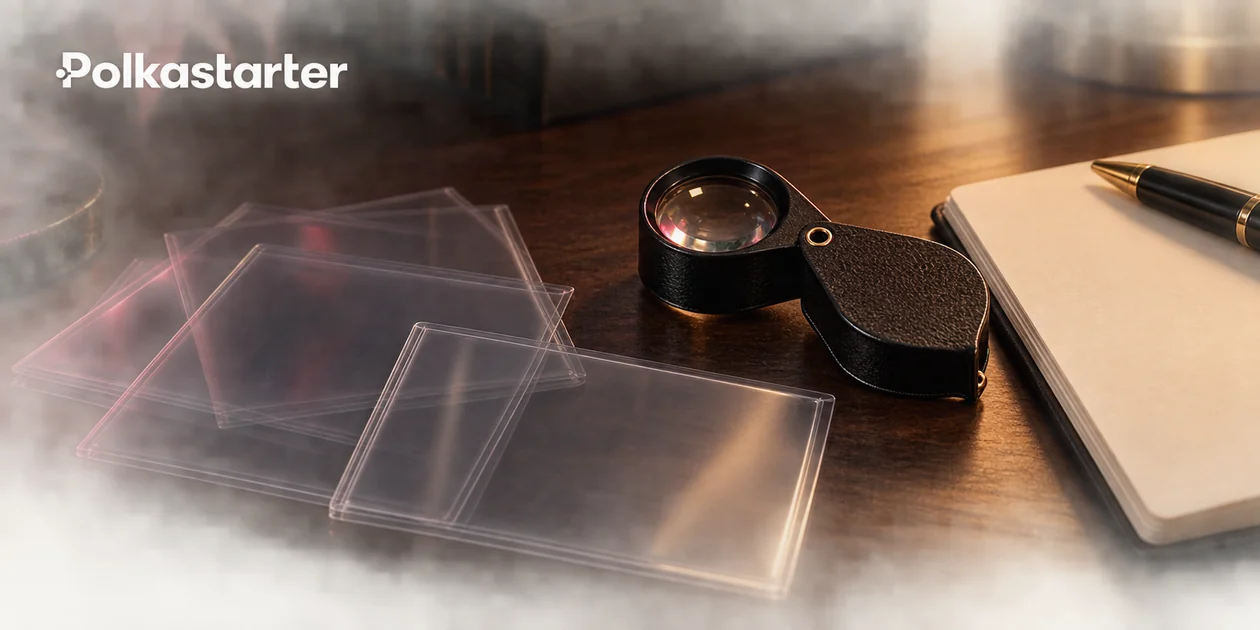
PSA assesses five things in condition review: centering, corners, edges, surface, authenticity, centering and surface flaws cap the most grades. Two cheap tools let you preview what a grader sees: a 10x loupe and a bright light you can angle the card against.
‍
Handle the card by its edges on a clean, soft surface, since skin oils leave fingerprints that show up under that light.

Centering is the one that caps the most grades. It's measured front and back, and a 60/40 tilt most people can't catch by eye is the whole difference between a 9 and a 10.

Corners. Check all four, front and back, for whitening, soft tips, or tiny bends. A corner that looks sharp in a phone photo will often catch light in hand.

Edges chipping, whitening, rough cuts, dents. On holo and reverse-holo cards, the edge usually shows wear before the front does.

Surface is where hopeful 10s quietly die. Tilt the card under the light and hunt for holo scratches, roller marks, print lines, dents, and fingerprints that only appear at an angle.

Authenticity and alterations. Trimming, recoloring, or other restoration can mean no numeric grade at all.

Most submitters overestimate their Gem Mint odds because sleeve glare hides exactly these flaws. Flip the habit: assume the card is a 9, and go find the one thing that proves it.
‍

PSA 10 vs PSA 9 vs PSA 8: How the Grade Is Assigned

A PSA 10 is "Gem Mint" virtually perfect. A PSA 9 is "Mint," still excellent but with one minor flaw. A PSA 8 is "Near Mint–Mint," clearly nice with small visible wear. The physical gap between a 9 and a 10 is tiny, the price gap often isn't. PSA's published standards put exact centering tolerances on each grade:

PSA 10 (Gem Mint) centering about 55/45 front and 75/25 back. Sharp corners, full gloss, no staining, at most a slight print imperfection.

PSA 9 (Mint) about 60/40 front and 90/10 back. One minor flaw allowed: a faint print line, a slight back wax stain, or an off-white border.

PSA 8 (NM-MT) about 65/35 front and 90/10 back. Minor visible wear on corners, edges, or surface.

On a high-supply modern card, a single missed border wipes out the entire premium you were grading for. The card never had to be bad. It just had to miss the 10.
‍

What Beginners Often Hear Wrong

Official grading language sounds cleaner than the hobby feels. Here's where the gap usually opens:

"PSA authenticates before grading." Beginners may hear "if it's graded, I don't need to check anything." It actually means: still check the cert, label, slab, seller, and recent sales.

"PSA 10 is Gem Mint." Beginners may hear "pack-fresh cards should be 10s." It actually means: factory defects and centering issues exist before the pack is opened.

"PSA uses a 1–10 scale." Beginners may hear "the number is the whole story." It actually means: eye appeal, demand, population, and liquidity still move price.

"PSA lists a service fee." Beginners may hear "the listed fee is the full cost." It actually means: shipping, insurance, supplies, upcharges, and selling fees all count.
‍

What PSA Grading Costs in 2026

The fee floor just moved. As of June 22, 2026, PSA's cheapest open tier is Regular at $79.99 per card (max declared value about $1,500, estimated 40–50 business days), after PSA paused its lower-priced Value tiers on June 2, 2026 to clear a large submission backlog. Faster and higher-value tiers (Express, Super Express, Walk-Through, Premium) cost more and scale with declared value and speed. PSA says pricing, services, and turnaround can change quickly and are not guaranteed.

On top of the tier fee, budget for:

Declared value and insurance, higher declared value pushes you into pricier tiers and raises return-shipping insurance.

Shipping both ways, plus penny sleeves, semi-rigids, and packing supplies.

Tier upcharges. If a card grades higher than you declared and its value clears your tier's ceiling, PSA bills the difference before releasing it usually as a surprise email. Leave room for it on any borderline-valuable card.

Selling fees if you plan to resell, usually a percentage of the final sale price on most marketplaces.

Selling fees and that upcharge are exactly where the "is it worth it" math turns, so run it.
‍

Is It Worth Grading? The Break-Even Math

Separate fixed grading costs from sale-based selling fees, or both the PSA 10 upside and the PSA 9 downside come out distorted. You only come out ahead when the card's expected graded proceeds, after selling fees, minus the cost of grading, beat what you'd net selling it raw.

Step 1. Pull comps from recent sold listings. Gather: R = raw sold price; V10 = PSA 10 sold; V9 = PSA 9 sold; Vlower = a realistic lower grade (e.g. PSA 8); Vng = value if it returns with no numeric grade. A word on Vng: a card returned altered or ungradable is not worth its old raw price. Once PSA flags it, the market treats it as damaged goods, often well below an uninspected raw copy. Model it with a penalty, not at raw value.

Step 2. Set your fee rate and grading cost. f = your marketplace + payment fee rate (illustratively ~13%; use your real rate). G = grading fee + shipping both ways + insurance + supplies. G can rise if a high grade triggers a tier upcharge.

Step 3. Estimate honest grade odds. Assign probabilities from your inspection, including a small chance of no numeric grade. These are illustrative; your card's real odds come from your own loupe.

Step 4. Net proceeds, then compare. For each graded outcome (10, 9, lower), net proceeds = sale price Γ— (1 βˆ’ f). For the no-grade branch, net = penalized no-grade value Γ— (1 βˆ’ f). Then: expected grading return = the sum of (probability Γ— net) across the graded outcomes, plus (no-grade probability Γ— no-grade net), minus total grading cost G. Net if sold raw = R Γ— (1 βˆ’ f). Grade only if the expected grading return comfortably beats the net-if-sold-raw, the graded outcomes are summed, and the no-grade branch is added once, separately, so nothing is double-counted.

Worked scenario A. it loses money. R = $70, V10 = $220, V9 = $85, V8 = $60, Vng β‰ˆ $35 (penalized). f = 13%. G = $80 grading + $25 shipping/supplies = $105. Odds: 20% PSA 10 / 60% PSA 9 / 15% PSA 8 / 5% no-grade.

Net per outcome: 10 β†’ $191.40; 9 β†’ $73.95; 8 β†’ $52.20; no-grade β†’ $30.45.

Expected grading return = (0.20 Γ— 191.40) + (0.60 Γ— 73.95) + (0.15 Γ— 52.20) + (0.05 Γ— 30.45) βˆ’ 105 = 92.00 βˆ’ 105 = βˆ’$13.00.

Net if sold raw = 70 Γ— 0.87 = $60.90.

Grading is expected to leave you about $74 worse than selling raw. Sell it raw. Break-even check: assume every non-PSA-10 outcome lands at a PSA 9 (no PSA 8, no no-grade). This card would then need roughly a 78% chance of a PSA 10 just to match selling raw and a slightly off-center card does not earn 78% Gem Mint odds. (Push the fee rate toward 15% and the break-even climbs; drop it toward 10% and it eases. Run your real rate.)

Worked scenario B. it works. R = $120, V10 = $700, V9 = $260, V8 = $180. f = 13%. G = $80 + $30 = $110. The card inspects strongly, so no-grade odds are negligible. Odds: 55% / 40% / 5%.

Net per outcome: 10 β†’ $609; 9 β†’ $226.20; 8 β†’ $156.60.

Expected grading return = (0.55 Γ— 609) + (0.40 Γ— 226.20) + (0.05 Γ— 156.60) βˆ’ 110 = 433.26 βˆ’ 110 = $323.26.

Net if sold raw = 120 Γ— 0.87 = $104.40.

Grading is expected to net about $219 more than selling raw, and even a PSA 9 keeps you ahead. This one is worth sending.
‍

How GameStop PSA Grading Differs

GameStop runs an in-store PSA drop-off service, which is why "how does GameStop PSA grading work" is its own common search. The cards are still graded by PSA to the same standards, GameStop is just the intake and bulk-submission middleman. Its pricing is tiered and, for lower-value cards, cheaper than going direct: recent listings show roughly $16–$25 per trading card depending on declared value, plus a $9.99 flat shipping fee per order, a declared-value cap, and a discount for GameStop Pro members. The catch is time, GameStop batches submissions into PSA's pipeline, which is backed up in 2026, so total turnaround can run months.
‍
Confirm GameStop's current terms before relying on them, pricing and caps shift, especially during PSA's Value-tier pause.
‍

Buying a PSA-Graded Card

A slab removes some uncertainty. It doesn't remove the need to look closely.

Use PSA's cert verification tool to check the certification number against PSA's database. PSA warns this isn't foolproof, counterfeiters clone valid, active cert numbers from public listings onto fake labels inside fake slabs, so a database match is the start of the check, not the end.

Before you buy, work down the slab:

Label match do the year, set, card number, and grade match the card actually in the holder?

Watch for "weak 10s." Some cards in a 10 holder look like a strong 9 today centering or surface that wouldn't earn the grade now. Angle the slab under light: fingerprints, hairline scratches, and print lines trapped under the plastic still count, label or not.

Slab condition cloudy, cracked, warped, or odd frosting at the seams can mean a cracked-and-reslabbed holder. Walk.

Comps over asking price. Check recent sold prices before you trust the number on the listing.

Seller history a thin track record hides easily behind clean photos.

The premium test is the graded jump actually worth it over a clean raw copy?

If the listing photos are blurry, cropped, or hiding the slab edges, ask for better ones.
‍

Why This Matters for Marketplace Buyers

When you buy a graded card, the slab changes what you should pay but a grade on a label is not a guarantee. That holds wherever you buy: eBay, a card shop, or newer marketplaces like Polkastarter.

‍
A careful buyer checks the cert, compares recent sold prices, inspects the slab, and asks whether the card inside deserves the premium. Those are marketplace-literacy habits worth building now, wherever you buy.

Don't buy the plastic. Buy the card inside it.

At review on June 22, 2026, PSA's Regular tier was $79.99/card (about 40–50 business days, max declared ~$1,500), with the lower Value tiers paused since June 2, 2026, GameStop's trading-card grading ran roughly $16–$25/card plus $9.99 shipping. PSA says pricing, services, and turnaround can change rapidly. Confirm current tiers, fees, and the grading-standard centering figures on the official pages before you submit.
‍

Frequently Asked Questions

1. How long does PSA grading take?

It depends on the service tier, declared value, and PSA's current backlog. In mid-2026 PSA's Regular estimate was about 40 to 50 business days. PSA states turnaround times are not guaranteed and can change quickly.

2. What is the difference between a PSA 9 and a PSA 10?

Mainly centering and a single flaw. PSA's published standards put a Gem Mint 10 at about 55/45 front and 75/25 back centering with a clean surface, a Mint 9 allows about 60/40 front and 90/10 back plus one minor flaw such as a faint print line or off-white border. On high-supply cards the price gap between them can be large.

3. Can a pack-fresh card get less than PSA 10?

Yes. Pack-fresh only means recently opened. Off-centering, print lines, edge whitening, soft corners, and roller marks are factory defects that exist before the pack is opened.

4. Does PSA grading always increase a card's value?

No. Grading helps when the card has demand and earns a strong grade. It loses money when the card is common, the grade comes back lower than expected, or total costs exceed the graded premium.

5. How much does PSA grading cost in 2026?

As of June 2026, PSA's cheapest open tier is Regular at $79.99 per card, after PSA paused its lower-priced Value tiers on June 2, 2026 to clear a backlog. Faster and higher-value tiers cost more. Budget beyond the headline fee for shipping both ways, insurance, penny sleeves and semi-rigids, and a possible tier upcharge if a card grades above your declared value. Confirm current pricing on PSA's official page, since fees and turnaround change quickly.

6. What does a PSA 10 mean?

A PSA 10 is Gem Mint, virtually perfect. PSA's published standards put it at about 55/45 front and 75/25 back centering, with sharp corners, full gloss, and no staining, allowing at most a slight print imperfection. It is the top numeric grade and usually carries the largest price premium, though demand and the specific card still decide value.

Where to Go From Here

PSA grading is a process authenticate, assess, grade, encapsulate and a slab is only as good as the card and the comps behind it. Before you submit, run the worksheet on your own card. Before you buy a slab, verify the cert, pull recent sold comps, and decide whether the premium survives fees, time, and grade risk.

Educational content only. Collectible markets can be volatile, and grading does not guarantee profit.

Content Writer
BA, Business Management & Finance

Yaryna Dobrianska is a Dubai-based business and technology writer with a background in fintech and digital services. She covers cryptocurrency adoption, cross-border payments, and the practical realities of spending digital assets across emerging markets.

Her work at Polkastarter focuses on making Web3 accessible, breaking down how crypto moves through real-world financial systems, from payments infrastructure to on-chain adoption trends.

‍

Latest

How Does PSA Grading Work? Step-by-Step Card Grading Guide
How PSA grading works, step by step plus a break-even formula to run before you submit a card.
CoinBooking vs Travala: Which is Better for Crypto Travel?
The choice is simple: unconditional lower prices or staking rewards?
Top 12 Crypto Travel Booking Sites in 2026
12 crypto travel platforms ranked on price, inventory, and token dependency.
Content

How Does PSA Grading Work? Step-by-Step Card Grading Guide

Published
June 23, 2026
Updated
June 23, 2026

Here is the full path a card takes, from your desk to a graded slab.

Create an account and declare value. Set up a PSA account and enter each card with a declared value, your honest estimate of what it's worth graded. Declared value sets your service tier and your return-shipping insurance, so it matters before anything physical happens.

Choose a service tier. Tier is driven by declared value and speed. As of mid-2026, with the cheaper Value tiers paused, Regular ($79.99/card) is the entry tier, faster and higher-value tiers cost more.

Prep the cards safely. Sleeve each card in a penny sleeve, then a semi-rigid holder, a Card Saver is the hobby standard. Skip top-loaders for submission, never force a tight sleeve, and don't tape anything. Rushed packing is how people crease a card they were about to pay to protect.

Ship insured. Pack the semi-rigids snugly between cardboard and ship with tracking and insurance to the declared value. The card is your property in transit, insure it accordingly.

Intake and research. PSA logs the cards against your submission and queues them for review.

Authentication. Graders confirm the card is genuine. A card only advances if it passes grading happens after authentication.

Condition review. Graders assess centering, corners, edges, and surface, and check for alterations like trimming or restoration.

Grade assignment. The card receives a number from 1 to 10 or a designation such as Authentic / Authentic-Altered / not gradable if it can't receive a numeric grade.

Encapsulation, label, and cert. The card is sealed in a sonically sealed, tamper-evident holder with a label showing the grade and a unique certification number.

Return shipping. PSA ships the graded cards back, insured to your declared value tier.

The money is won or lost in three of those steps: how accurately you declare value, the condition your card is really in, and the grade it earns. The rest of this guide lives there.
‍

What PSA Actually Looks At

PSA assesses five things in condition review: centering, corners, edges, surface, authenticity, centering and surface flaws cap the most grades. Two cheap tools let you preview what a grader sees: a 10x loupe and a bright light you can angle the card against.
‍
Handle the card by its edges on a clean, soft surface, since skin oils leave fingerprints that show up under that light.

Centering is the one that caps the most grades. It's measured front and back, and a 60/40 tilt most people can't catch by eye is the whole difference between a 9 and a 10.

Corners. Check all four, front and back, for whitening, soft tips, or tiny bends. A corner that looks sharp in a phone photo will often catch light in hand.

Edges chipping, whitening, rough cuts, dents. On holo and reverse-holo cards, the edge usually shows wear before the front does.

Surface is where hopeful 10s quietly die. Tilt the card under the light and hunt for holo scratches, roller marks, print lines, dents, and fingerprints that only appear at an angle.

Authenticity and alterations. Trimming, recoloring, or other restoration can mean no numeric grade at all.

Most submitters overestimate their Gem Mint odds because sleeve glare hides exactly these flaws. Flip the habit: assume the card is a 9, and go find the one thing that proves it.
‍

PSA 10 vs PSA 9 vs PSA 8: How the Grade Is Assigned

A PSA 10 is "Gem Mint" virtually perfect. A PSA 9 is "Mint," still excellent but with one minor flaw. A PSA 8 is "Near Mint–Mint," clearly nice with small visible wear. The physical gap between a 9 and a 10 is tiny, the price gap often isn't. PSA's published standards put exact centering tolerances on each grade:

PSA 10 (Gem Mint) centering about 55/45 front and 75/25 back. Sharp corners, full gloss, no staining, at most a slight print imperfection.

PSA 9 (Mint) about 60/40 front and 90/10 back. One minor flaw allowed: a faint print line, a slight back wax stain, or an off-white border.

PSA 8 (NM-MT) about 65/35 front and 90/10 back. Minor visible wear on corners, edges, or surface.

On a high-supply modern card, a single missed border wipes out the entire premium you were grading for. The card never had to be bad. It just had to miss the 10.
‍

What Beginners Often Hear Wrong

Official grading language sounds cleaner than the hobby feels. Here's where the gap usually opens:

"PSA authenticates before grading." Beginners may hear "if it's graded, I don't need to check anything." It actually means: still check the cert, label, slab, seller, and recent sales.

"PSA 10 is Gem Mint." Beginners may hear "pack-fresh cards should be 10s." It actually means: factory defects and centering issues exist before the pack is opened.

"PSA uses a 1–10 scale." Beginners may hear "the number is the whole story." It actually means: eye appeal, demand, population, and liquidity still move price.

"PSA lists a service fee." Beginners may hear "the listed fee is the full cost." It actually means: shipping, insurance, supplies, upcharges, and selling fees all count.
‍

What PSA Grading Costs in 2026

The fee floor just moved. As of June 22, 2026, PSA's cheapest open tier is Regular at $79.99 per card (max declared value about $1,500, estimated 40–50 business days), after PSA paused its lower-priced Value tiers on June 2, 2026 to clear a large submission backlog. Faster and higher-value tiers (Express, Super Express, Walk-Through, Premium) cost more and scale with declared value and speed. PSA says pricing, services, and turnaround can change quickly and are not guaranteed.

On top of the tier fee, budget for:

Declared value and insurance, higher declared value pushes you into pricier tiers and raises return-shipping insurance.

Shipping both ways, plus penny sleeves, semi-rigids, and packing supplies.

Tier upcharges. If a card grades higher than you declared and its value clears your tier's ceiling, PSA bills the difference before releasing it usually as a surprise email. Leave room for it on any borderline-valuable card.

Selling fees if you plan to resell, usually a percentage of the final sale price on most marketplaces.

Selling fees and that upcharge are exactly where the "is it worth it" math turns, so run it.
‍

Is It Worth Grading? The Break-Even Math

Separate fixed grading costs from sale-based selling fees, or both the PSA 10 upside and the PSA 9 downside come out distorted. You only come out ahead when the card's expected graded proceeds, after selling fees, minus the cost of grading, beat what you'd net selling it raw.

Step 1. Pull comps from recent sold listings. Gather: R = raw sold price; V10 = PSA 10 sold; V9 = PSA 9 sold; Vlower = a realistic lower grade (e.g. PSA 8); Vng = value if it returns with no numeric grade. A word on Vng: a card returned altered or ungradable is not worth its old raw price. Once PSA flags it, the market treats it as damaged goods, often well below an uninspected raw copy. Model it with a penalty, not at raw value.

Step 2. Set your fee rate and grading cost. f = your marketplace + payment fee rate (illustratively ~13%; use your real rate). G = grading fee + shipping both ways + insurance + supplies. G can rise if a high grade triggers a tier upcharge.

Step 3. Estimate honest grade odds. Assign probabilities from your inspection, including a small chance of no numeric grade. These are illustrative; your card's real odds come from your own loupe.

Step 4. Net proceeds, then compare. For each graded outcome (10, 9, lower), net proceeds = sale price Γ— (1 βˆ’ f). For the no-grade branch, net = penalized no-grade value Γ— (1 βˆ’ f). Then: expected grading return = the sum of (probability Γ— net) across the graded outcomes, plus (no-grade probability Γ— no-grade net), minus total grading cost G. Net if sold raw = R Γ— (1 βˆ’ f). Grade only if the expected grading return comfortably beats the net-if-sold-raw, the graded outcomes are summed, and the no-grade branch is added once, separately, so nothing is double-counted.

Worked scenario A. it loses money. R = $70, V10 = $220, V9 = $85, V8 = $60, Vng β‰ˆ $35 (penalized). f = 13%. G = $80 grading + $25 shipping/supplies = $105. Odds: 20% PSA 10 / 60% PSA 9 / 15% PSA 8 / 5% no-grade.

Net per outcome: 10 β†’ $191.40; 9 β†’ $73.95; 8 β†’ $52.20; no-grade β†’ $30.45.

Expected grading return = (0.20 Γ— 191.40) + (0.60 Γ— 73.95) + (0.15 Γ— 52.20) + (0.05 Γ— 30.45) βˆ’ 105 = 92.00 βˆ’ 105 = βˆ’$13.00.

Net if sold raw = 70 Γ— 0.87 = $60.90.

Grading is expected to leave you about $74 worse than selling raw. Sell it raw. Break-even check: assume every non-PSA-10 outcome lands at a PSA 9 (no PSA 8, no no-grade). This card would then need roughly a 78% chance of a PSA 10 just to match selling raw and a slightly off-center card does not earn 78% Gem Mint odds. (Push the fee rate toward 15% and the break-even climbs; drop it toward 10% and it eases. Run your real rate.)

Worked scenario B. it works. R = $120, V10 = $700, V9 = $260, V8 = $180. f = 13%. G = $80 + $30 = $110. The card inspects strongly, so no-grade odds are negligible. Odds: 55% / 40% / 5%.

Net per outcome: 10 β†’ $609; 9 β†’ $226.20; 8 β†’ $156.60.

Expected grading return = (0.55 Γ— 609) + (0.40 Γ— 226.20) + (0.05 Γ— 156.60) βˆ’ 110 = 433.26 βˆ’ 110 = $323.26.

Net if sold raw = 120 Γ— 0.87 = $104.40.

Grading is expected to net about $219 more than selling raw, and even a PSA 9 keeps you ahead. This one is worth sending.
‍

How GameStop PSA Grading Differs

GameStop runs an in-store PSA drop-off service, which is why "how does GameStop PSA grading work" is its own common search. The cards are still graded by PSA to the same standards, GameStop is just the intake and bulk-submission middleman. Its pricing is tiered and, for lower-value cards, cheaper than going direct: recent listings show roughly $16–$25 per trading card depending on declared value, plus a $9.99 flat shipping fee per order, a declared-value cap, and a discount for GameStop Pro members. The catch is time, GameStop batches submissions into PSA's pipeline, which is backed up in 2026, so total turnaround can run months.
‍
Confirm GameStop's current terms before relying on them, pricing and caps shift, especially during PSA's Value-tier pause.
‍

Buying a PSA-Graded Card

A slab removes some uncertainty. It doesn't remove the need to look closely.

Use PSA's cert verification tool to check the certification number against PSA's database. PSA warns this isn't foolproof, counterfeiters clone valid, active cert numbers from public listings onto fake labels inside fake slabs, so a database match is the start of the check, not the end.

Before you buy, work down the slab:

Label match do the year, set, card number, and grade match the card actually in the holder?

Watch for "weak 10s." Some cards in a 10 holder look like a strong 9 today centering or surface that wouldn't earn the grade now. Angle the slab under light: fingerprints, hairline scratches, and print lines trapped under the plastic still count, label or not.

Slab condition cloudy, cracked, warped, or odd frosting at the seams can mean a cracked-and-reslabbed holder. Walk.

Comps over asking price. Check recent sold prices before you trust the number on the listing.

Seller history a thin track record hides easily behind clean photos.

The premium test is the graded jump actually worth it over a clean raw copy?

If the listing photos are blurry, cropped, or hiding the slab edges, ask for better ones.
‍

Why This Matters for Marketplace Buyers

When you buy a graded card, the slab changes what you should pay but a grade on a label is not a guarantee. That holds wherever you buy: eBay, a card shop, or newer marketplaces like Polkastarter.

‍
A careful buyer checks the cert, compares recent sold prices, inspects the slab, and asks whether the card inside deserves the premium. Those are marketplace-literacy habits worth building now, wherever you buy.

Don't buy the plastic. Buy the card inside it.

At review on June 22, 2026, PSA's Regular tier was $79.99/card (about 40–50 business days, max declared ~$1,500), with the lower Value tiers paused since June 2, 2026, GameStop's trading-card grading ran roughly $16–$25/card plus $9.99 shipping. PSA says pricing, services, and turnaround can change rapidly. Confirm current tiers, fees, and the grading-standard centering figures on the official pages before you submit.
‍

Frequently Asked Questions

1. How long does PSA grading take?

It depends on the service tier, declared value, and PSA's current backlog. In mid-2026 PSA's Regular estimate was about 40 to 50 business days. PSA states turnaround times are not guaranteed and can change quickly.

2. What is the difference between a PSA 9 and a PSA 10?

Mainly centering and a single flaw. PSA's published standards put a Gem Mint 10 at about 55/45 front and 75/25 back centering with a clean surface, a Mint 9 allows about 60/40 front and 90/10 back plus one minor flaw such as a faint print line or off-white border. On high-supply cards the price gap between them can be large.

3. Can a pack-fresh card get less than PSA 10?

Yes. Pack-fresh only means recently opened. Off-centering, print lines, edge whitening, soft corners, and roller marks are factory defects that exist before the pack is opened.

4. Does PSA grading always increase a card's value?

No. Grading helps when the card has demand and earns a strong grade. It loses money when the card is common, the grade comes back lower than expected, or total costs exceed the graded premium.

5. How much does PSA grading cost in 2026?

As of June 2026, PSA's cheapest open tier is Regular at $79.99 per card, after PSA paused its lower-priced Value tiers on June 2, 2026 to clear a backlog. Faster and higher-value tiers cost more. Budget beyond the headline fee for shipping both ways, insurance, penny sleeves and semi-rigids, and a possible tier upcharge if a card grades above your declared value. Confirm current pricing on PSA's official page, since fees and turnaround change quickly.

6. What does a PSA 10 mean?

A PSA 10 is Gem Mint, virtually perfect. PSA's published standards put it at about 55/45 front and 75/25 back centering, with sharp corners, full gloss, and no staining, allowing at most a slight print imperfection. It is the top numeric grade and usually carries the largest price premium, though demand and the specific card still decide value.

Where to Go From Here

PSA grading is a process authenticate, assess, grade, encapsulate and a slab is only as good as the card and the comps behind it. Before you submit, run the worksheet on your own card. Before you buy a slab, verify the cert, pull recent sold comps, and decide whether the premium survives fees, time, and grade risk.

Educational content only. Collectible markets can be volatile, and grading does not guarantee profit.

Content Writer
BA, Business Management & Finance

Yaryna Dobrianska is a Dubai-based business and technology writer with a background in fintech and digital services. She covers cryptocurrency adoption, cross-border payments, and the practical realities of spending digital assets across emerging markets.

Her work at Polkastarter focuses on making Web3 accessible, breaking down how crypto moves through real-world financial systems, from payments infrastructure to on-chain adoption trends.

‍

Latest

How Does PSA Grading Work? Step-by-Step Card Grading Guide
How PSA grading works, step by step plus a break-even formula to run before you submit a card.
CoinBooking vs Travala: Which is Better for Crypto Travel?
The choice is simple: unconditional lower prices or staking rewards?
Top 12 Crypto Travel Booking Sites in 2026
12 crypto travel platforms ranked on price, inventory, and token dependency.
This is some text inside of a div block.
Share this Article

Share this Article

This is some text inside of a div block.

Telegram