.avif)
.png)
.avif)


Content
Top 10 Ways to Spend Bitcoin (BTC) in Austria After Converting EUR

Austria has more retail crypto infrastructure than almost anywhere else in Europe. Bitpanda, the Vienna-headquartered exchange, has over seven million registered users and holds a full MiCA licence under the EU framework. Bitcoin adoption here is well established. The spending options that come with that infrastructure are broader than most holders here have actually explored.

The gap is between owning Bitcoin and knowing what to do with it. The conversion step is easy and Bitpanda makes it fast, but what most Austrian holders have not worked out yet is which spending methods make the most financial sense, and which categories let you skip the EUR conversion entirely.
Bitcoin goes further when you know where to spend it. Browse the full country-by-country breakdown.
Why Bitcoin Spending in Austria Requires Converting to EUR First
Direct BTC acceptance at merchants is still uncommon. Austria runs on IBAN transfers, Visa, Mastercard, and increasingly app-based payments, which means most purchases start with a conversion step.
Bitpanda is the most natural place to do it for anyone based here: Vienna-headquartered, MiCA licensed, and supporting instant EUR withdrawals via SEPA to any Austrian bank account, whether that is Raiffeisen, Erste Bank, Bank Austria, or a neobank like N26.
Coinbase, Kraken, and Crypto.com are all accessible from Austria as well. Every platform requires KYC verification. Completing that before you need to transact avoids a situation where you are locked out mid-conversion when timing matters.
Is It Legal to Use Bitcoin in Austria? What You Should Know First
Austria's position on crypto is one of the clearest in Europe, and it has been consistent for several years.
Buying, holding, converting, and spending Bitcoin is fully legal. Austria operates under the EU's MiCA framework as of 2024, with the FMA overseeing licensed providers. There are no payment bans and no restrictions on ownership.
The part that catches people off guard is the tax side. Austria introduced a flat 27.5% Kapitalertragsteuer on crypto gains in 2022, bringing it in line with other capital income. What fewer people know is that Austria also treats crypto-to-crypto swaps as taxable events. Every trade, not just the final EUR withdrawal, can trigger a liability. That is meaningfully stricter than several EU neighbours and important to understand before moving between assets.

Three things worth keeping in mind:
- Watch the rate. EUR is stable but BTC is not. If you are converting to cover a specific expense, timing matters. On larger amounts, a few hours can make a meaningful difference.
- Stick to licensed platforms. Bitpanda, Coinbase, Kraken, and Crypto.com all operate within Austria's regulatory framework. The cautionary stories almost always involve someone who stepped outside it.
- Keep your records clean. Every conversion and every trade is a potential tax event. Document cost basis from the start. For significant amounts, consulting a local tax professional before you need one is the right approach.
After Converting to EUR
10 Ways to Spend Bitcoin in Austria
1. Book Hotels and Flights with Bitcoin
For anyone based in Austria, the next country is never more than a few hours away. A weekend in Prague, a ski week in Innsbruck, a city break in Rome, a retreat in Stockholm. Every one of those trips can be booked directly in Bitcoin.
CoinBooking is a Dubai-licensed travel platform where you can not only pay for hotels and flights directly in Bitcoin, but get prices that run up to 30% below what you would find on Booking.com or Expedia for the same properties and dates.
.png)
.png)
The platform covers 1 million+ properties worldwide, including the Hotel Imperial and Vienna Marriott on the Ringstrasse, the Ritz-Carlton Vienna, and thousands of independent properties across Austria, plus flights with major carriers. It’s the easiest and most cost-effective way for Austria based travelers to book trips.
Just $870 Cheaper.

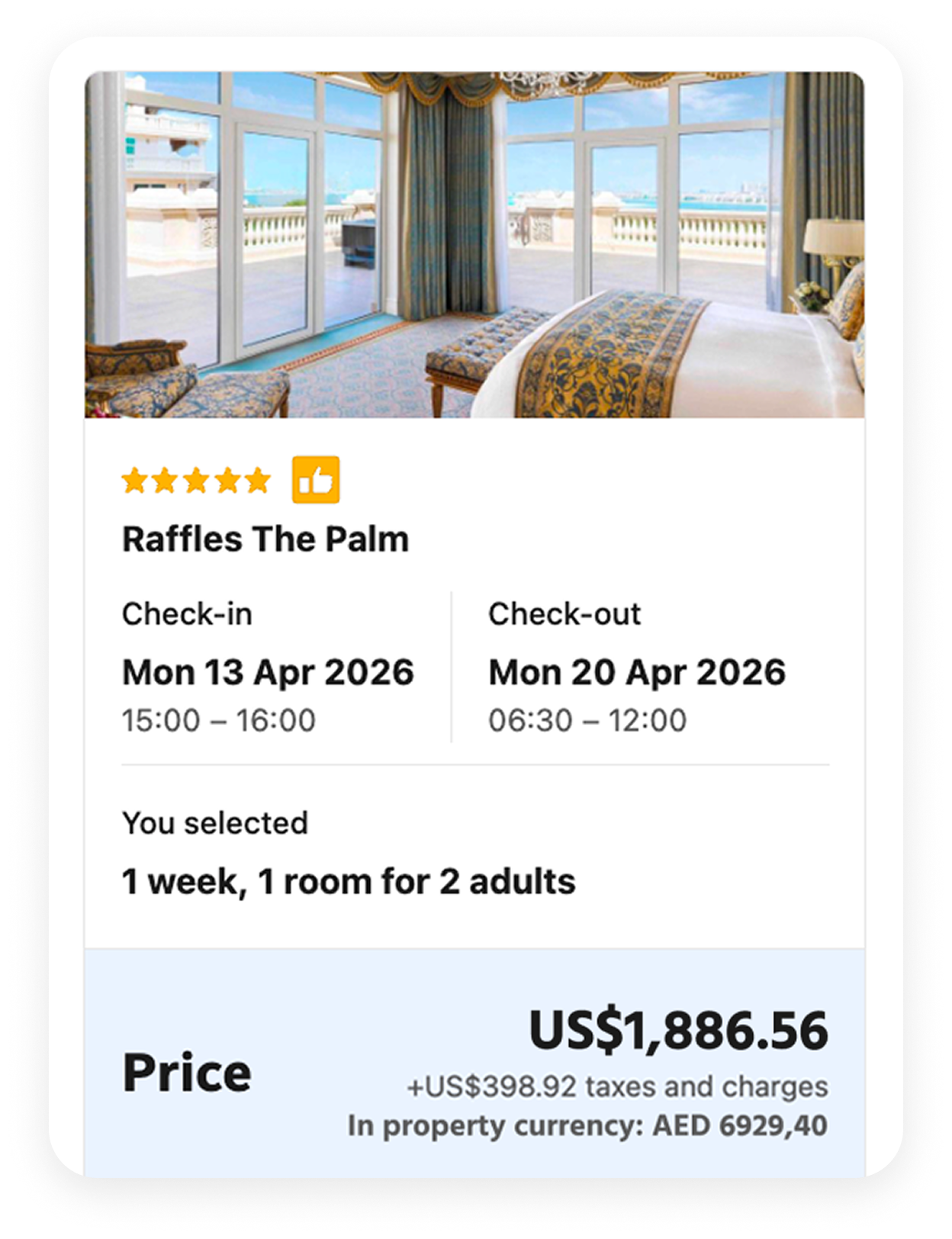
%201.png)
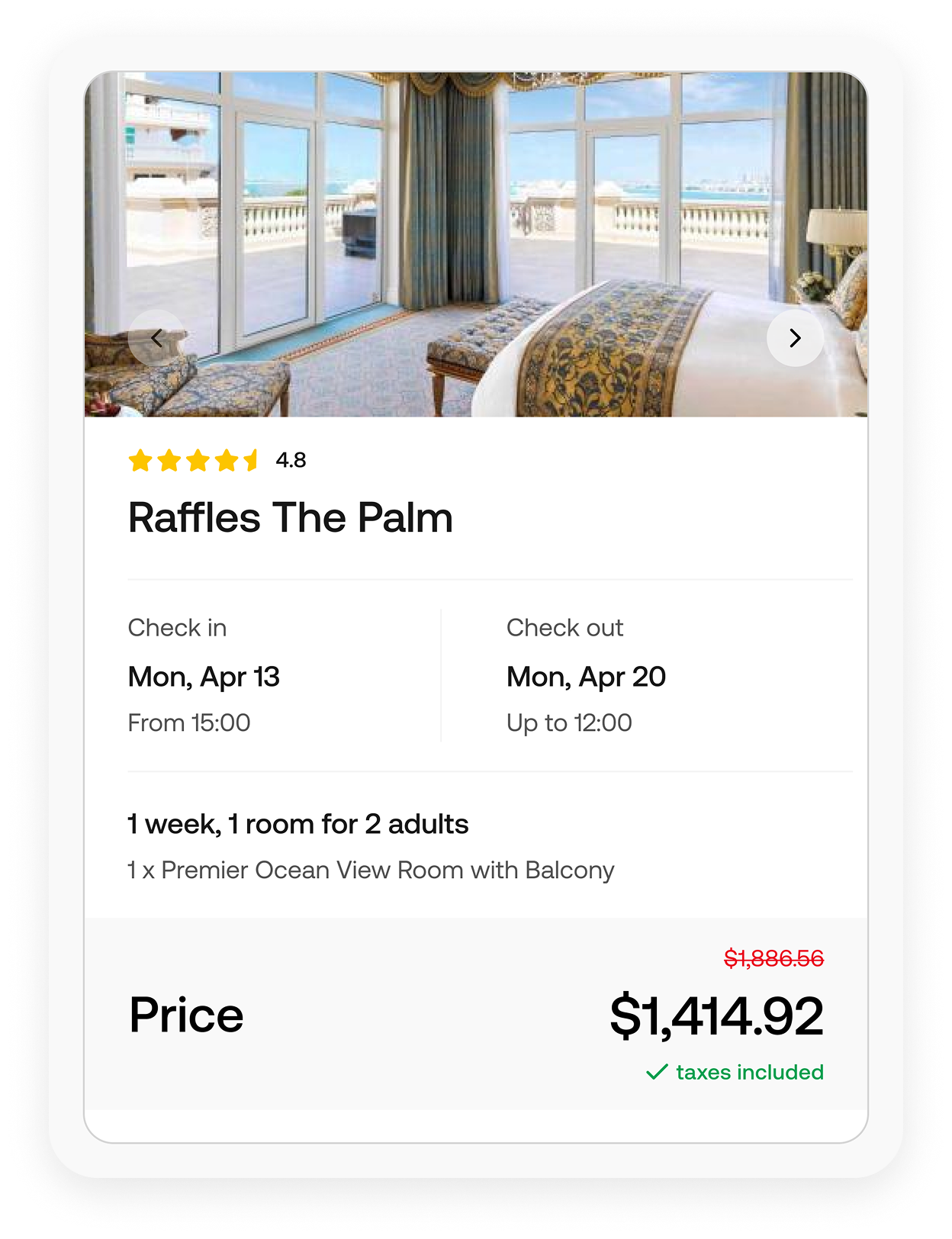
your first booking.
Planning a trip to Stockholm? See how to spend Bitcoin in Sweden.
2. Spend Anywhere via Bitpanda Card
Most crypto spending methods require you to decide when to convert. The Bitpanda Card handles it automatically.
It is a Visa debit card linked directly to your Bitpanda account. BTC or USDT sits in the app. When you pay at a merchant, the card handles the EUR conversion in real time. Supermarkets, petrol stations, restaurants, online checkouts: the card works wherever Visa works, which in Austria is essentially everywhere.
The difference from the manual conversion route comes down to timing and control. Converting through Bitpanda first gives you full control over the rate, which matters on larger amounts. The card trades that control for convenience: the conversion happens at point of sale without any separate step.
For routine daily spending, that trade-off works in the card's favour. For a purchase where the current BTC rate is a significant factor, converting ahead of time makes more sense.
3. Shop on Amazon.de or Willhaben
Austria's two most-used shopping platforms cover very different use cases.
Amazon.de handles the full range of consumer goods: electronics, books, household products, software. Pay with any EUR-denominated card after converting through Bitpanda, or use the Bitpanda Card directly at checkout without a separate conversion step.
Willhaben is where a lot of Austria's high-value private sales happen. Electronics, furniture, vehicles. The standard approach is a bank transfer after converting to EUR first. Some private sellers may be open to crypto for in-person deals, but this is uncommon and verifying whoever you are dealing with matters before any transaction outside a formal platform.
4. Order Food via Mjam or Lieferando
Mjam and Lieferando are Austria's dominant food delivery platforms, well-established across Vienna and the major cities. Both accept standard card payments.
The Bitpanda Card is the simplest route. Hold crypto in the app, pay at checkout, and the conversion runs automatically. For anyone already using the card for everyday spending, ordering food works the same way as any other purchase with no additional step involved.
5. Pay Utility and Household Bills
Wien Energie covers electricity in Vienna. EVN serves Lower Austria. Salzburg AG handles Salzburg. Energie Steiermark covers Graz. Each provider is paid through standard Austrian banking: ELBA for Raiffeisen customers, George for Erste Bank, or Bank Austria's portal depending on who you bank with.
Once EUR is in your account, setting up SEPA Lastschrift with your provider is the cleanest long-term approach. You authorise the debit once and recurring bills pay automatically on the due date with no manual action required each month.
One thing to plan for: SEPA withdrawals from exchanges take up to one business day. Starting the conversion the morning a bill is due is cutting it too close.
6. Travel with OeBB
OeBB connects Austria's major cities via Railjet services, with Nightjet overnight trains extending to Germany, Switzerland, Italy, and Hungary. Vienna, Graz, Salzburg, Innsbruck, Linz: most of the network is reachable without flying.
Tickets are purchased through the OeBB app or website. Pay with any linked card after converting through Bitpanda, or use the Bitpanda Card directly. For trips that also involve accommodation at the destination, CoinBooking handles the hotel booking in Bitcoin with no EUR conversion at all. Rail and hotel, covered, without touching a bank account for either.
7. Buy Electronics at MediaMarkt or Saturn
MediaMarkt and Saturn are Austria's go-to retailers for consumer electronics, with stores across the country and full online catalogues.
Both accept Visa and Mastercard. For smaller purchases, the Bitpanda Card at checkout is the simplest option. For larger purchases where the BTC sale timing matters, converting through Bitpanda first and locking in the rate you are comfortable with gives more control. Neither approach is wrong. It depends on the size of the purchase and how much the current BTC rate matters to you at that point.
8. Shop for Groceries at BILLA or SPAR
BILLA and SPAR between them cover most of Austria's grocery retail. Both accept Visa and Mastercard at every checkout, in store and online.
For weekly shopping, the Bitpanda Card covers this cleanly. Load BTC or USDT into the account, tap at checkout, done. Running a manual conversion before every supermarket visit adds friction that disappears once the card is set up.
9. Send Remittances Home
Austria's Serbian, Croatian, Bosnian, Turkish, and Romanian communities are among the most active remittance corridors in Central Europe. For those sending money home regularly, converting to EUR first and using a transfer service is the standard approach.
For EU destinations, a SEPA transfer after converting on Bitpanda is fast and low-cost, typically settling the same day or the next business day. Wise works well for both EU and non-EU routes and is fully accessible from Austria.
For Serbia, Bosnia, and Turkey specifically, Wise, Western Union, and Remitly all cover the corridor after the EUR conversion. The EUR is strong relative to most destination currencies, which makes this an efficient route for regular senders.
Sending money to Turkey? See how to spend Bitcoin there.
10. Pay for Streaming and Digital Subscriptions
Austrian bank cards generally work fine on international platforms. But there are holders who would rather keep a bank card off every subscription service they use, and crypto handles that cleanly.
Bitrefill gift cards cover the main platforms: Netflix, Spotify, Amazon Prime, Adobe Creative Cloud, Microsoft 365. The code arrives instantly and works like any standard voucher. No EUR conversion, no bank account involved.
VPN providers are a particularly natural fit here. Many accept Bitcoin natively, and for a recurring subscription you are paying every year anyway, removing the bank card entirely is a small but clean simplification.
Frequently Asked Questions
1. What is the best way to spend Bitcoin in Austria?
Travel via CoinBooking is the highest-value option on this list. You book hotels and flights directly in Bitcoin at wholesale rates, saving up to 30% compared to Booking.com or Expedia, with no EUR conversion required. For everyday spending, the Bitpanda Card converts crypto automatically at point of sale at any Visa terminal across Austria and the EU.
2. How to buy Bitcoin in Austria?
Bitpanda is the most direct option for Austrian residents. It is Vienna-headquartered, holds a MiCA licence, and supports SEPA deposits from any Austrian bank account. Coinbase, Kraken, and Crypto.com are also fully accessible, and all require KYC verification before you can transact.
3. What is the best Austria crypto wallet?
For daily spending, the Bitpanda in-app wallet connects directly to the Bitpanda Visa Card, making it convenient for regular use. For longer-term holdings, a hardware wallet such as a Ledger or Trezor keeps private keys offline and removes exchange counterparty risk.
4. How does the Bitpanda Card work for spending?
The Bitpanda Card is a Visa debit card linked to your Bitpanda account. When you make a purchase, the app converts the necessary amount of BTC or USDT to EUR in real time and processes the payment at the terminal. It works at any Visa merchant in Austria and across the EU.
5. What Bitcoin services are available in Vienna?
Vienna has a genuine Bitcoin ecosystem. The House of Nakamoto is a dedicated Bitcoin retail and education store near the city centre. 21bitcoin is an Austrian Bitcoin-only savings platform known for its automated recurring purchase feature and full local regulatory compliance.
6. Can I book flights and hotels with Bitcoin directly?
Yes. CoinBooking is built for exactly this purpose. You can book hotels in 190+ countries and flights on hundreds of airlines, paying in Bitcoin or USDT without any EUR conversion. Early users receive $25 off their first booking.


The #1 way to spend BTC and USDT on this list
Save up to 30% on hotels and flights.

Yaryna Dobrianska is a Dubai-based business and technology writer with a background in fintech and digital services. She covers cryptocurrency adoption, cross-border payments, and the practical realities of spending digital assets across emerging markets.
Her work at Polkastarter focuses on making Web3 accessible, breaking down how crypto moves through real-world financial systems, from payments infrastructure to on-chain adoption trends.
Your $25 is waiting. So is up to 30% off every trip you'll ever take.
.avif)
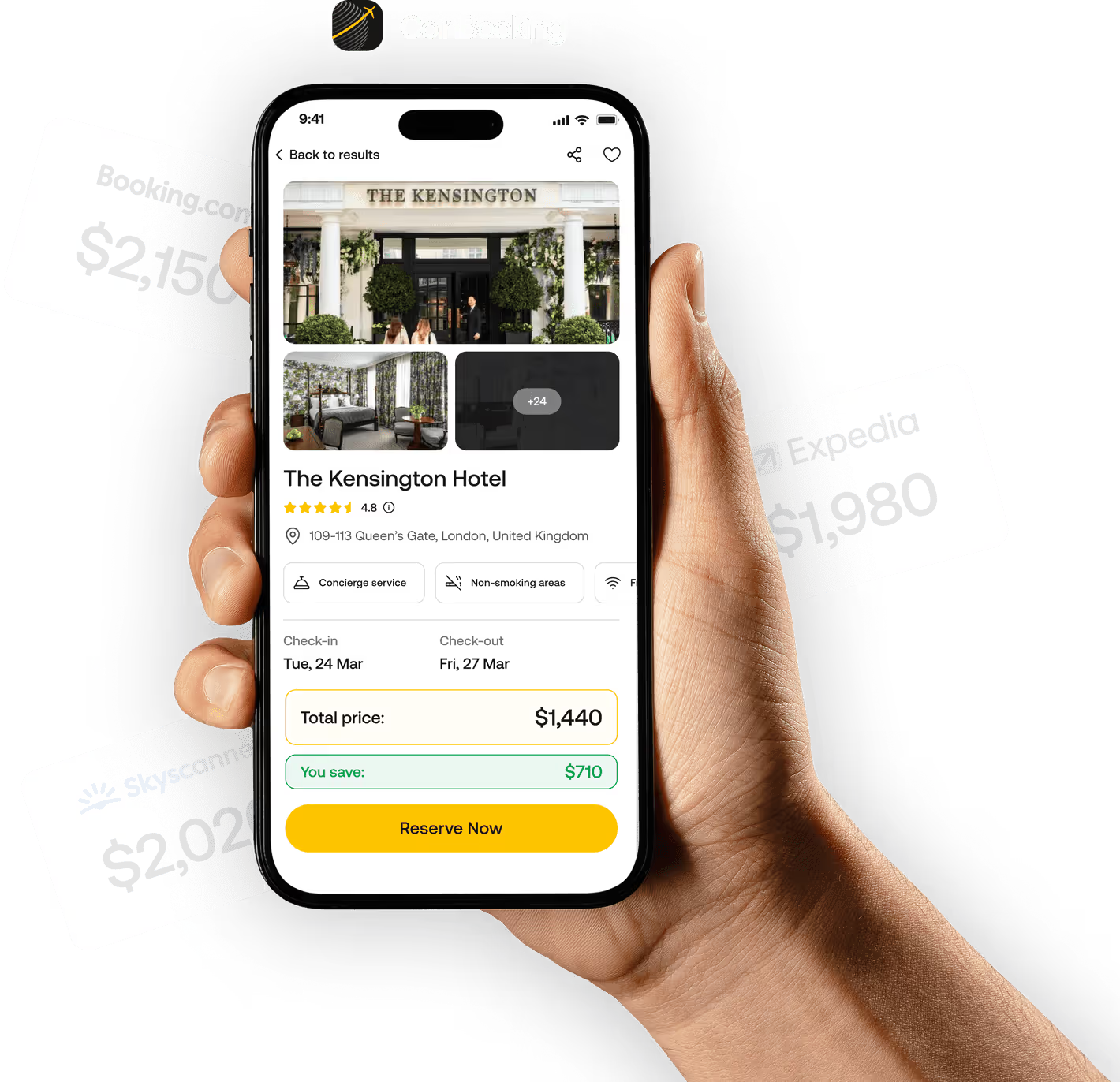
Your $25 is waiting. So is up to 30% off every trip you'll ever take.