.avif)
.png)
.avif)


Content
Top 10 Ways to Travel With Bitcoin (BTC) in Costa Rica

Most countries in this guide series have Bitcoin infrastructure that exists on paper. Costa Rica has one that works at the gas station. Bull Bitcoin processed 32,774 Bitcoin-to-fiat conversions in Costa Rica between May 2024 and May 2025, processing hundreds of Lightning payments daily through the country's SINPE national payment network. In the Jaco and Pacific Coast region, over 200 businesses accept BTC directly. You can pay for a surf lesson, a bowl of rice and beans, and a tank of gas all in Bitcoin without ever touching a card or cash.
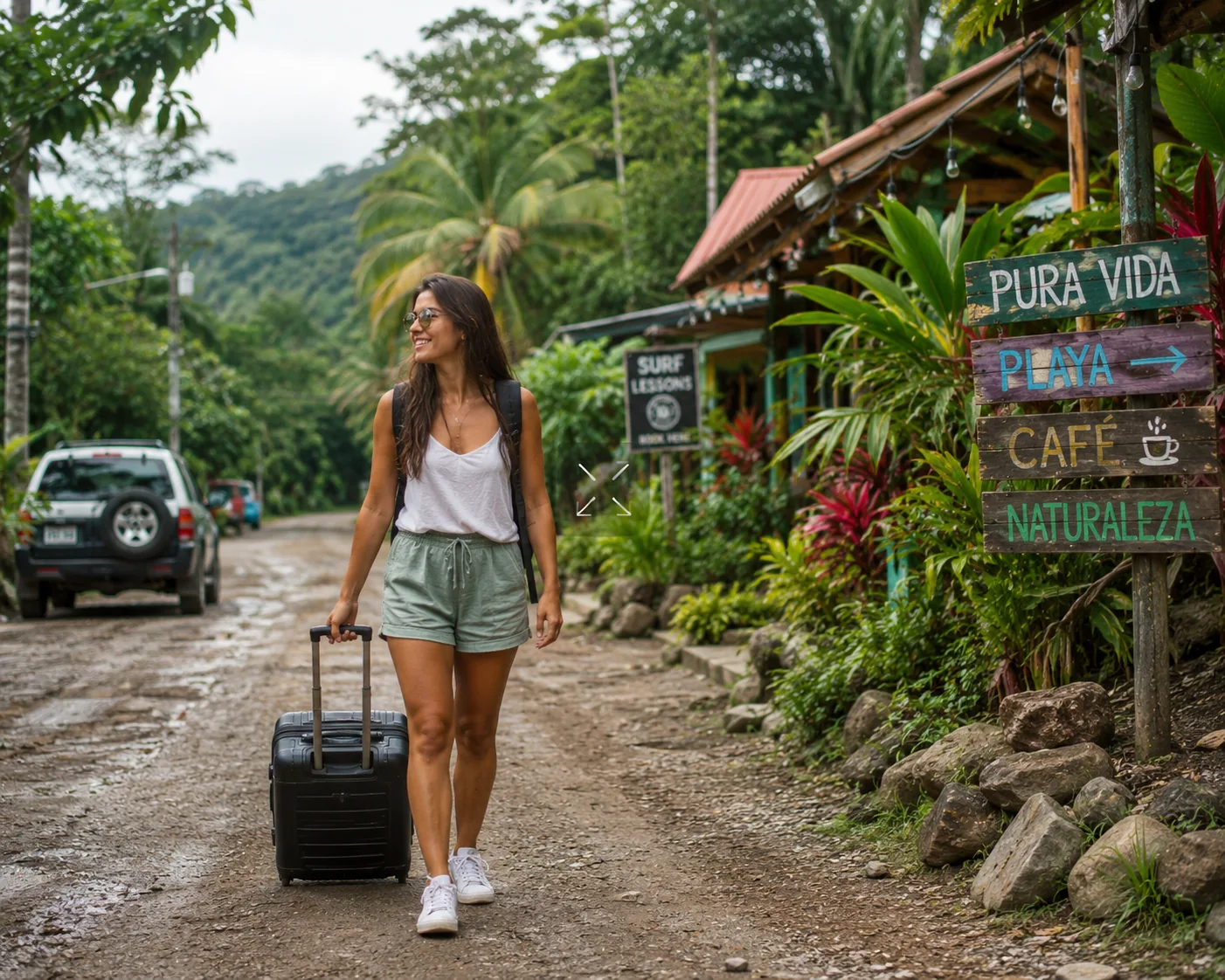
That said, most of Costa Rica still runs on cards and colones, so the practical stack covers both realities. Book accommodation in BTC before you arrive, use a crypto card at card terminals across the country, and use BTC directly at Bitcoin Jungle merchants in the Jaco area.
Bitcoin travel does not stop at the Costa Rican border. The global Bitcoin travel guide covers every destination on the circuit.
What Bitcoin Can Do for Travelers in Costa Rica
Costa Rica has the most active grassroots Bitcoin merchant economy in Central America. Bitcoin Jungle has enabled over 200 stores across Costa Rica to accept Bitcoin, concentrated along the Pacific Coast from Jaco through the Osa Peninsula. Restaurants, surf shops, accommodation, and local services in these areas accept BTC via Lightning Network, settling instantly in colonies for the merchant. For a BTC holder, this is as close to a functioning circular Bitcoin economy as you will find outside El Salvador.
For accommodation across the rest of the country, CoinBooking covers hotels, eco-lodges, and beach resorts across San Jose, La Fortuna, Manuel Antonio, Tamarindo, and beyond, paid directly in BTC at rates up to 30% below Booking.com and Expedia. A crypto Visa or Mastercard debit card handles card terminals at hotels, restaurants, and tour operators throughout the country. Bitrefill covers Uber credits and local top up options for mobile data.
USD is widely accepted alongside the colon in tourist areas, which means currency conversion is less of a concern here than in most destinations. The main friction point is accommodation cost, not currency access.
Is It Legal to Use Bitcoin While Traveling in Costa Rica? What You Should Know
Costa Rica has no law banning or restricting crypto. The Banco Central de Costa Rica has noted that BTC is not legal tender, but holding, trading, and spending it is not prohibited for residents or visitors. There are no declaration requirements for crypto wallets on arrival.
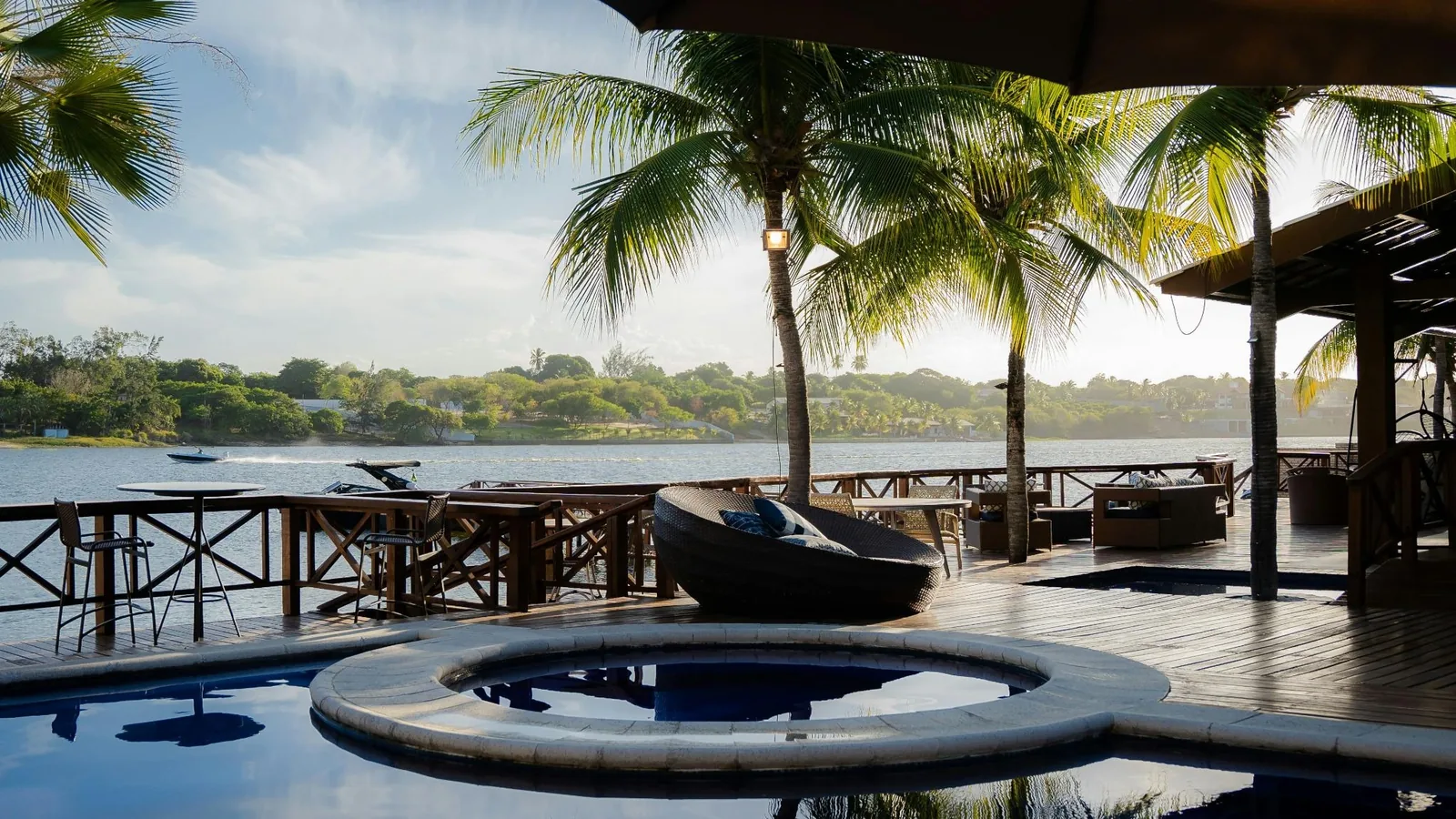
The Bitcoin Jungle community operates under voluntary merchant acceptance rather than a government mandate. Participating businesses choose to accept BTC because it saves them on card processing fees and attracts Bitcoin-holding customers. The Bull Bitcoin SINPE integration means even merchants who do not hold BTC can accept Lightning payments, with the conversion to colones happening automatically. Tourists can use BTC at participating merchants without any legal concern.
For general tourist spending outside the Bitcoin Jungle area, the crypto card and colones cash combination covers everything. Direct BTC acceptance outside Jaco and the Pacific Coast community is not widespread, so do not plan around it for the rest of the country.
in Costa Rica
10 Ways to Travel With Bitcoin in Costa Rica
Preparation matters more in Costa Rica than in most destinations on this list. Get accommodation and key experiences sorted before you land, and the Pacific Coast takes care of the rest.
1. Book Your Hotels and Eco-Lodges with CoinBooking
Costa Rica accommodation runs from budget surf hostels in Santa Teresa to eco-lodges in the Osa Peninsula and beach resorts along Guanacaste. For longer stays, which is how most people approach it, costs add up fast across several weeks.
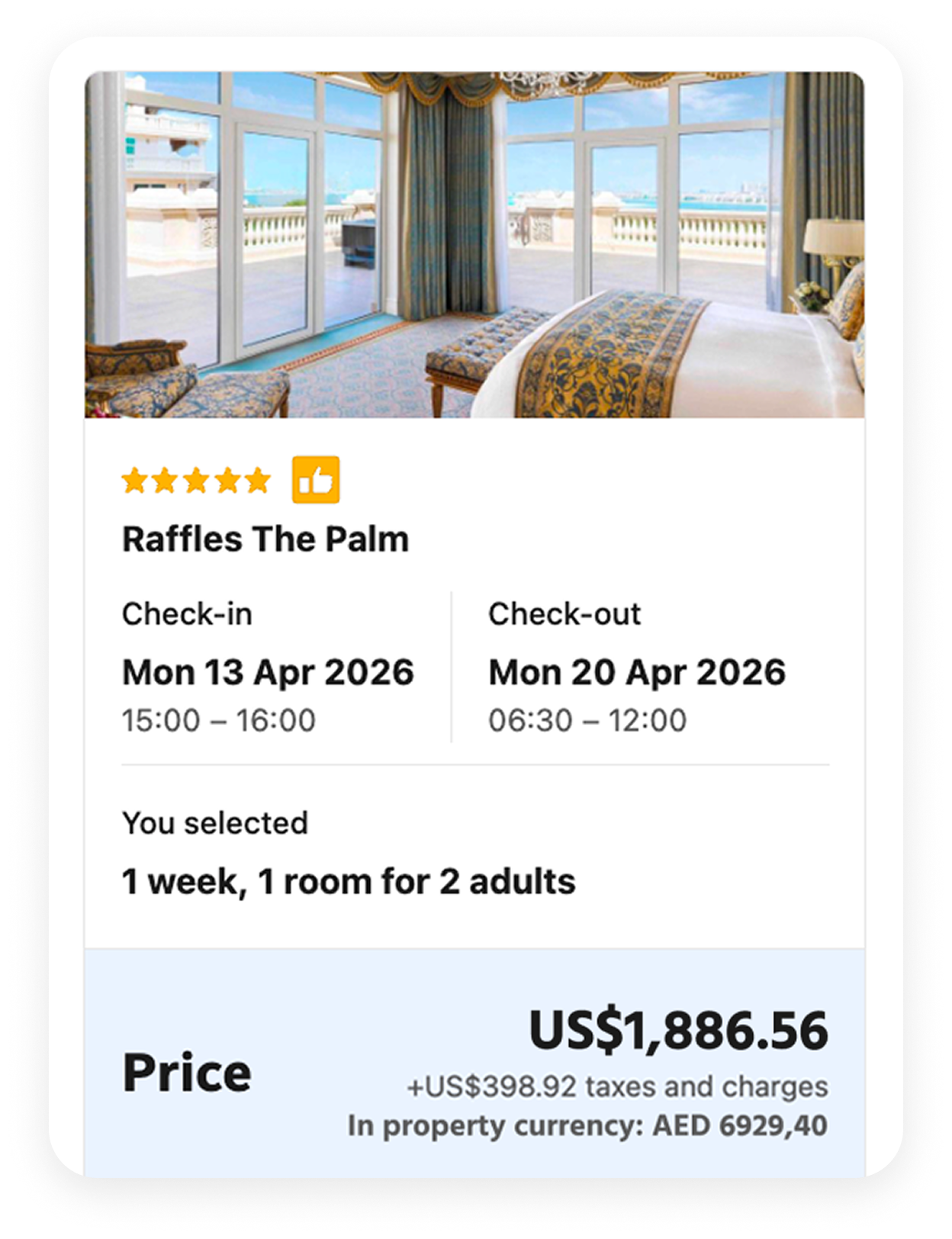
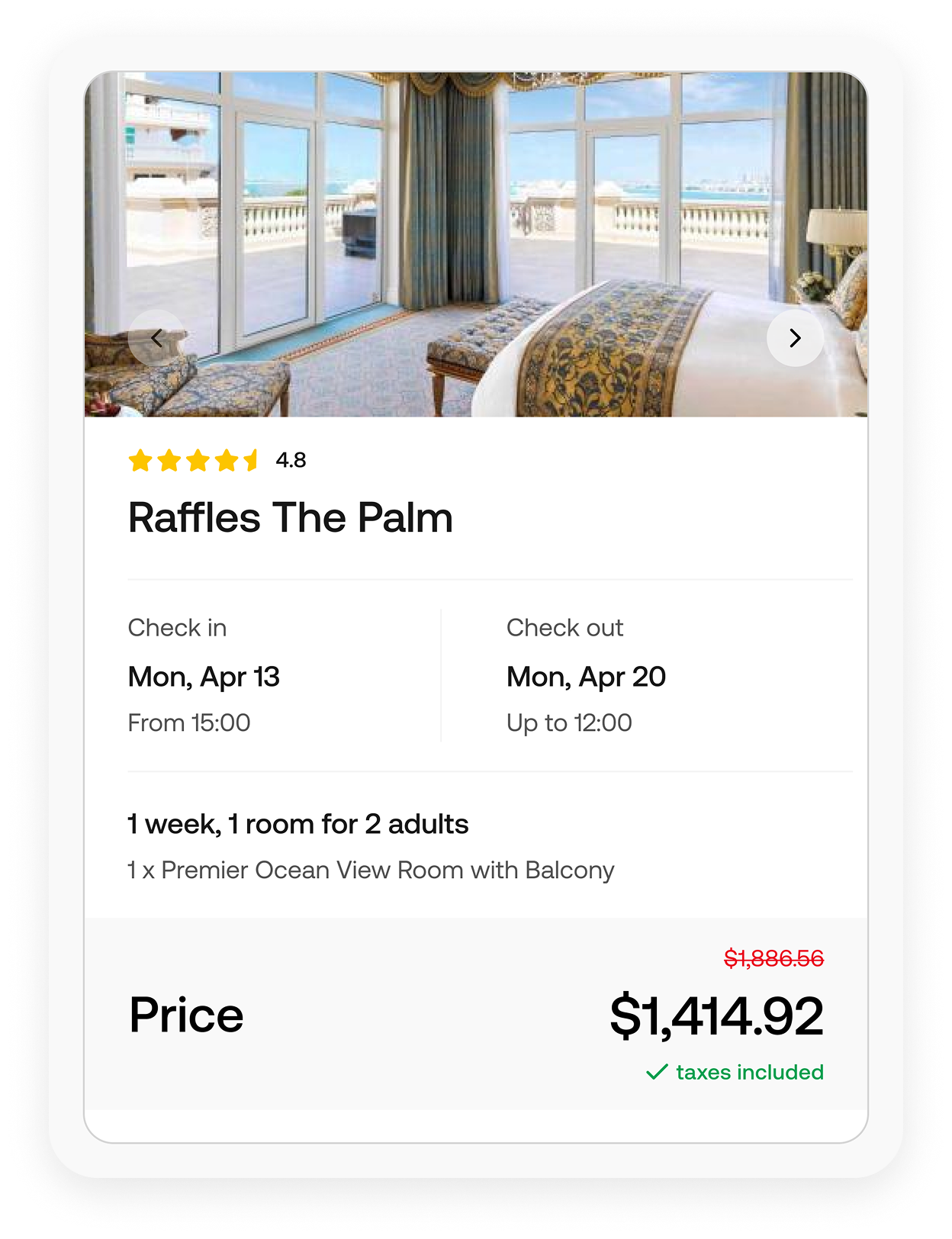
CoinBooking is a Dubai-based travel platform with hotel and eco-lodge rates up to 30% below Booking.com and Expedia, paid in BTC or any of 200+ other cryptocurrencies.


San Jose, La Fortuna, Arenal, Manuel Antonio, Tamarindo, Jaco, Santa Teresa, and properties around Corcovado and the Osa Peninsula are all covered, along with flights. For digital nomads planning a longer base here, that 30% adds up significantly across a month-long stay. The platform covers 190+ countries and 2M+ hotels and flights.
Just $870 Cheaper.

%201.png)
your first booking.
New users get $25 off their first booking.
South America next? Here’s how Bitcoin travel works in Argentina.
2. Book Tours and Experiences in Advance
Costa Rica's most popular experiences book out fast. Corcovado National Park requires permits and guided entry that fill weeks ahead during high season. Arenal zip line operators cap daily group sizes. Tortuguero canal tours run on fixed departure schedules with limited space. The Manuel Antonio area fills up during the December to April dry season, and the best guides and operators are gone first.
Platforms like Viator and GetYourGuide cover a wide range of Costa Rican tours and accept international card payment at checkout, where your crypto debit card works fine. Many local operators also take international cards or PayPal directly on their websites. Confirm payment options before booking.
3. Use a Crypto Debit Card for Day-to-Day Spending
Card acceptance in Costa Rica is strong across hotels, restaurants, supermarkets, and businesses that serve tourists in San Jose, La Fortuna, Manuel Antonio, Tamarindo, and Jaco. A Bybit Card, Crypto.com Visa, or Wirex card converts your BTC or USDT at the point of sale and works at any Visa or Mastercard terminal. USD is widely accepted in tourist areas, and your card settles in whichever currency the merchant charges.
Smaller sodas (local Costa Rican eateries), rural bus routes, market vendors, and some beach operators prefer cash. Keep a moderate amount of colones or USD on hand for these. Outside the main tourist corridors, cash remains the practical default.
4. Pay Directly with BTC at Bitcoin Jungle Merchants
Bitcoin Jungle is not a pilot program. It is a functioning Bitcoin circular economy built around the Pacific Coast communities of Jaco, Quepos, Dominical, Uvita, and the Osa Peninsula. Over 200 businesses across Costa Rica now accept BTC via Lightning Network, with the merchant receiving colones automatically through the SINPE integration. Restaurants, surf shops, accommodation, tour operators, and market vendors in these areas all participate.
To use it, download the Bitcoin Jungle app before you arrive. It works as a Lightning wallet and includes a map of all accepting merchants in the area. Payments confirm in seconds and cost nothing in fees. This is the most developed community Bitcoin economy in Central America, and spending BTC here is as frictionless as tapping a card. If you are heading to the Pacific Coast, it is worth using.
5. Get Around with Uber, Taxis, and Shared Shuttles
Uber operates in San Jose and some tourist corridors, accepting international Visa and Mastercard in the app. Your crypto debit card covers those rides. Outside San Jose, Uber coverage is inconsistent and restricted in some areas due to local taxi regulations.
Shared shuttles from operators like Gray Line and Easy Ride are the standard intercity tourist transport, connecting San Jose to La Fortuna, Manuel Antonio, Jaco, Tamarindo, and Monteverde. These accept card payment at booking, where your crypto debit card works. Local taxis and public buses run on cash in colones or USD. Keep some on hand for shorter hops.
6. Eat at Restaurants, Sodas, and Beach Bars
Restaurants across Costa Rica's tourist destinations generally accept cards. Your crypto debit card handles meals at restaurants with table service at hotels, upscale restaurants, and most beach bars in Tamarindo, Manuel Antonio, and La Fortuna. In the Bitcoin Jungle area around Jaco and Dominical, many of these same restaurants also accept BTC directly via Lightning.
Local sodas serving casado (the classic rice, beans, and protein plate) often prefer cash. Street food vendors and market stalls are cash only. A meal at a good soda costs very little in colones and is consistently better value than the restaurants aimed at tourists. Keep colones or USD on hand for these.
7. Buy a Tourist SIM or Top Up Mobile Data
Kolbi, Movistar, and Claro all have SIM counters at Juan Santamaria International Airport (SJO) in San Jose. Payment by card at the counter works, and your crypto debit card handles the purchase. Kolbi has the widest rural coverage in Costa Rica, which matters if you are heading to remote areas like the Osa Peninsula or Tortuguero. Data plans are reasonable.
If you prefer to arrive connected, Bitrefill sells eSIMs for Costa Rica purchased directly in BTC before you travel. Bitrefill also covers top up credit for local carriers if you need to reload during the trip. On the Pacific Coast in the Bitcoin Jungle area, a local SIM also makes it easier to use the Bitcoin Jungle app for payments.
8. Cover Airport Transfers from Juan Santamaria International
Juan Santamaria International Airport (SJO) is located about 20km from downtown San Jose. Uber operates from the airport pickup zone and accepts card payment through the app. Licensed official taxis (orange in color) also operate from the terminal at metered fares, payable in colones or USD cash. The app option gives you a fixed fare before you confirm.
For travelers heading directly from the airport to Pacific Coast destinations like Jaco or Manuel Antonio, shared shuttle services accept card booking in advance. Journey times vary: Jaco is about 90 minutes, Manuel Antonio about two and a half hours. Booking a shuttle in advance saves time in the arrivals hall.
9. Book Surf Lessons, Dive Trips, and Adventure Tours
Costa Rica's adventure tourism runs on advance bookings. Surf schools in Jaco and Santa Teresa cap class sizes. White water rafting on the Pacuare River and zip line operators in Monteverde and Arenal book out weeks ahead during the dry season. The best guides for Corcovado fill their permit slots months in advance.
Established operators accept Visa and Mastercard online, where your crypto debit card works at checkout. In the Bitcoin Jungle area, many surf schools and tour operators also accept BTC directly. On the ground, smaller operators and day trip boats may prefer cash. Carry colones or USD for anything you book after arrival.
10. Buy Costa Rican Gift Cards and Credits via Bitrefill
Bitrefill's Costa Rica catalog is focused but covers the essentials. Uber credits cover transport in San Jose and rides through the app, and telecom top ups for Kolbi, Movistar, and Claro keep your data running without hunting for a kiosk. All are purchasable directly in BTC, with codes arriving by email within minutes.
For travelers in the Bitcoin Jungle area, the Bitrefill catalog is a useful backup rather than the primary tool, since direct BTC acceptance at local merchants covers most of what you need. For the rest of Costa Rica, it fills the gap for transport apps and mobile data. Bitrefill requires no account.
If you plan a trip to America afterwards and prefer to convert to dollars first and spend locally? The full guide covers how that works across the US.
Frequently Asked Questions
1. Can I use Bitcoin directly in Costa Rica?
Yes. The Bitcoin Jungle community along the Pacific Coast has enabled over 200 businesses to accept BTC via Lightning Network. Restaurants, surf shops, and accommodation in the Jaco area all take BTC directly. Outside this community, a crypto debit card covers card terminals and cash covers the rest.
2. What is Bitcoin Jungle and how does it work for tourists?
Bitcoin Jungle is a community project started in 2021 that helps Pacific Coast businesses accept Bitcoin. The Bitcoin Jungle app is a free Lightning wallet with a built-in merchant map. Payments confirm in seconds with no fees. The Bull Bitcoin SINPE integration means merchants receive colones automatically. Download the app before you arrive.
3. Is Bitcoin legal in Costa Rica for tourists?
Yes. Costa Rica has no law restricting crypto. The Banco Central has stated BTC is not legal tender, but holding, trading, and spending it is not prohibited. No declaration is required on arrival. Bitcoin Jungle merchants operate under voluntary participation and tourists can spend BTC there without any legal concern.
4. Can I book hotels in Costa Rica with Bitcoin?
Yes. CoinBooking covers hotels and eco-lodges from San Jose and La Fortuna to Manuel Antonio, Tamarindo, Jaco, and the Osa Peninsula with direct BTC payment at checkout. Rates run up to 30% below Booking.com and Expedia. New users get $25 off their first booking.
5. What is the best crypto card for traveling in Costa Rica?
The Bybit Card, Crypto.com Visa, and Wirex card all work well. Each converts BTC or USDT at terminals and lets you withdraw colones at ATMs. USD is widely accepted in tourist areas. Prioritize a card with no foreign transaction fees.
6. How do I get Costa Rican colones from Bitcoin while traveling?
Use your crypto debit card at a Banco Nacional, BAC Credomatic, or Scotiabank ATM. Always decline dynamic currency conversion and settle in colones. In most tourist areas USD is accepted directly, so colones are mainly needed for sodas, local buses, and markets. Bring some USD cash as a backup.
Spending crypto is the easy part. 30% off is the good part.
Get up to 30% off all future hotels and flights.

Yaryna Dobrianska is a Dubai-based business and technology writer with a background in fintech and digital services. She covers cryptocurrency adoption, cross-border payments, and the practical realities of spending digital assets across emerging markets.
Her work at Polkastarter focuses on making Web3 accessible, breaking down how crypto moves through real-world financial systems, from payments infrastructure to on-chain adoption trends.
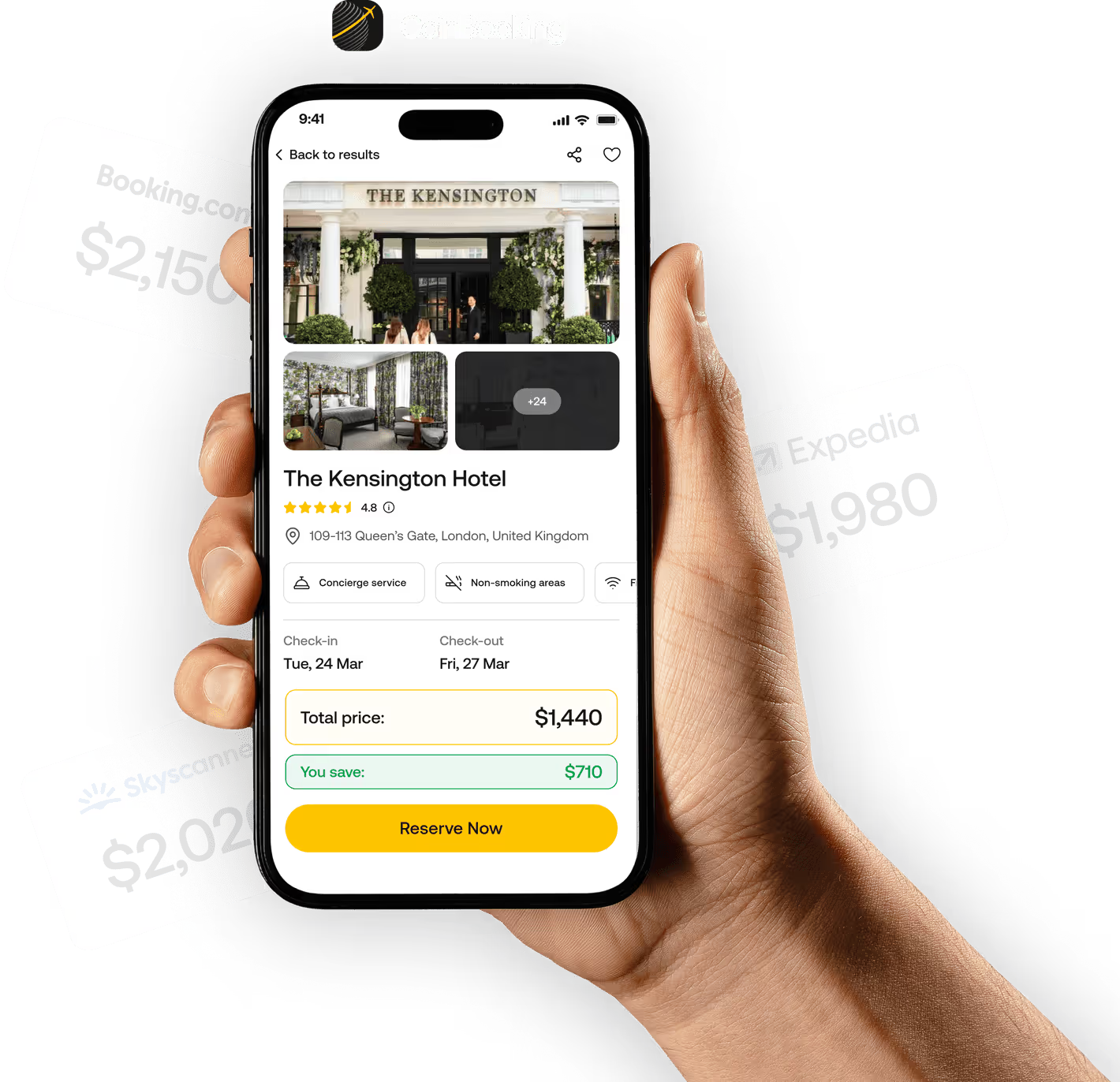
You just read 12 ways to spend crypto. This is the most valuable.
.avif)
You just read 12 ways to spend crypto. This is the most valuable.