.avif)
.png)
.avif)


Content
Top 12 Ways to Spend Bitcoin (BTC) and USDT in Dubai

From the beginning of 2025, virtual asset transaction volumes across regulated entities under VARA surged to nearly $680 billion, making Dubai the world's single largest licensed crypto market by volume. Crypto adoption rate in the UAE hit 31% in 2025 and daily active crypto traders exceed 500,000 with $56 billion in on-chain value flowing through the UAE between 2024 and 2025, a 33% increase year-over-year.

None of this happened by accident. Dubai built it deliberately: a dedicated regulator established in 2022, 70+ licensed platforms, zero VAT on crypto transactions since November 2024, and no personal income tax on crypto gains. Developers sell apartments directly in Bitcoin, the Gold Souk accepts USDT. In October 2025, the government tested paying official fees in crypto. Dubai holds crypto because it has chosen to lead the world in it.
See how crypto spending works in other parts of the world.
Can You Spend Bitcoin and USDT Directly in Dubai?
VARA-licensed businesses, luxury real estate developers, select Gold Souk dealers, hospitality businesses, and professional service providers accept BTC and USDT without conversion. Transaction volumes across VARA-regulated entities reached nearly $680 billion in 2025, driven by both retail and institutional participation.
For everything else, conversion to AED is fast and well-regulated. BitOasis is the oldest VARA-licensed local exchange with strong AED pairs. Rain offers zero trading fees with seamless local bank integration. Binance FZE holds a VARA license and provides the deepest global liquidity.
On the tax side, Cabinet Decision 100 (November 2024) eliminated VAT on all crypto transactions for individuals, retroactive to 2018. There is no personal income tax and no capital gains tax on individual crypto holdings in the UAE. If you hold residency elsewhere or a passport from a country with global taxation, your home jurisdiction may still require reporting. Consult a tax advisor before moving significant amounts.
Is It Legal to Use Bitcoin and USDT in Dubai? What VARA Means for You
VARA was established under Dubai Law No. (4) of 2022 as the world's first dedicated crypto regulator at the emirate level. Every exchange, broker, custodian, and payment processor serving Dubai residents must hold a VARA license. In October 2025, VARA fined 19 unlicensed crypto firms between AED 100,000 and AED 600,000 each, demonstrating that enforcement is active, not theoretical.
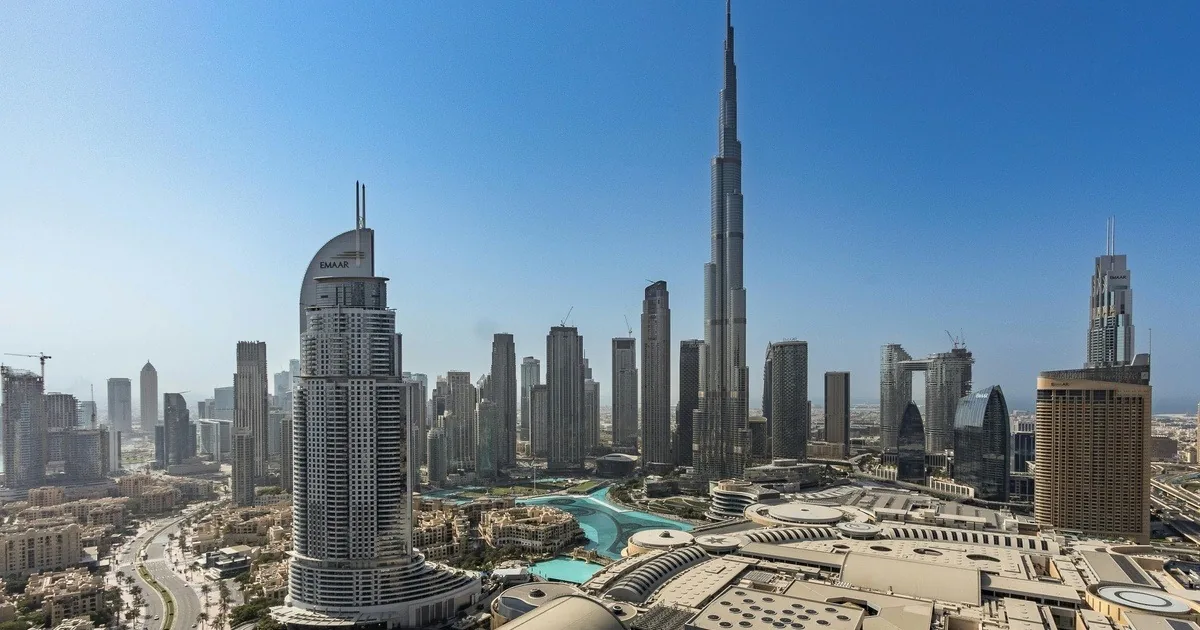
For individual users, VARA means the platforms you use have been audited, meet capital requirements, and comply with international AML and KYC standards. In July 2025, a Dubai court ruled that employers and employees can legally agree to salary payments in crypto if the employment contract specifies this. The city's commitment to crypto as a legitimate financial instrument is embedded in its legal infrastructure.
in Dubai
12 Ways to Spend Bitcoin (BTC) and USDT in Dubai
1. Book Hotels and Flights with Bitcoin or USDT
The infrastructure for spending cryptocurrency on travel has matured significantly, yet most booking platforms continue to operate exclusively in fiat. For crypto holders, this creates an unnecessary friction point: converting assets, absorbing exchange losses, and navigating banking intermediaries simply to confirm a hotel room or a flight.
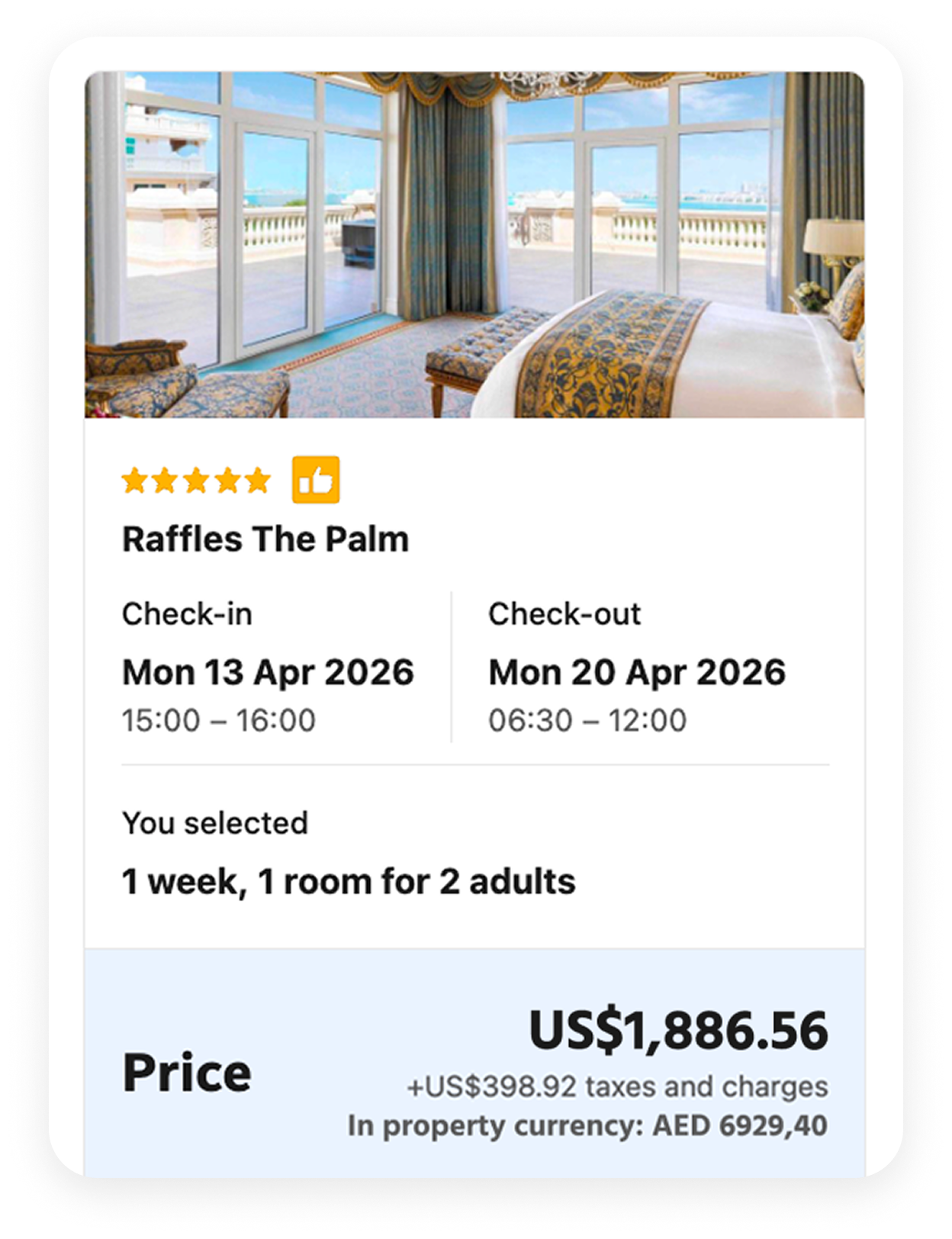
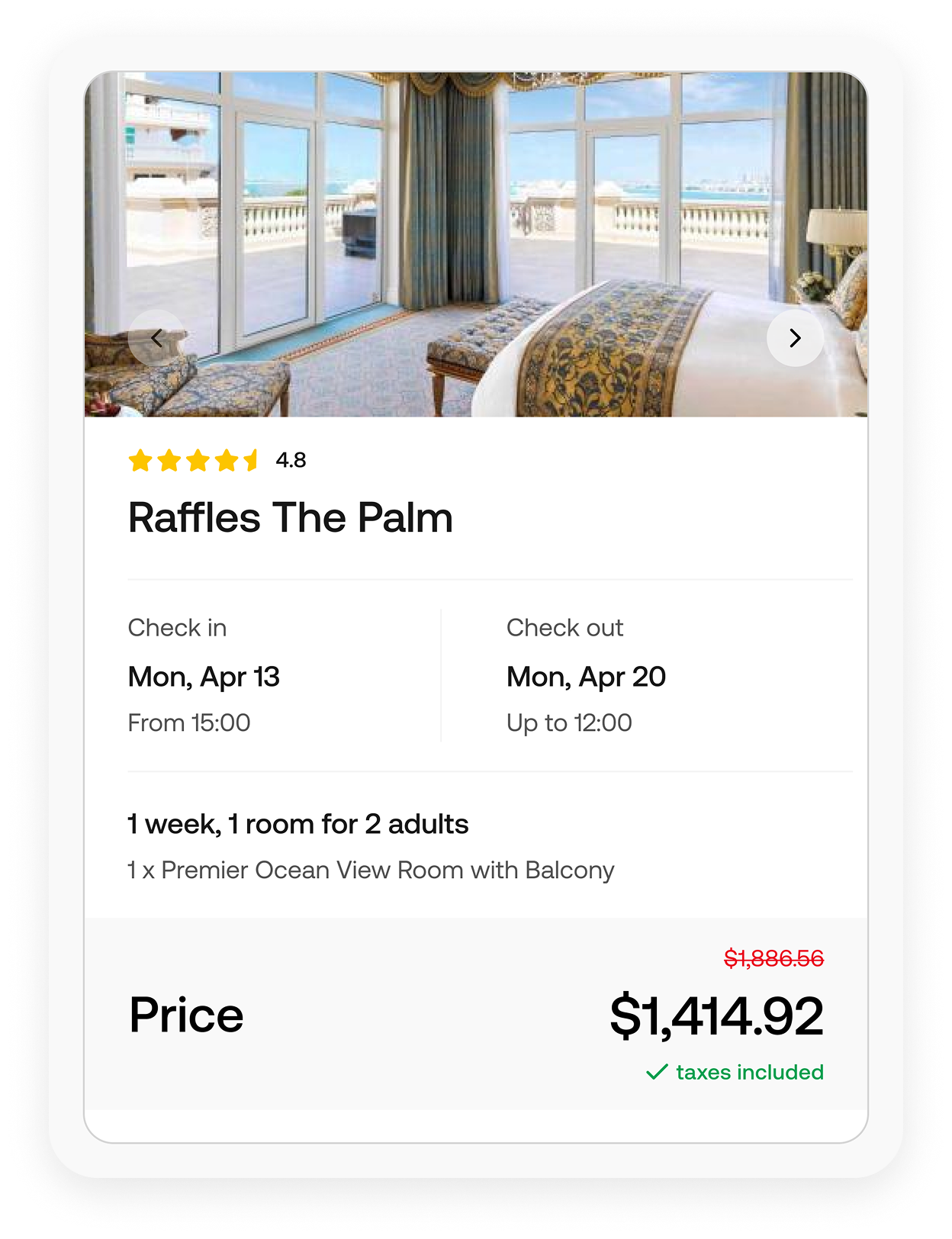
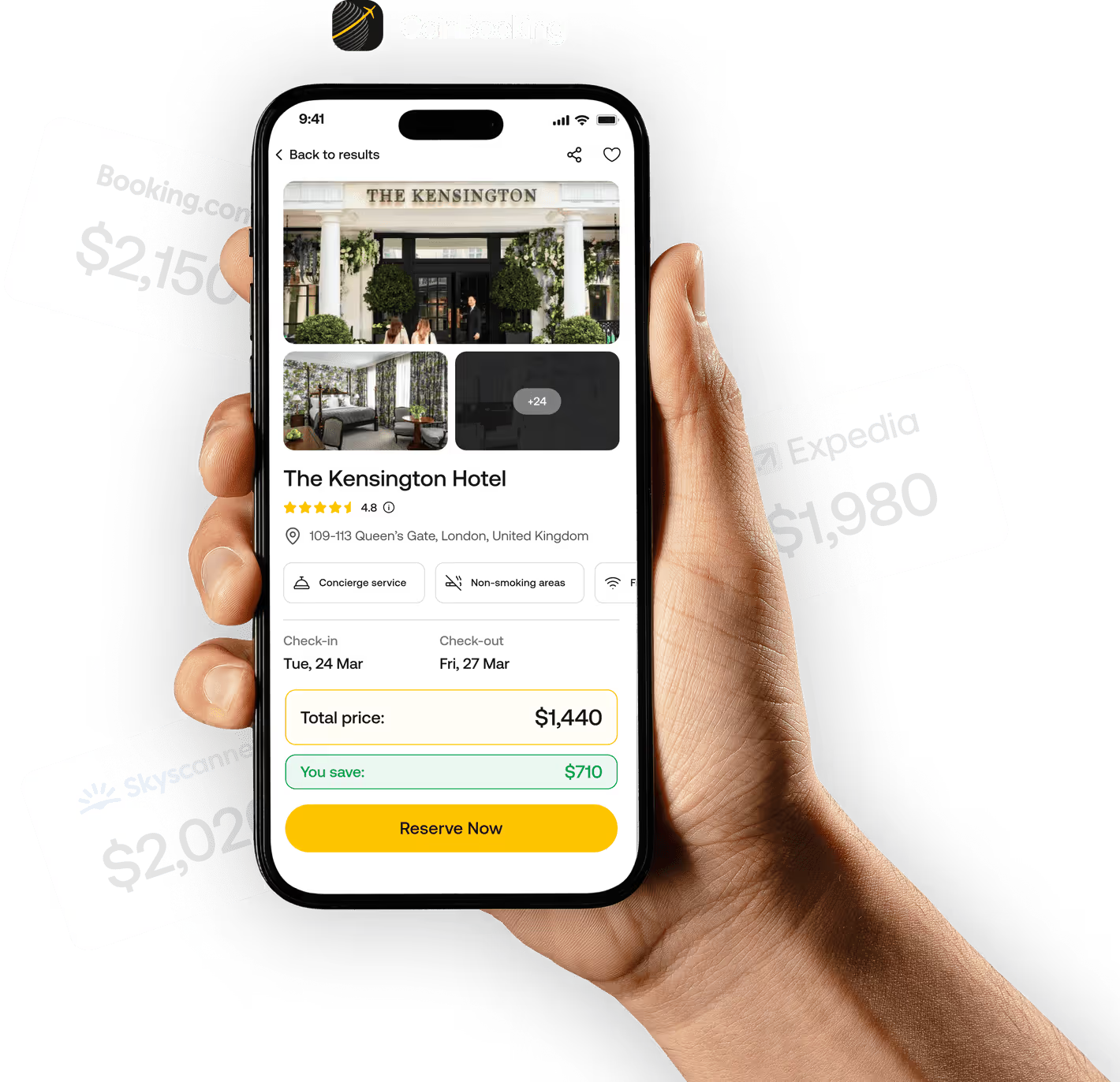
CoinBooking addresses this directly. It’s a locally licensed travel platform with rates that run up to 30% below those listed on Booking.com and Expedia for identical properties and dates. Payment is accepted in Bitcoin, USDT, and over 100 additional cryptocurrencies which means travellers arriving into Dubai can get their accommodation settled in USDT long before they arrive.


For residents booking outbound travel, the 30% price difference applies consistently across properties and dates, making CoinBooking a more economical choice than any conventional platform on the market.
They have coverage across more than one million properties in 190+ countries and flights available on Emirates, flydubai, Qatar Airways, Etihad, and major international carriers.
Just $870 Cheaper.

%201.png)
your first booking.
First-time users receive $25 off their initial booking.
Read our full guide to spending Bitcoin after converting to AED in Dubai.
2. Use a Crypto Debit Card for Everyday Spending
Dubai's retail environment is among the most card-terminal-dense in the world. The Mall of the Emirates, Dubai Mall, JBR Walk, and City Walk all have near-universal contactless terminal coverage. A crypto debit card is the most practical daily spending tool in this environment.
Oobit is the confirmed option: Tether-backed, accepted at over 150 million Visa merchants globally, and compatible with Apple Pay and Google Pay. You connect a self-custody wallet, complete KYC via Sumsub, and the virtual card is active the same day. At any terminal, USDT or BTC converts to AED at the live rate and the merchant receives a standard Visa payment.
3. Buy Gift Cards and Top-ups via Bitrefill
For digital purchases where direct crypto or card acceptance is unavailable, Bitrefill covers the gap. UAE mobile operators e& and du are available for prepaid top-up in BTC or USDT. Google Play, Steam, PlayStation Network, Netflix, and Xbox Game Pass gift cards are all stocked.
Dubai's expat population spans over 200 nationalities, many of whom use platforms and services from their home countries that do not accept UAE-issued cards or AED payments. A gift card purchased in USDT works regardless of where the platform is based, what currency it bills in, or which country the buyer is from.
4. Spend USDT Directly with VARA-Licensed Businesses
Palazzo Versace Dubai accepts Bitcoin and Ethereum via Binance Pay for rooms, dining, and spa. Majid Al Futtaim integrated Binance Pay across Mall of the Emirates and 28 other UAE properties in 2025. Day to Day Hypermarket was the first supermarket in the UAE to accept BTC, ETH, and USDT in-store and online. CÉ LA VI, the rooftop restaurant at Address Sky View, accepts USDT and Bitcoin. In every case, you pay in crypto and the merchant receives AED through a VARA-licensed processor.
Check VARA's registry at vara.ae before transacting to confirm a business is licensed.
5. Buy Property or Pay Rent in Crypto
Damac Properties accepts Bitcoin, Ether, and stablecoins for luxury off-plan projects in Business Bay, Dubai Marina, and Damac Hills. Emaar, the developer behind Burj Khalifa, accepts crypto on select developments through licensed partners. Nakheel, Ellington, Omniyat, and Arada round out the confirmed list. In July 2025, the Dubai Land Department signed a strategic agreement with Crypto.com to advance digital property transactions and fractional ownership.
For property purchases, payment runs through VARA-licensed intermediaries that convert crypto to AED before DLD registration. Work with a licensed broker experienced in crypto transactions and complete full KYC checks before proceeding.
For rentals USDT payment is increasingly common for high-end leases in Downtown, DIFC, JBR, and Palm Jumeirah. Landlords route payments through licensed gateways. Agree terms in writing and confirm the payment processor before sending funds.
6. Buy Gold at the Dubai Gold Souk
The Dubai Gold Souk in Deira is one of the world's most famous gold markets, with over 380 retailers and among the most competitive gold prices globally due to the UAE's low import duties.
Some Gold Souk dealers accept BTC and USDT directly, though this is not universal. The more reliable route is to convert BTC or USDT to AED via BitOasis or Binance FZE, receive AED to a UAE bank account, and purchase directly at the Souk in cash or by card. Dubai gold prices track the international spot price closely, and the UAE's zero personal income tax means any gain from later selling is untaxed for UAE residents.
For digital gold exposure without physical conversion, PAXG and Kinesis tokens can be held in a crypto wallet, tracking the spot price with the ability to redeem for physical bars at selected vaults.
7. Shop on Noon.com or Amazon.ae
Noon.com is the UAE's largest homegrown e-commerce platform. Amazon.ae operates across the same categories with Prime delivery. Neither takes crypto at checkout directly.
The conversion route is fast. Sell BTC or USDT on BitOasis or Binance FZE, receive AED via Aani to any UAE bank account in under two minutes, and pay by card or Apple Pay at checkout. For Noon specifically, Noon Pay's in-app wallet accepts card top-ups and buy-now-pay-later options that can be loaded from an AED bank account funded from a crypto conversion. The gap between holding USDT and completing a Noon checkout is genuinely small in Dubai's financial infrastructure.
8. Order Food via Talabat or Deliveroo
Talabat is the dominant food delivery platform across the UAE. Deliveroo operates in premium areas including DIFC, Downtown, and Dubai Marina. Both require a card or wallet payment rather than direct crypto.
The Oobit card is the cleanest route: fund from USDT, set as the default payment method in Talabat or Deliveroo, and orders processed as standard Visa transactions. For Dubai residents who maintain AED balances, a standard bank card works equally well. The crypto route here suits visitors or residents who prefer to keep balances in USDT and convert at the point of use rather than maintaining a standing AED account.
9. Pay for Luxury Experiences and Activities
Desert safari operators, yacht charter companies, helicopter tour providers, skydiving operators, and luxury private dining experiences represent a spending category where Dubai specifically caters to crypto-native clients.
A growing number of Dubai experience providers accept crypto directly or via licensed payment processors, particularly for bookings made by international visitors who hold BTC or USDT as their primary liquid asset. The Oobit card works at any point-of-sale terminal for in-person experiences. For experiences booked online and priced in AED or USD, the card handles the transaction as a standard Visa payment.
For the highest-value experiences, particularly yacht charters and private aviation, USDT settlement is increasingly offered directly. Verify with the operator before booking and confirm whether a VARA-licensed payment processor is involved.
10. Send Money Home as an Expat Worker
The UAE is one of the world's largest sources of outbound remittances. Expats in Dubai send over $47 billion abroad annually. Top corridors include India, Pakistan, Philippines, Bangladesh, Egypt, and Nepal. Traditional exchange houses such as Al Ansari charge 2 to 5% in fees and take one to three business days.
USDT remittances via Binance FZE or direct wallet transfer cut both costs and time. An expat in Dubai buys USDT on a VARA-licensed exchange, sends it directly to the recipient's wallet in their home country, and the recipient converts locally. The transfer settles in minutes. For regular monthly transfers, the fee saving compounds significantly over a year.
Sending USDT home to Pakistan? See exactly how your family can use it.
11. Pay for Business and Professional Services
Dubai is a significant business hub for company formation, financial consulting, legal services, and technology work. The DMCC Free Zone alone hosts over 600 Web3 companies, and the broader UAE now has over 1,800 crypto firms employing more than 8,600 people.
Company formation agents in free zones including DMCC, DIFC, and Dubai South increasingly quote and accept USDT for their fees. Lawyers specialising in crypto and international corporate work routinely settle invoices in USDT. Accountants serving the crypto community do the same. For international clients paying Dubai-based contractors, USDT avoids the bank wire overhead and the AED conversion step entirely.
12. Gaming, Streaming and Digital Subscriptions
Dubai has one of the highest internet penetration rates in the world at over 99%, and a population that skews young, professional, and digitally active. Steam, PlayStation Store, Xbox, Netflix, Spotify, and YouTube Premium all have strong usage across the expat community.
Unlike most other markets in this series, UAE bank cards work on international platforms without regional restrictions. The crypto angle here is primarily about convenience and preference rather than solving a card decline problem. Bitrefill covers PSN credit, Steam Wallet codes, Google Play, and Netflix gift cards in BTC or USDT. For someone who keeps most liquid assets in crypto and prefers not to maintain a standing AED bank balance, buying a gift card in USDT is faster than converting to AED and buying by card.
For recurring subscriptions, the Oobit card set as the default payment method handles renewals automatically from a USDT balance, without manual intervention each cycle.
Frequently Asked Questions
1. Is Bitcoin legal in Dubai?
Yes, fully. Dubai established VARA under Law No. (4) of 2022 as the world's first dedicated crypto regulator at the emirate level. Buying, selling, holding, and spending BTC and USDT is completely legal for individuals and businesses. In November 2024, Cabinet Decision 100 eliminated VAT on crypto transactions, making Dubai one of the most tax-efficient crypto jurisdictions globally.
2. What is VARA and how does it affect crypto users in Dubai?
VARA is Dubai's Virtual Assets Regulatory Authority, established in 2022. It licenses and supervises every exchange, broker, custodian, and payment processor serving Dubai residents outside the DIFC. Over 70 VASPs hold active VARA licenses as of 2025, including Binance FZE, BitOasis, Bybit, OKX, Rain, and Crypto.com. For individual users, VARA means the platforms you use have been audited and must meet capital, AML, and KYC standards.
3. Can I book hotels and flights with Bitcoin in Dubai?
Yes. CoinBooking offers rates up to 30% below Booking.com and Expedia on the same properties. It accepts Bitcoin, USDT, and 100+ other cryptocurrencies for over one million hotels worldwide and flights on major carriers including Emirates. First-time users receive $25 off their first booking. For on-the-ground spending in Dubai, a crypto debit card such as Oobit covers any merchant that accepts Visa.
4. Do I pay tax on Bitcoin in Dubai?
No personal income tax and no capital gains tax on individual crypto holdings in the UAE. Cabinet Decision 100 (November 2024) eliminated VAT on crypto transactions retroactive to 2018. This covers trading, staking, DeFi yields, and NFT sales for individuals. UAE corporate tax introduced in 2023 may apply to businesses. If you hold residency or citizenship elsewhere, your home country may still require reporting: US citizens are subject to IRS obligations regardless of residence. Consult a tax advisor who understands both UAE and your home jurisdiction.
5. Can I use a crypto debit card in Dubai?
Yes. Dubai's terminal density is among the highest in the world and a Visa card works at essentially every merchant across the city. Oobit is the confirmed option: Tether-backed, accepted at over 150 million Visa merchants, issued the same day as KYC approval via Sumsub, and compatible with Apple Pay and Google Pay. In Dubai specifically, direct crypto acceptance at the point of sale is also expanding: Majid Al Futtaim integrated Binance Pay across its malls and hotels in 2025, allowing direct payment in Bitcoin and other assets at select merchants.
6. Which exchanges are VARA-licensed to operate in Dubai?
Over 70 VASPs hold active VARA licenses as of 2025. The most established include Binance FZE, BitOasis , Rain, Bybit, OKX, and Crypto.com. BitOasis and Rain are the strongest options for residents who primarily work in AED. Always verify current status on VARA's public registry at vara.ae before depositing funds.


Spending crypto is the easy part. 30% off is the good part.
Get up to 30% off all future hotels and flights.

Yaryna Dobrianska is a Dubai-based business and technology writer with a background in fintech and digital services. She covers cryptocurrency adoption, cross-border payments, and the practical realities of spending digital assets across emerging markets.
Her work at Polkastarter focuses on making Web3 accessible, breaking down how crypto moves through real-world financial systems, from payments infrastructure to on-chain adoption trends.
Your $25 is waiting. So is up to 30% off every trip you'll ever take.
.avif)
Your $25 is waiting. So is up to 30% off every trip you'll ever take.