.avif)
.png)
.avif)


Content
Fake Pokemon Cards Are Up 125 Percent: Inside PSA's $200 Million Fraud Report

The collecting boom has a shadow, and PSA just measured it. The grading giant's fraud report identified more than $200 million in counterfeit and altered cards, and that is only what got caught, with counterfeit submissions up 250 percent as a share of the queue and fake Pokemon cards up 125 percent in a single year. Here are the numbers, the fresh federal conviction that shows the enforcement side waking up, and the habits that keep your collection clean.
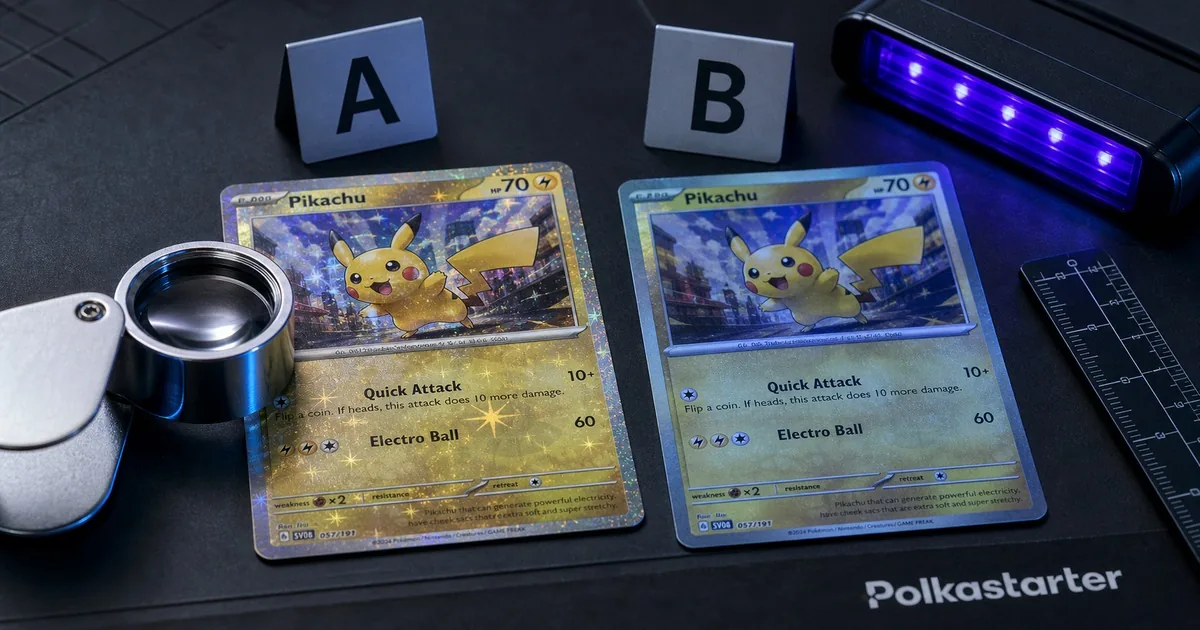
What PSA's Report Found
PSA released its fraud report on May 7, covering what the company detected and intercepted across 2025, and the coverage wave it set off is still building. The core findings:
- Over $200 million in counterfeit and altered cards identified across all categories, a figure PSA calls conservative, valued at PSA 10 levels the intercepted material could represent more than $1 billion.
- Counterfeit and altered cards rose 45.3 percent in 2025, and counterfeit submissions grew 250 percent as a share of everything sent in.
- The $200 million reflects only what was caught at the grading desk, not the fakes changing hands raw on marketplaces, the true circulating number is unknowable and larger.
- PSA fights the surge with AI trained on a reference library of authentic, altered, and counterfeit cards, flagging irregularities alongside human graders.
Pokemon Is the Target
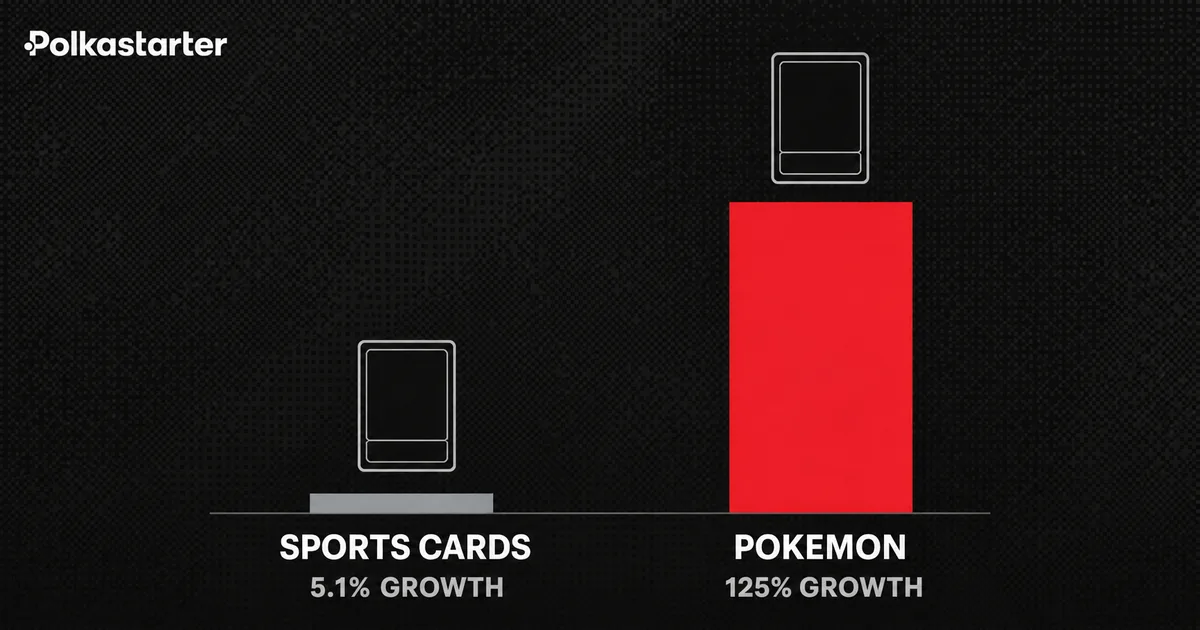
The category split is the story. Counterfeit sports cards grew 5.1 percent. Counterfeit Pokemon cards grew 125 percent, the fakers followed the money, and the money went to Pokemon. Coverage of the report lists Pokemon alongside Michael Jordan, Mickey Mantle, and Tom Brady as the most-targeted names, and the flood of fake Pokemon product has become its own news cycle this month.
The enforcement side is moving too. A federal court in New York just convicted the perpetrator of a nationwide fraud scheme that moved roughly $2 million in fake sports and Pokemon cards, including counterfeit Michael Jordan material. Convictions like that are rare, the report's numbers explain why prosecutors are starting to care.
The Boom's Dark Side
None of this is happening in a vacuum. We measured the boom this week, a record $1.36 billion in eBay card sales in six months and record auction halves, in our collecting boom breakdown, and we wrote the warning in the same piece, booms breed hype, and hype breeds fakes. PSA's report is that warning with a dollar figure attached.
The mechanics are simple. Record prices make counterfeiting profitable, record submission volume gives fakes more chances to slip through, and the 11-million-card grading backlog means more raw cards trading ungraded while owners wait, our PSA backlog coverage has that side of the squeeze. More money, more volume, more raw cards in motion, the fraud surge is the boom's mirror image.
How Not to Get Burned
The defense has not changed, the stakes have. The habits that work:
- Learn the tells and check every valuable card. Print quality, texture, fonts, colors, the back's blue, our how to tell if a Pokemon card is fake guide walks the full inspection, and it matters twice as much in a 125 percent growth year.
- Buy graded where the money is real. A slabbed card from PSA or CGC carries the authentication the report describes, and always verify the cert number on the grader's site, fake slabs exist too.
- Too cheap is a tell, not a deal. Price every purchase against recent sold listings, a grail at half market from an anonymous seller is the oldest red flag in the hobby.
- Watch for resealed product. Packs and boxes get opened, searched, and resealed, the red flags are in our mystery box honesty guide.
- Buy from accountable platforms. A marketplace with a real company behind it, support, and a reputation to lose beats an anonymous seller every time, and that gap widens as the fakes multiply.
Frequently Asked Questions
How big is the fake trading card problem?
PSA's fraud report identified more than $200 million in counterfeit and altered cards detected in 2025 alone, a conservative figure that could exceed $1 billion at top-graded values, with counterfeit submissions up 250 percent as a share of everything sent in. And that only counts what reached a grading desk, fakes sold raw on marketplaces are on top of it.
Why are fake Pokemon cards increasing?
Because the money moved there. PSA's report shows counterfeit Pokemon cards grew 125 percent in a year against 5.1 percent for sports cards, tracking the record demand and prices of the Pokemon boom. High values, huge submission volume, and a long grading backlog that keeps more cards trading raw all give counterfeiters more opportunity than ever.
How do I avoid buying fake Pokemon cards?
Inspect every valuable card against the known tells, buy graded copies for serious money and verify the cert number on the grader's site, treat too-cheap listings as red flags rather than deals, be wary of resealed packs and boxes, and prefer accountable platforms over anonymous sellers. A few minutes of checking is the cheapest insurance in the hobby.
Where to Go From Here
The boom brought the money and the money brought the fakers, that is the whole story in one line. The answer is not fear, it is habit, check the card, verify the slab, price against sold data, and buy where someone is accountable. The Polkastarter marketplace is built on that side of the line, graded cards, a real platform, and Lootboxes that list every card, value, and chance before you open, with your first one free at signup.
News content, figures are PSA's published report covering 2025 as released May 7, 2026, the conviction is per the Department of Justice, and nothing here is investment advice.
Sources
- SI — $200M in fake cards: PSA's new report reveals a growing threat
- Sports Collectors Digest — fraud and counterfeit cards rampant, PSA report shows
- Star City Games — drastic increase in counterfeit TCG submissions
- Yahoo Finance — fake Pokemon cards are flooding the market
- DOJ SDNY — nationwide sports and Pokemon card fraud conviction
.png)


Ilknur Gubel is a social media manager at Polkastarter. Ilknur has spent the past four years working as a project manager, marketing manager, and social media strategist across Web3. She has held marketing and project management positions at several crypto companies, including Polygen, Nitro League, Kaizen.Finance, and ChainPort.
At Polkastarter she has covered trading card releases, collectible market pricing, and how token holders can spend crypto on real cards and videogames.
Based in Istanbul, Ilknur earned a bachelor's degree in sociology from Istanbul Aydın University.
You can connect with her on LinkedIn for more information.