.avif)
.png)
.avif)


Content
Top 10 Ways to Travel With Bitcoin (BTC) in the Philippines

GCash holds 89% of the Philippine mobile wallet market, and digital payments now account for 59% of all transactions in the country. Both numbers reflect a payment revolution built entirely around Philippine nationals. GCash requires a Philippine phone number and national ID. Maya is the same. For international visitors, 59% of transactions are effectively inaccessible without local credentials most tourists cannot realistically obtain for a short stay.
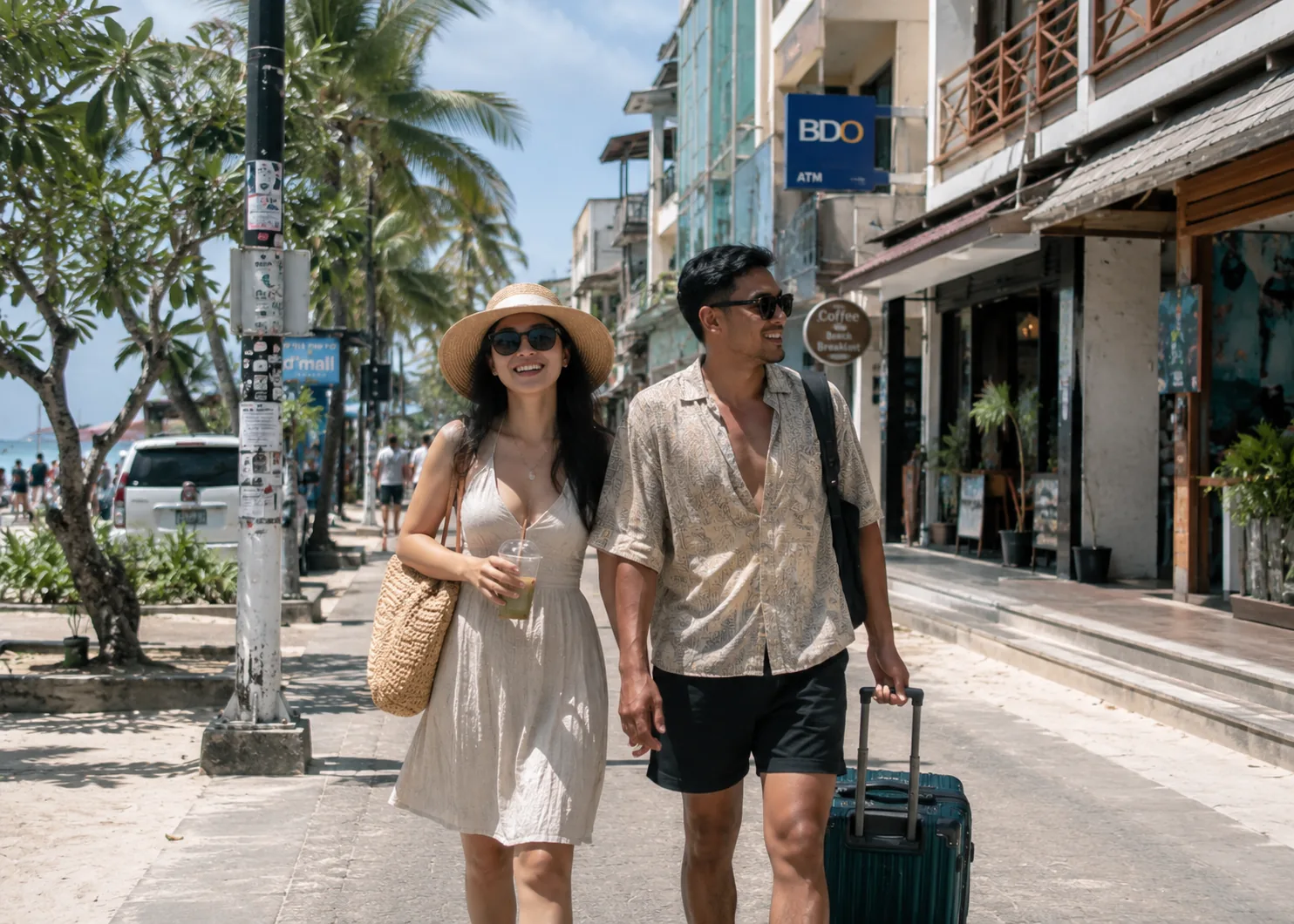
For a BTC holder, the answer is to bypass those rails entirely rather than trying to access them. Book accommodation before you arrive in BTC, use a crypto debit card at hotels and restaurants that take card on the ground, and carry Philippine peso cash for island transport, local food spots, and dive operators that run on cash only.
Most Southeast Asia trips start here and keep going. The global Bitcoin travel guide covers how BTC works at every stop.
What Bitcoin Can Do for Travelers in the Philippines
Crypto ownership in the Philippines rose to between 22% and 23% of the population, up from 17.8% the previous year, driven largely by remittances. That makes it one of the highest adoption rates in Southeast Asia. The infrastructure exists, but it is built around local users and local payment methods. For tourists, the useful tools are the international ones.
The most useful tool before the trip is CoinBooking, a Dubai-based travel platform with hotel and flight rates up to 30% below Booking.com and Expedia, paid directly in BTC at checkout. It covers Manila, Cebu, Boracay, Palawan (El Nido and Coron), Siargao, and the wider island circuit. A crypto Visa or Mastercard debit card handles card terminals at hotels, restaurants, and malls across major cities and resort towns. Bitrefill covers Grab credits and local top up options, which is the practical workaround for apps that default to GCash or Maya at checkout.
PHP cash fills the rest. Tricycles, jeepneys, local carinderias, market stalls, and most island-hopping and dive operators run on cash. Withdraw in provincial capitals or cities before heading to smaller islands where ATMs can be limited.
Is It Legal to Use Bitcoin While Traveling in the Philippines? What You Should Know
Crypto trading and holding is fully legal in the Philippines under the BSP's Virtual Asset Service Provider licensing framework, in place since 2017. The BSP has licensed exchanges including Coins.ph, PDAX, and others under this framework, making the Philippines one of the more developed regulatory environments in Southeast Asia.
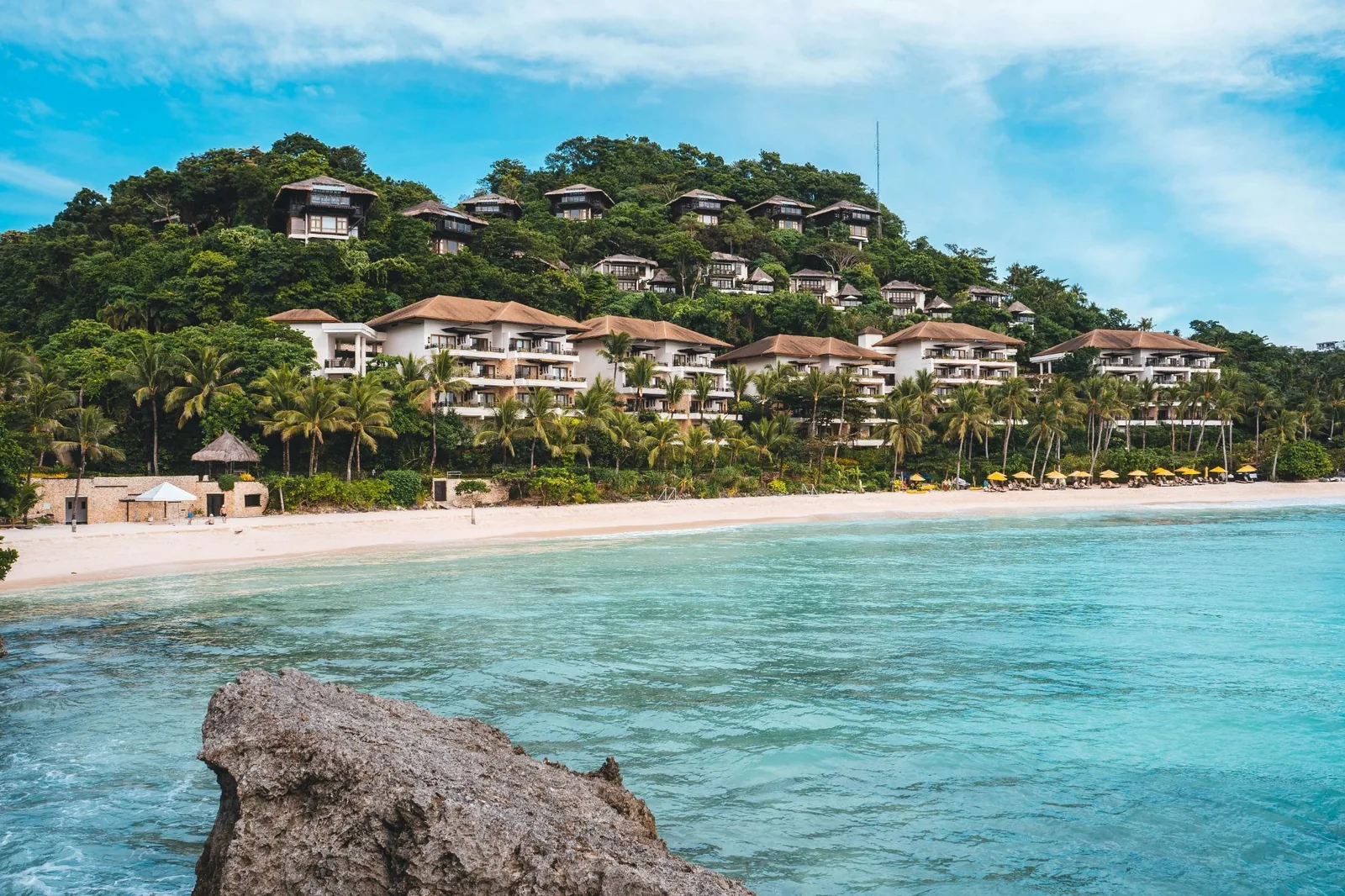
Tourists face no restrictions on holding BTC or transacting on international platforms. The gap is practical, not legal: GCash and Maya, which handle the majority of local digital payments, require a Philippine ID and local phone number that most visitors cannot easily obtain. International platforms like CoinBooking and a crypto debit card sit entirely outside that system.
Direct BTC payments to merchants are not mainstream but exist informally at some businesses in Manila and Cebu. For most tourist spending, the crypto card and PHP cash combination covers everything without needing to locate accepting merchants.
in the Philippines
10 Ways to Travel With Bitcoin in the Philippines
Island-hopping the Philippines takes preparation. A few things are best locked in before you land.
1. Book Your Hotels and Resorts with CoinBooking
Philippine accommodation covers a wide range, from guesthouses in Siargao to luxury beach resorts in Palawan and business hotels in Makati. Booking through a mainstream platform with a foreign card often adds surcharges on top of already significant resort rates.
CoinBooking is a Dubai-licensed travel platform with hotel and resort rates up to 30% below Booking.com and Expedia, paid in BTC or any of 200+ other cryptocurrencies.

Manila, Cebu, Boracay, El Nido, Coron, and Siargao are all covered, with flights for itineraries that mix a Manila arrival with a domestic hop to Palawan or the Visayas. The platform covers 190+ countries and 2M+ hotels and flights.
Just $870 Cheaper.

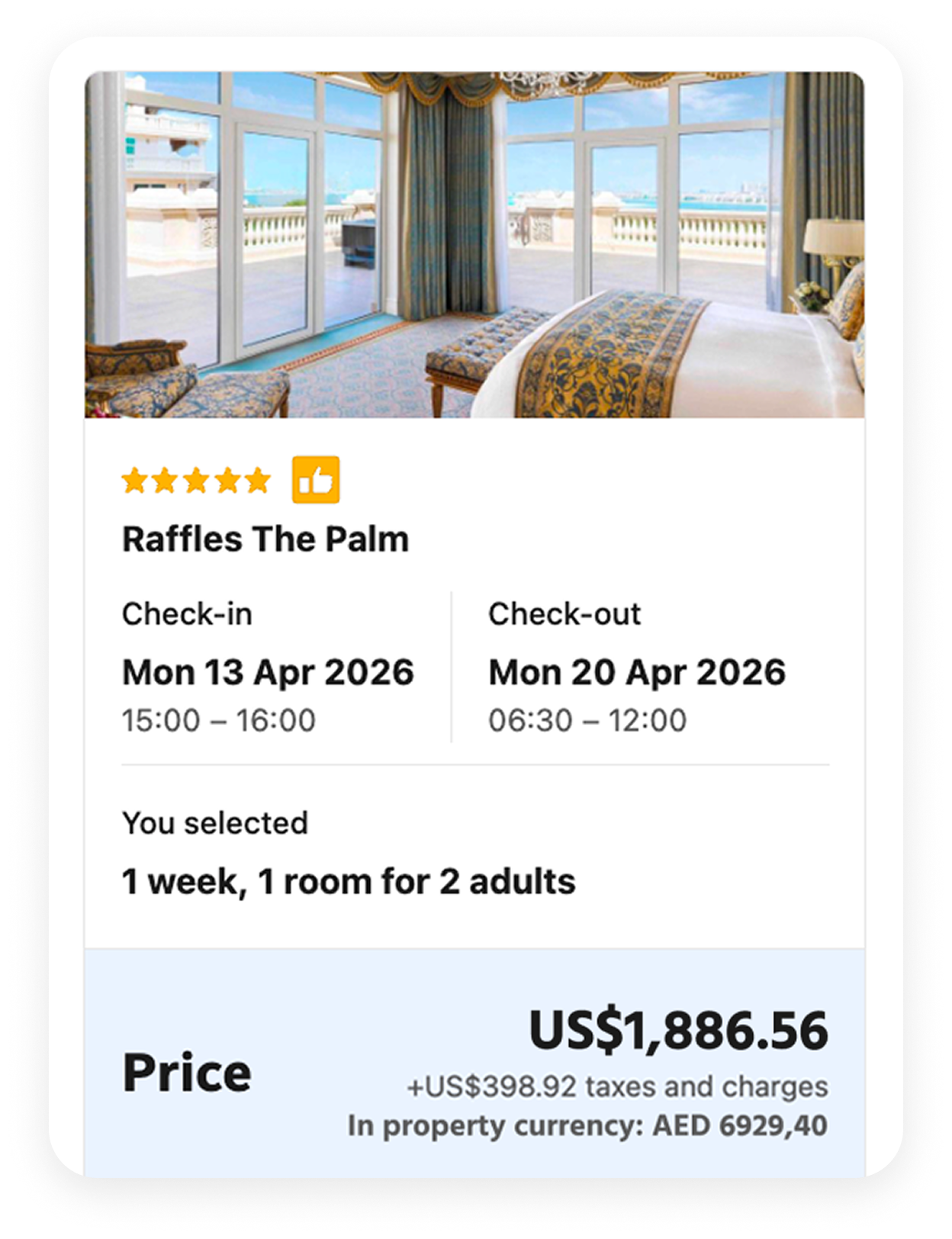
%201.png)
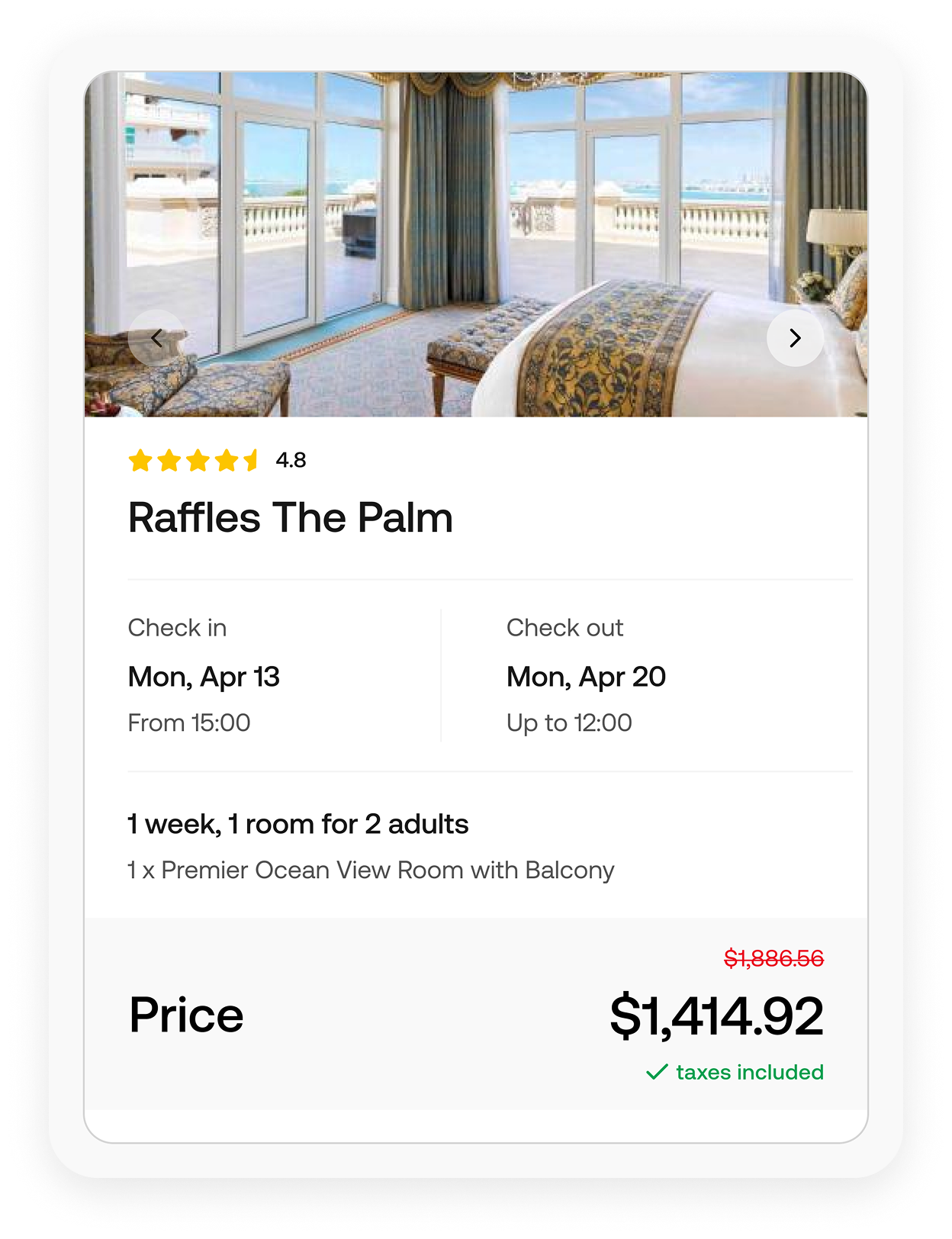
your first booking.
New users get $25 off their first booking.
Planning an Indonesia extension? Here’s how Bitcoin travel works there.
2. Book Island Tours and Experiences in Advance
The most popular experiences in the Philippines book out well ahead of time. El Nido island hopping tours fill up weeks ahead during the November to May dry season. Tubbataha Reef liveaboards, which operate only from March to June, sell their limited berths months in advance. The Chocolate Hills area in Bohol and Kawasan Falls canyoneering in Cebu have daily capacity limits that disappear fast on peak weekends.
Platforms like Viator and GetYourGuide cover a wide range of Philippine experiences and accept international card payment at checkout, where your crypto debit card works fine. For local operators, many accept international cards or PayPal online. Confirm payment methods before booking.
3. Use a Crypto Debit Card at Hotels and Restaurants
Card acceptance in Manila and Cebu is strong at hotels, malls, and established restaurants. Resort areas in Boracay and El Nido have solid card acceptance at the larger properties. A Bybit Card, Crypto.com Visa, or Wirex card converts your BTC or USDT at the point of sale and works at any Visa or Mastercard terminal. In a country where accommodation aimed at tourists can run high, avoiding the foreign transaction fee on every card purchase adds up across a trip.
Outside main cities and resort centers, card acceptance drops sharply. Local eateries, market vendors, transport, and most smaller island operators run on cash. Withdraw PHP before leaving any major hub for a more remote destination.
4. Withdraw PHP from ATMs Using Your Crypto Card
PHP cash is not optional in the Philippines. Tricycles, jeepneys, local carinderias, market stalls, and most operators on smaller islands accept nothing else. Your crypto debit card works at BancNet ATMs across the country, including BDO, BPI, and Metrobank, to pull PHP directly from your BTC or USDT balance.
ATM availability varies significantly outside major cities and provincial capitals. Withdraw enough PHP in Manila, Cebu, or Puerto Princesa before heading to El Nido, Siargao, or the Gili-equivalent island destinations in the Visayas. Always decline the dynamic currency conversion prompt on screen and let your card settle in PHP. Taking out a larger amount in one go keeps the fee per withdrawal proportional.
5. Get Around with Grab, Jeepneys, and Tricycles
Grab dominates transport through apps across Manila, Cebu, and major provincial cities. It accepts international Visa and Mastercard in the app, so your crypto debit card works directly for most rides. Grab is the most reliable option for airport pickups and longer city routes where price certainty matters. Set the app up before you land.
For shorter distances and local travel, jeepneys and tricycles run on PHP cash and are how most Filipinos get around outside the main cities. They are cheap, direct, and part of the experience. Bitrefill sells Grab credits purchasable directly in BTC, which is useful if the app rejects a foreign card on first use. For areas where Grab does not operate, cash transport is the only option.
6. Eat at Restaurants, Local Eateries, and Food Courts
Restaurants with table service in Manila, Cebu, and the main tourist areas of Boracay accept international cards. Your crypto debit card covers those. SM Malls, Ayala Malls, and the dining strips in Makati and BGC are all fully set up for card payment. Food courts inside major malls similarly accept cards.
Local carinderias, street food stalls, paluto spots, and market food are cash only. A full Filipino meal at a local eatery costs very little in PHP and is worth the experience. Keep cash on hand for these. On the islands, smaller restaurants and beachside stalls often prefer cash regardless of whether they have a card machine. Tips are small and always paid in cash.
7. Buy a Tourist SIM or Top Up Mobile Data
Globe, Smart, and DITO all have SIM counters at Ninoy Aquino International Airport (MNL) in Manila, Mactan-Cebu International Airport (CEB), and Puerto Princesa Airport (PPS). Payment at the counter is by card, and your crypto debit card works fine. Globe and Smart both have tourist data plans with reasonable rates. A local SIM is useful for Grab and any Filipino app that requires a local number.
If you prefer to arrive connected, Bitrefill sells eSIMs for the Philippines purchased directly in BTC before you travel. Bitrefill also covers top up credit for Globe and Smart if you need to reload during the trip. On remote islands, data coverage varies. Smart tends to have slightly better reach outside main urban areas.
8. Cover Airport Transfers from Manila, Cebu, and Puerto Princesa
Ninoy Aquino International Airport (MNL) in Manila is one of Southeast Asia's busiest. Grab operates from the airport pickup zone and accepts card payment through the app. Official metered taxis also operate from the terminal. The app option gives you a fixed fare before you confirm. Journey times to Makati and BGC vary widely with Manila traffic.
Mactan-Cebu International Airport (CEB) connects to Cebu City via Grab or metered taxis from the arrivals area. Puerto Princesa Airport (PPS) is the gateway for Palawan, and Grab operates in Puerto Princesa with card payment in the app. For onward transport from Puerto Princesa to El Nido or Coron, vans and shared shuttles run on PHP cash. Book in advance if possible.
9. Book Dive Packages, Snorkeling, and Water Sports
The Philippines has some of the world's best diving, and the best operators fill their schedules quickly. Tubbataha Reef liveaboards sell out months ahead. Dive shops in Moalboal, Dumaguete, and Malapascua accept online bookings with international card payment. El Nido and Coron boat tours and snorkeling packages similarly benefit from advance booking, particularly from November through April.
Larger established operators accept Visa and Mastercard online, where your crypto debit card works at checkout. On the ground, smaller operators and day trip boats run on PHP cash. Carry enough PHP for any activity you plan to add after arrival. On remote islands, there are no ATMs and cash is the only option for anything booked locally.
10. Use Bitrefill for Grab Credits and Philippine Gift Cards
GCash and Maya are the two apps that power Philippine digital payments for locals, but both require a Philippine ID and phone number to set up. Bitrefill's Philippines catalog opens the most useful alternatives: Grab credits for transport, Globe and Smart top up credit for mobile data, and select local retail gift cards, all purchasable directly in BTC. Codes arrive by email and work instantly in the relevant app.
For digital nomads based in Manila or Cebu for weeks or months, having Grab credits loaded in BTC is the cleanest substitute for GCash-funded transport. Bitrefill requires no account and delivers codes within minutes.
Planning a trip to Hong Kong? See how to spend Bitcoin there.
Frequently Asked Questions
1. Can I use Bitcoin directly in the Philippines?
Not at mainstream merchants. The practical setup is CoinBooking for accommodation, a crypto debit card for card terminals, Bitrefill for Grab credits, and PHP cash for everything else. Some Manila and Cebu businesses accept BTC informally, but not reliably enough to plan around.
2. Is Bitcoin legal for tourists in the Philippines?
Yes, fully. Crypto is legal under the BSP's VASP framework in place since 2017. Tourists face no restrictions. The gap is practical: GCash and Maya require a Philippine ID tourists cannot easily obtain. CoinBooking, a crypto debit card, and Bitrefill all work without any local banking setup.
3. Can I use GCash or Maya as a tourist in the Philippines?
Not easily. Both require a Philippine mobile number and national ID. Some visitors have managed limited GCash access with a passport only, but full payment features are restricted. Grab via a crypto debit card or Bitrefill credits, card payment at hotels and malls, and PHP cash from ATMs covers the same ground.
4. Can I book hotels in the Philippines with Bitcoin?
Yes. CoinBooking covers hotels and resorts across Manila, Cebu, Boracay, El Nido, Coron, and Siargao with direct BTC payment at checkout. Rates run up to 30% below Booking.com and Expedia. For Filipino diaspora, it removes the need to route accommodation costs through remittance services. New users get $25 off their first booking.
5. What is the best crypto card for traveling in the Philippines?
The Bybit Card, Crypto.com Visa, and Wirex card all work well. Each converts BTC or USDT at terminals and lets you withdraw PHP at BancNet ATMs. Prioritize low ATM fees since cash is essential outside cities. Withdraw larger amounts in Manila, Cebu, or Puerto Princesa before heading to smaller islands.
6. How do I get Philippine pesos from Bitcoin while traveling?
Use your crypto debit card at a BDO, BPI, or Metrobank ATM. Always decline dynamic currency conversion and settle in PHP. Withdraw enough before heading to remote destinations as ATMs are scarce in El Nido, Siargao, and smaller Visayas islands. Coins.ph requires local registration and suits longer stays only.
Spending crypto is the easy part. 30% off is the good part.
Get up to 30% off all future hotels and flights.

Yaryna Dobrianska is a Dubai-based business and technology writer with a background in fintech and digital services. She covers cryptocurrency adoption, cross-border payments, and the practical realities of spending digital assets across emerging markets.
Her work at Polkastarter focuses on making Web3 accessible, breaking down how crypto moves through real-world financial systems, from payments infrastructure to on-chain adoption trends.
You just read 12 ways to spend crypto. This is the most valuable.
.avif)
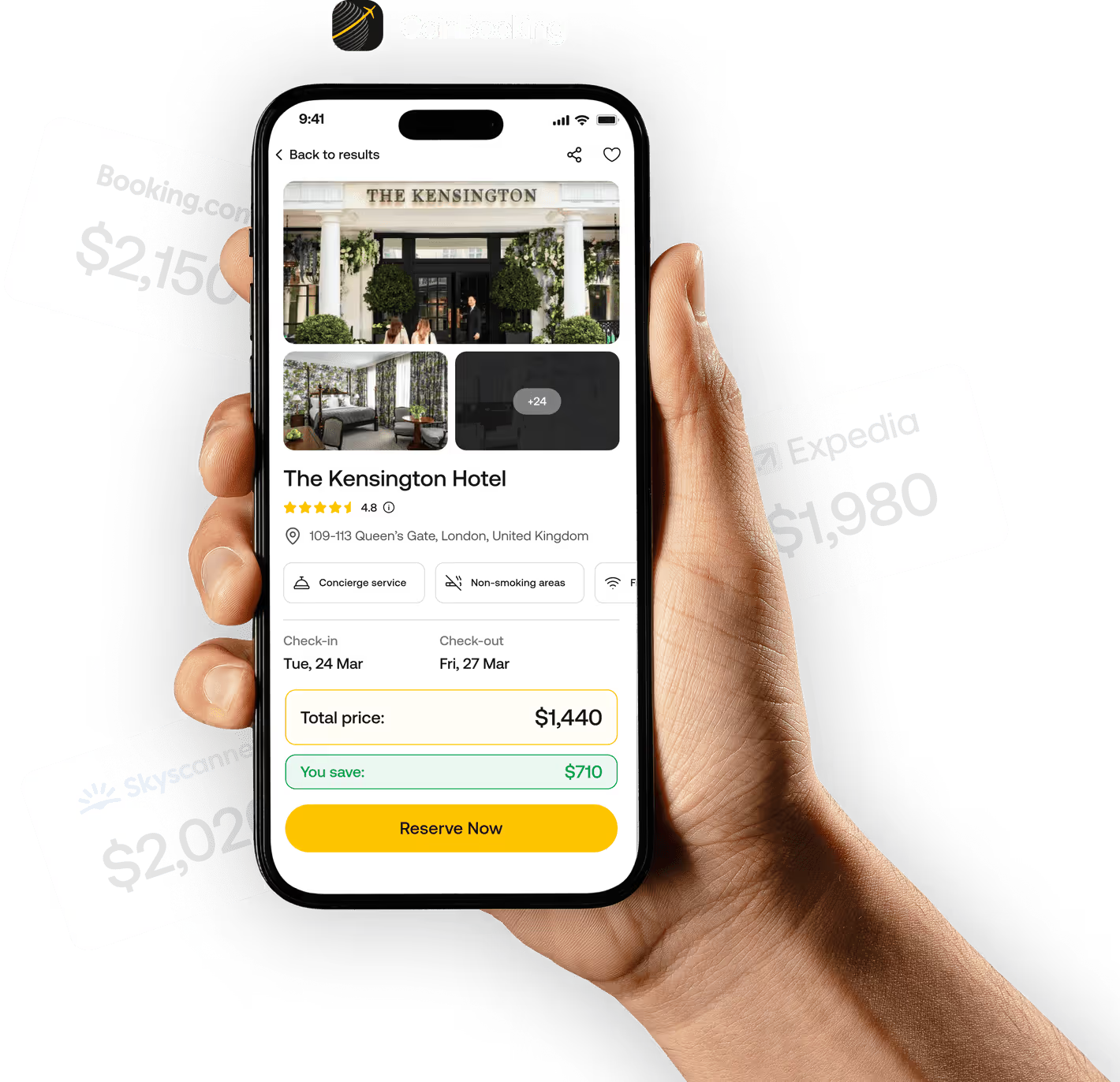
You just read 12 ways to spend crypto. This is the most valuable.