.avif)
.png)
.avif)


Content
Top 12 Ways to Spend Bitcoin (BTC) and USDT in Hong Kong

Across the border in mainland China, crypto trading is banned. In Hong Kong, the Securities and Futures Commission has built the most advanced regulated crypto framework in Asia: mandatory licensing since June 2023, spot Bitcoin and Ethereum ETFs approved in April 2024, and the Stablecoins Ordinance in effect since August 2025.
There is no capital gains tax on individual investment profits. Transaction volumes on Hong Kong exchanges soared to HKD 26.1 billion in the first half of 2025, a 233% year-on-year increase, and Hong Kong recorded 85.6% year-on-year growth in crypto adoption, the largest increase in all of Eastern Asia.

For a BTC or USDT holder in Hong Kong, spending that balance runs along two routes. The first is direct: CoinBooking for travel bookings, a crypto Visa debit card at any terminal, and Bitrefill for gift cards and mobile top-ups. The second is conversion to HKD via an SFC-licensed exchange, which then unlocks FPS, Octopus, and the full Hong Kong merchant economy.
Not based in Hong Kong? Explore our full country-by-country crypto spending guide.
Can You Spend Bitcoin and USDT Directly in Hong Kong?
Direct BTC or USDT merchant acceptance is limited in Hong Kong. Most businesses accept HKD via Octopus, FPS, or card, and while some crypto-native venues in Central and Wan Chai accept crypto directly, this remains the exception. Three routes work without any HKD conversion: CoinBooking for travel, a crypto Visa debit card at any Hong Kong terminal, and Bitrefill for gift cards and mobile top-ups. The HashKey Card is a locally issued debit card option for HashKey Exchange clients.
For everything else, converting to HKD first is the practical path. HashKey Exchange and OSL are the two SFC-licensed retail trading platforms. Both support HKD pairs and fast bank withdrawals to any Hong Kong bank, including HSBC, Hang Seng, Standard Chartered, and virtual banks like ZA Bank and Mox. Once HKD is in a bank account, FPS gives instant access to the full Hong Kong merchant ecosystem. The HKD is pegged to the USD within a narrow band of 7.75 to 7.85, so conversion carries essentially no currency risk.
On tax: individual investment gains from crypto are not subject to capital gains tax in Hong Kong. Business trading activity may be subject to profits tax. Active traders should consult a Hong Kong tax professional.
Is It Legal to Use Bitcoin and USDT in Hong Kong? What the SFC Licensing Means for You
Holding, trading, and spending BTC and USDT is fully legal in Hong Kong. The SFC introduced mandatory VASP licensing in June 2023, and only licensed exchanges may offer retail trading to Hong Kong residents. As of early 2026, HashKey Exchange and OSL are the two fully licensed retail platforms that were first to market, with additional licenses issued to HKVAX, HKbitEX, Accumulus, DFX Labs, and EX.IO. Always verify current SFC licensing status before using any platform.
Hong Kong has explicitly positioned itself as Asia’s crypto hub in deliberate contrast to mainland China’s ban on crypto trading and mining. It is government policy, backed by the HKMA and SFC with regulatory frameworks, ETF approvals, and the Stablecoins Ordinance that took effect on 1 August 2025.

No capital gains tax applies to individual crypto investment profits in Hong Kong. This puts Hong Kong alongside Singapore and Switzerland as one of the most favourable tax environments for crypto holders.
in Hong Kong
12 Ways to Spend Bitcoin (BTC) and USDT in Hong Kong
1. Book Hotels and Flights with Bitcoin or USDT
Hong Kong residents are among Asia's most frequent travelers. Short-haul flights to Tokyo, Bangkok, Singapore, and Taipei are routine, and the city draws millions of visitors year-round who often extend trips into the rest of the region.


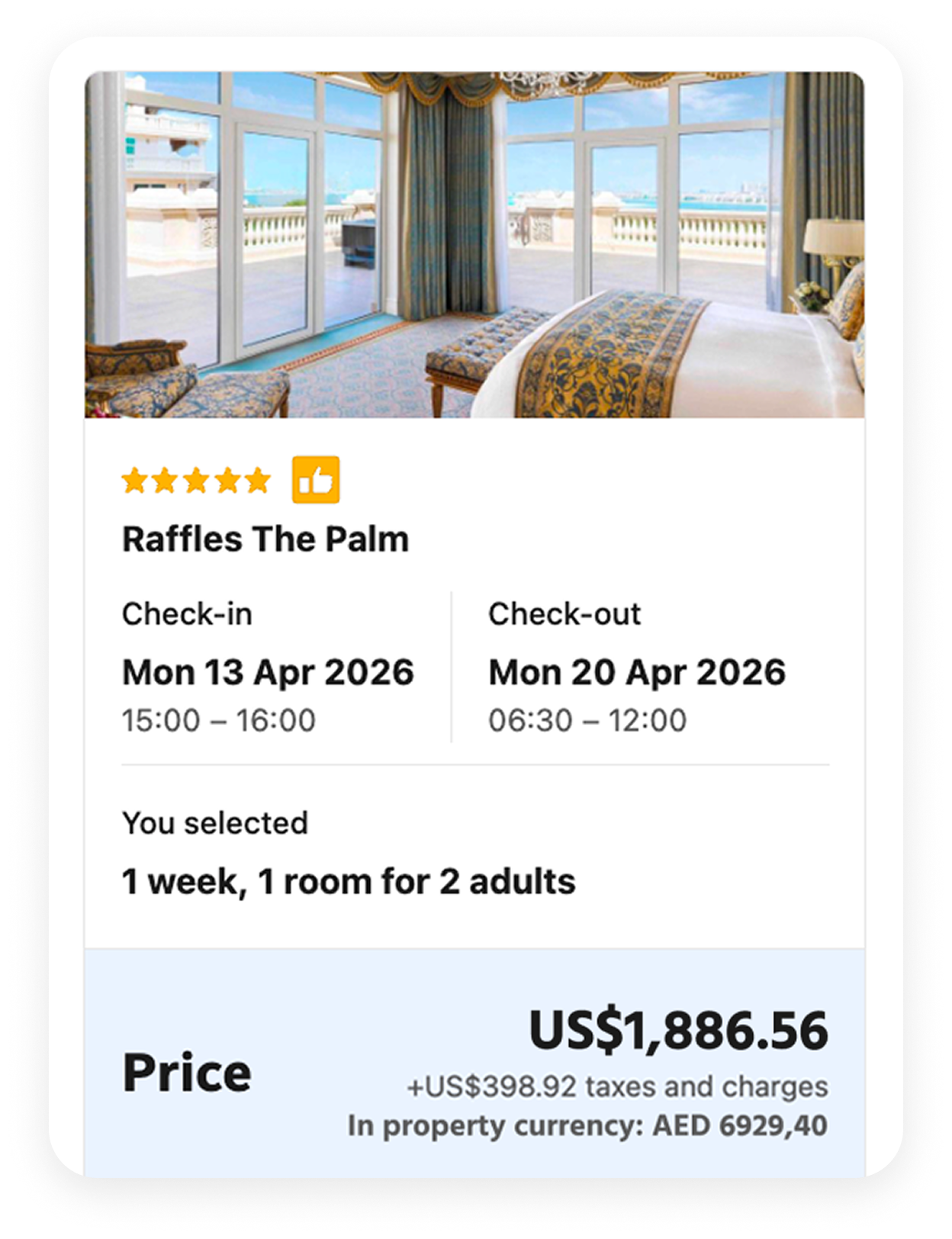
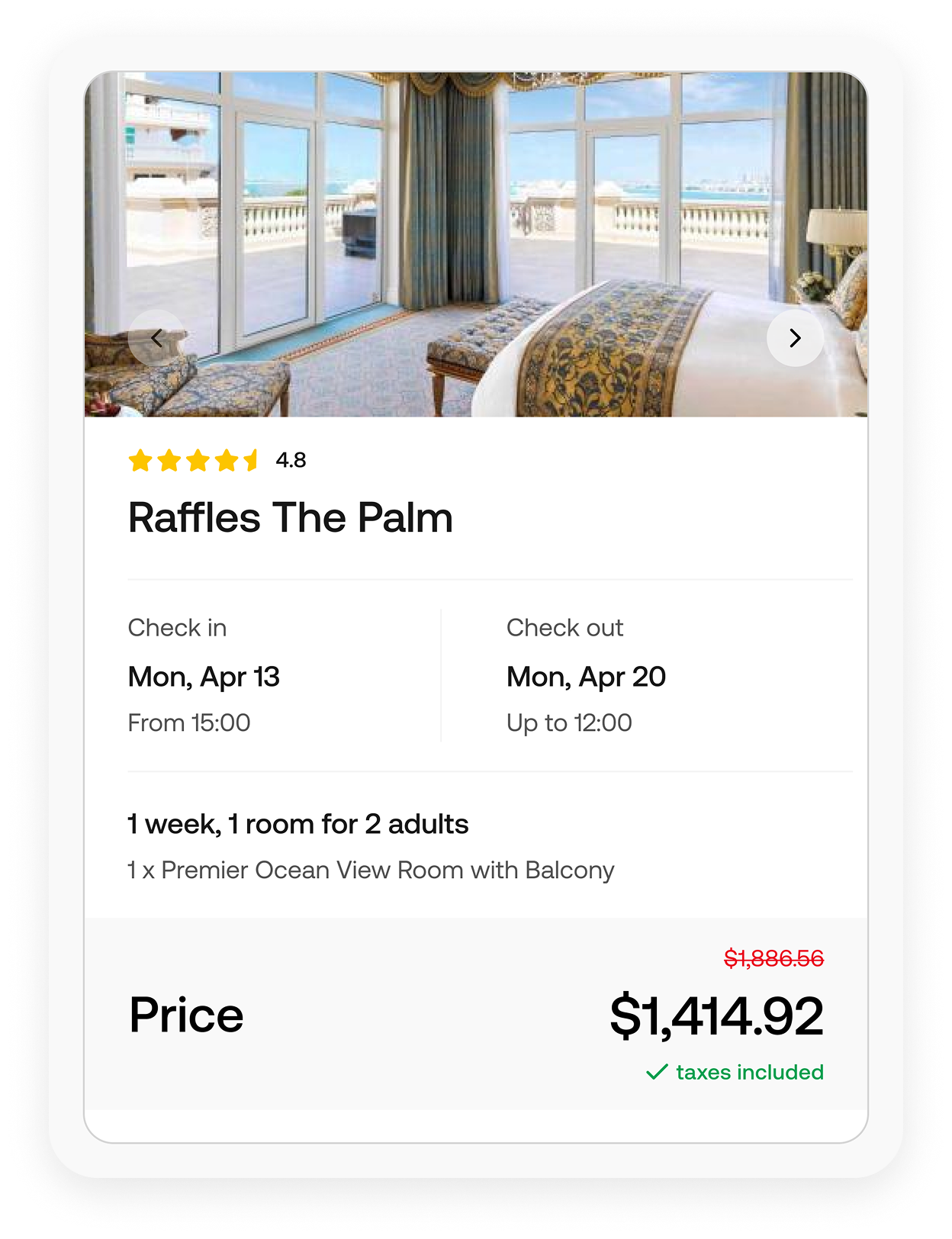
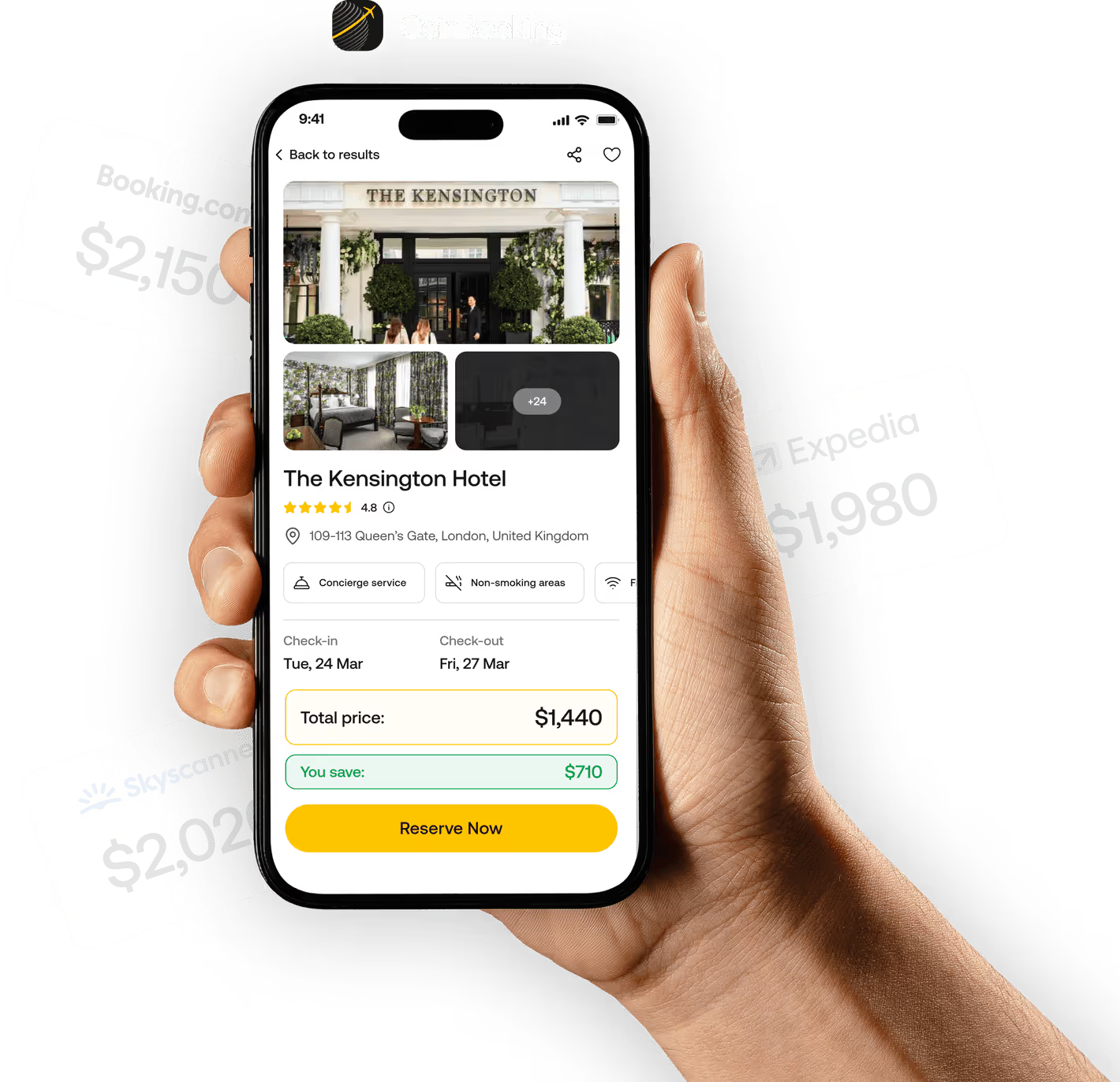
CoinBooking is a Dubai-licensed travel platform that lists the same hotels and flights as Booking.com and Expedia at up to 30% less, accepting Bitcoin, USDT, and 100+ other cryptocurrencies directly at checkout. At the frequency most Hong Kong residents actually travel, a consistent 30% off adds up quickly
Coverage spans 190+ countries and over a million properties, including major hotels like the Mandarin Oriental and Peninsula alongside flights on Cathay Pacific and Singapore Airlines.
Just $870 Cheaper.

%201.png)
your first booking.
First-time users get $25 off their first booking.
Already have Dubai on the list? See how Bitcoin and USDT work in the UAE.
2. Use a Crypto Debit Card for Everyday Spending
Card terminals are standard across Hong Kong’s retail landscape, from convenience stores and restaurants to luxury malls and hotels. A crypto Visa debit card converts your BTC or USDT automatically at the point of payment, with no HKD pre-loading required. The Crypto.com Visa card and the Bybit Card both function at Hong Kong Visa and Mastercard terminals. The HashKey Card, issued by HashKey Exchange, is a locally relevant option that keeps spending within the SFC-regulated ecosystem.
For Hong Kong residents who hold significant BTC or USDT and prefer to avoid the conversion step, a crypto debit card is the most immediate route to everyday spending without touching a local bank account. Each card transaction is a disposal event, which is worth tracking for anyone with active trading records.
3. Buy Gift Cards and Mobile Top-ups via Bitrefill
Bitrefill operates in over 186 countries and offers a broad catalogue of international and Hong Kong gift cards, mobile top-ups, and service vouchers purchasable directly in BTC, ETH, USDT, and USDC. For Hong Kong holders, this covers international platforms that do not have a local HKD payment option alongside direct top-ups for local carriers.
Bitrefill also supports Lightning Network payments, keeping fees low for smaller amounts. For mobile top-ups, Bitrefill covers SmarTone, HKT, 3 Hong Kong, and China Mobile HK directly, making it straightforward to top up a Hong Kong number without any HKD conversion step.
4. Trade and Spend via SFC-Licensed Platforms
HashKey Exchange and OSL are the two SFC-licensed retail platforms through which Hong Kong residents can convert BTC or USDT to HKD within a fully regulated framework. Both support HKD pairs and withdraw to any Hong Kong bank account via FPS, typically within one business day. Do not use unlicensed platforms for retail trading in Hong Kong. The SFC enforces this actively, and the JPEX incident of 2023 demonstrated the real risks of operating outside the licensed framework.
HashKey Exchange also offers a crypto debit card for its clients, making it a convenient single platform for both conversion and spending. Once HKD is in your bank account, the full Hong Kong payment economy opens up through FPS and Octopus.
5. Shop on HKTVmall or Carousell
HKTVmall is Hong Kong’s leading local e-commerce platform, strong on groceries, electronics, and household goods, with delivery across the city. Carousell is the dominant secondhand marketplace for electronics, fashion, and furniture, but neither accepts crypto directly.
The practical route is converting BTC or USDT to HKD via HashKey Exchange or OSL, then paying by card or FPS at checkout. HKTVmall supports FPS directly, making it the most efficient route once HKD conversion is done. For Carousell, bank transfer or FPS is the standard payment method for peer-to-peer transactions.
6. Pay via FPS or Octopus After Converting to HKD
FPS is Hong Kong’s instant bank transfer network, connected to virtually every Hong Kong bank and accepted by a wide range of merchants, utilities, and service providers. Octopus is the stored-value card used for transit, retail, vending, and parking across the city, accepted at over 15,000 service providers. Neither FPS nor Octopus can be loaded with crypto directly.
The route is to convert BTC or USDT to HKD via HashKey Exchange or OSL, receive HKD to your bank account, then pay via FPS or load Octopus. This combination covers the vast majority of everyday spending in Hong Kong, from MTR and bus fares to supermarkets and pharmacies.
7. Top Up Mobile Credit for SmarTone, HKT, 3, and China Mobile HK
Hong Kong’s four main mobile carriers, SmarTone, HKT, 3 Hong Kong, and China Mobile HK, all support prepaid top-up through Bitrefill in BTC or USDT. This is the most direct route for topping up a Hong Kong number without any HKD conversion step.
For postpaid accounts, bills settle via direct debit or FPS from a Hong Kong bank account. Convert via HashKey Exchange or OSL and FPS handles the payment automatically.
8. Order Food via Foodpanda or Deliveroo
Foodpanda and Deliveroo are Hong Kong’s two dominant food delivery platforms, covering restaurants across Hong Kong Island, Kowloon, and the New Territories. The practical routes are paying through a Crypto.com or Bybit crypto debit card set as the default in the app, which converts BTC or USDT at the point of order, or converting to HKD via HashKey Exchange or OSL and paying by card or FPS.
9. Send Money Across the Border or Internationally
Hong Kong has large Filipino, Indonesian, and South Asian communities sending remittances home, alongside finance and tech professionals making cross-border transfers. Traditional wire transfers from Hong Kong banks carry fees of 3 to 5% and can take one to three business days for international transfers. USDT sent directly to a recipient’s wallet converts to local currency at the other end within minutes, at rates consistently more competitive than formal wire channels.
For Hong Kong residents sending money to the Philippines, Indonesia, India, or elsewhere in Southeast Asia, USDT is faster and cheaper than any traditional remittance channel currently available.
Sending crypto to friends in Indonesia? See exactly how recipients can spend it once it arrives.
10. Pay for Professional and Business Services
Hong Kong’s finance, legal, and tech sectors include a growing population of service providers accepting USDT for cross-border work. For international clients paying Hong Kong-based consultants, developers, or legal advisers, USDT settles instantly and avoids the SWIFT fees associated with international bank transfers.
For Hong Kong tax purposes, income received in cryptocurrency is assessed at its HKD fair market value on the date of receipt and may be subject to salaries tax or profits tax depending on the nature of the activity. A Hong Kong tax professional familiar with the Inland Revenue Department’s guidance on digital assets is worth consulting for anyone receiving regular USDT payments professionally.
11. Pay for Online Courses and Education
International education platforms including Coursera, Udemy, and LinkedIn Learning all accept card payments. A Crypto.com or Bybit debit card handles these directly from a BTC or USDT balance without any HKD conversion step. Bitrefill carries gift cards for several of the larger platforms as an alternative.
Hong Kong’s universities, including HKU, CUHK, HKUST, and PolyU, do not accept crypto for tuition. A growing number of Web3 and blockchain professional certification programmes operating in Hong Kong accept USDT directly, catering to the developer and finance community driving the city’s crypto ecosystem.
12. Gaming, Streaming, and Digital Subscriptions
Steam, PlayStation Network, Xbox Game Pass, Netflix, and Spotify all have strong user bases in Hong Kong, and none accept crypto directly at checkout. Bitrefill solves this with instant gift card delivery for all of them, including Google Play, purchasable in BTC or USDT with no HKD conversion required.
For Hong Kong users who prefer to keep their balance in crypto rather than hold HKD, buying a Bitrefill code is more direct than converting first. For Web3 and blockchain gaming, BTC and USDT are already native payment methods across the category, and Hong Kong’s developer and Web3 community has produced a growing number of projects that accept crypto from day one without any intermediary step.
Frequently Asked Questions
1. Is Bitcoin legal in Hong Kong?
Yes. Holding, trading, and spending Bitcoin and USDT is fully legal in Hong Kong. The SFC introduced mandatory VASP licensing in June 2023, and only licensed exchanges may offer retail trading. Hong Kong has no capital gains tax on individual crypto investment profits. The city has explicitly positioned itself as Asia’s crypto hub in deliberate contrast to mainland China’s ban on crypto trading and mining. There is no restriction on individuals holding, spending, or converting crypto through licensed platforms.
2. Do I pay tax on crypto in Hong Kong?
Individual investment gains from crypto are not subject to capital gains tax in Hong Kong. This is one of the most favourable treatments in Asia and puts Hong Kong alongside Singapore and Switzerland in this series. If crypto activity is classified as a business or trading operation, profits may be subject to profits tax under the Inland Revenue Ordinance. Salaries received in crypto are assessed at HKD fair market value on the date of receipt and subject to salaries tax. Active traders or anyone receiving regular crypto income professionally should consult a Hong Kong tax adviser familiar with IRD guidance on digital assets.
3. What exchanges are licensed in Hong Kong?
As of early 2026, the SFC has issued VATP licenses to several exchanges including HashKey Exchange, OSL, HKVAX, HKbitEX, Accumulus, DFX Labs, and EX.IO. HashKey and OSL were the first to receive retail trading licenses in August 2023. Always verify current licensing status on the SFC’s official website before depositing funds. The JPEX incident of 2023 demonstrated the serious risks of using unlicensed platforms in Hong Kong.
4. How is Hong Kong different from mainland China on crypto?
Mainland China banned crypto trading and mining in 2021. Hong Kong, as a Special Administrative Region with its own legal and regulatory framework, has taken the opposite approach. The SFC has issued multiple VATP licenses, approved spot Bitcoin and Ethereum ETFs in April 2024, and the Stablecoins Ordinance came into effect on 1 August 2025. Transaction volumes on Hong Kong exchanges grew 233% year-on-year in the first half of 2025. Hong Kong is positioning itself as the regulated gateway for digital assets in the Greater China region precisely because of, not despite, the mainland ban.
5. Can I book a hotel or flight with Bitcoin in Hong Kong?
Yes. CoinBooking lists the same properties at up to 30% less than Booking.com or Expedia and accepts Bitcoin and 100+ other cryptocurrencies for hotel and flight bookings across 190+ countries and over a million properties, including hotels across Hong Kong Island, Kowloon, and destinations across Asia. No HKD conversion, no bank account, and no card is required. First-time users get $25 off their first booking.
6. Can I use a crypto debit card in Hong Kong?
Yes. The Crypto.com Visa card and the Bybit Card both work at Hong Kong Visa and Mastercard terminals, converting BTC or USDT to HKD automatically at the point of payment. The HashKey Card, issued by HashKey Exchange, is a locally licensed alternative. Card terminals are standard across Hong Kong’s retail, dining, and hospitality sectors. No local bank account is required to use a crypto debit card.


Spending crypto is the easy part. 30% off is the good part.
Get up to 30% off all future hotels and flights.

Yaryna Dobrianska is a Dubai-based business and technology writer with a background in fintech and digital services. She covers cryptocurrency adoption, cross-border payments, and the practical realities of spending digital assets across emerging markets.
Her work at Polkastarter focuses on making Web3 accessible, breaking down how crypto moves through real-world financial systems, from payments infrastructure to on-chain adoption trends.
You just read 12 ways to spend crypto. This is the most valuable.
.avif)
You just read 12 ways to spend crypto. This is the most valuable.