.avif)
.png)
.avif)


Content
How to Sell Pokémon Cards: Compare What You Actually Keep

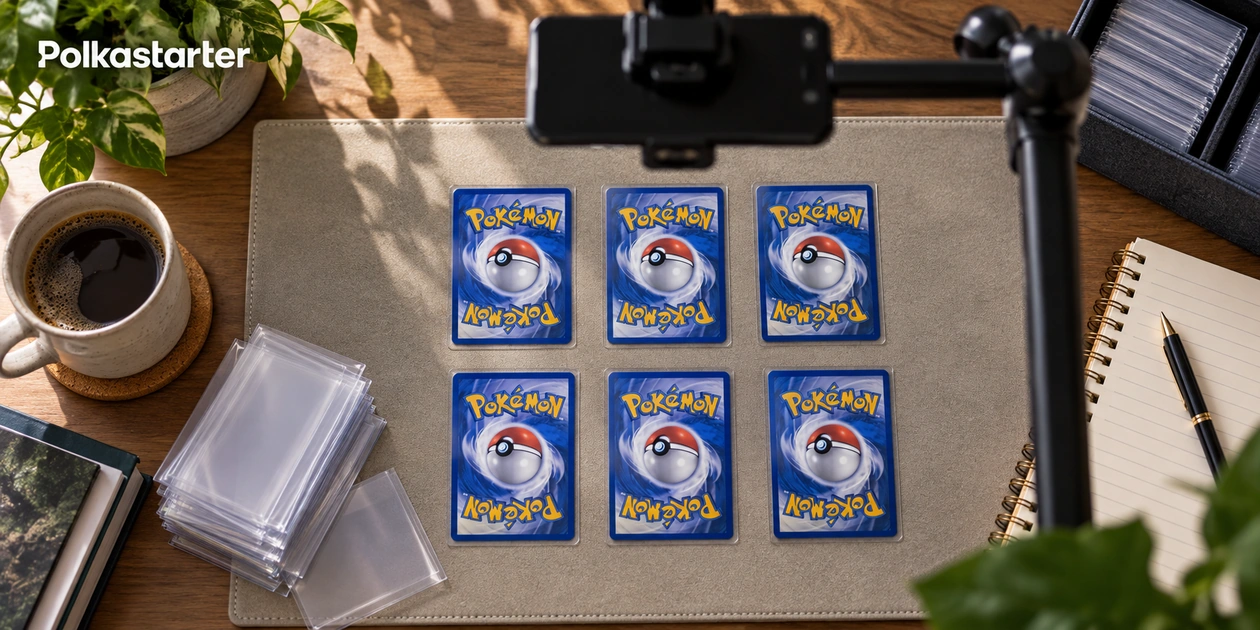
The best way to sell Pokémon cards depends on the exact cards, how much work you want to do and what remains after selling costs. A higher advertised price is not automatically a better outcome. Start with identification and condition, then compare realistic routes to a completed sale.
Identify the Version Before Looking Up a Price
Write down the card name, collector number, expansion, language and finish. Add any stamp or edition detail. If it is graded, record the grading company and grade without treating a matching certification number as the entire authentication process.
Our rarity-symbol guide helps decode the card. Our graded-card checks cover the slab-specific questions. This page focuses on the sale, not another catalogue of valuable cards.
An attractive asking price for a different language or foil version is not a comparable sale. Neither is a graded example a direct price reference for your raw card.
Document Condition Before Choosing a Listing
TCGplayer's condition guidance provides criteria for listings on its marketplace. Use the platform's actual standard rather than treating a personal description such as looks mint as a recognised grade.
Photograph the front, back, corners and any defect under clear light. Include angled views when surface wear would otherwise disappear. Do not use filters that conceal whitening or scratches.
If you cannot confidently identify a version or authenticity, resolve that before listing. Do not convert uncertainty into a confident title and leave the buyer to discover the problem.
Compare Selling Routes by Work as Well as Price
Individual marketplace listings let you present specific cards and reach buyers searching for that version. They also require photos, accurate descriptions, order management and delivery.
A local shop or collection buyer can offer a simpler transaction for a group of cards. Ask what is included, what is excluded and whether the offer is cash or store credit. A buyer's resale margin is part of their business, not proof that your collection is worthless.
A collection or themed lot can reduce the work attached to low-value duplicates. Be explicit about the contents and condition. Do not advertise a valuable card in the cover image if it is not included.
Avoid claims that one venue always pays best. Compare current terms and genuine offers for your actual cards. eBay's trading-card seller guidance is one first-party starting point for listing requirements.
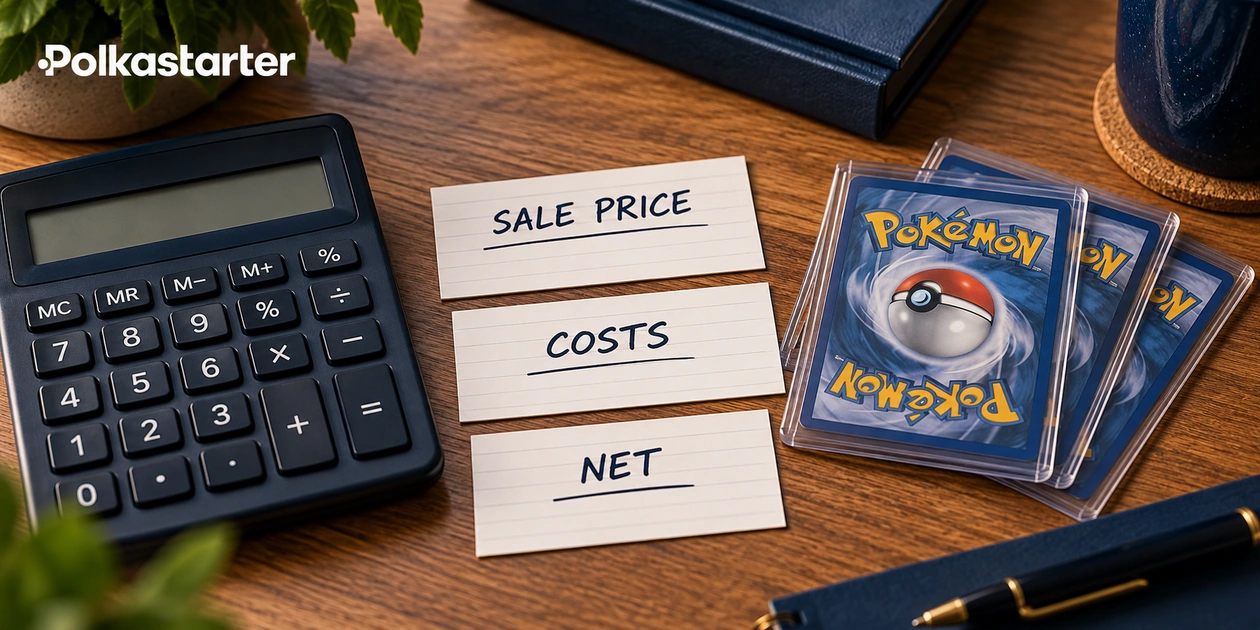
Calculate Net Proceeds Before Accepting
Use this simple framework: sale proceeds minus platform and payment fees, postage, packaging and any other seller-paid charges. Keep your original purchase cost separately if you are assessing profit rather than cash received.
TCGplayer's fee schedule distinguishes selling programmes and fee types. Check the one that applies to your account. Do not copy a percentage from a different programme or assume a fee applies only to the card's sticker price.
Give your time a place in the decision too. Photographing, listing and mailing a large pile of inexpensive singles may produce a different outcome from selling a small, well-described lot. That is a practical trade-off, not a guaranteed rule.
Treat Comparable Sales as Evidence, Not a Promise
Look for completed transactions matching the version and condition. Record when they occurred and whether shipping was included. Separate an accepted sale from an unsold listing.
A thin market can produce a wide range of prices. A single exceptional transaction does not prove that another buyer is waiting at the same number. Be especially careful when search results mix sealed products, raw cards and graded copies.
Choose a price and selling format you can explain from the evidence. Do not present speculative appreciation as a reason someone should buy from you.
Finish the Transaction Cleanly
Keep communication and payment inside the chosen platform's approved process. Follow its order record, address and dispatch instructions. Avoid moving a deal off-platform because an unsolicited message promises to remove the fees.
Package the exact sold card and preserve dispatch evidence. The card-shipping guide covers packing separately. For cards you decide to keep, our binder guide covers suitable storage.
For a different collecting experience, the Polkastarter marketplace offers real collectibles through Lootboxes, with contents, values, and chances shown before you open. Check the current free mystery pack offer at signup. This does not mean you can upload or sell your outside Pokémon collection on Polkastarter.
Frequently Asked Questions
Should I sell Pokémon cards individually or as a lot?
Compare the likely proceeds with the work involved. Specific desirable cards may justify individual listings, while accurately described lots can simplify selling inexpensive duplicates.
Does an online asking price show what my card is worth?
No. Check completed sales for the same version and condition, and account for shipping and other differences.
Can I use this guide to sell my own collection on Polkastarter?
No outside-collection listing service is asserted here. Check the live marketplace for the options available for items acquired there.
Facts and specifications checked September 14, 2026 as cited. Offers, stock and product details can change. Nothing here is financial or investment advice. Polkastarter is not affiliated with Pokémon, Nintendo, Bandai, Wizards, Topps, Panini or the other manufacturers named. Generated visuals are editorial illustrations, not official product photos or evidence of an actual shipment.
Sources
.png)


Ilknur Gubel is a social media manager at Polkastarter. Ilknur has spent the past four years working as a project manager, marketing manager, and social media strategist across Web3. She has held marketing and project management positions at several crypto companies, including Polygen, Nitro League, Kaizen.Finance, and ChainPort.
At Polkastarter she has covered trading card releases, collectible market pricing, and how token holders can spend crypto on real cards and videogames.
Based in Istanbul, Ilknur earned a bachelor's degree in sociology from Istanbul Aydın University.
You can connect with her on LinkedIn for more information.