.avif)
.png)
.avif)


Content
Reverse Holo Pokémon Cards: Identify the Finish, Then Check the Version

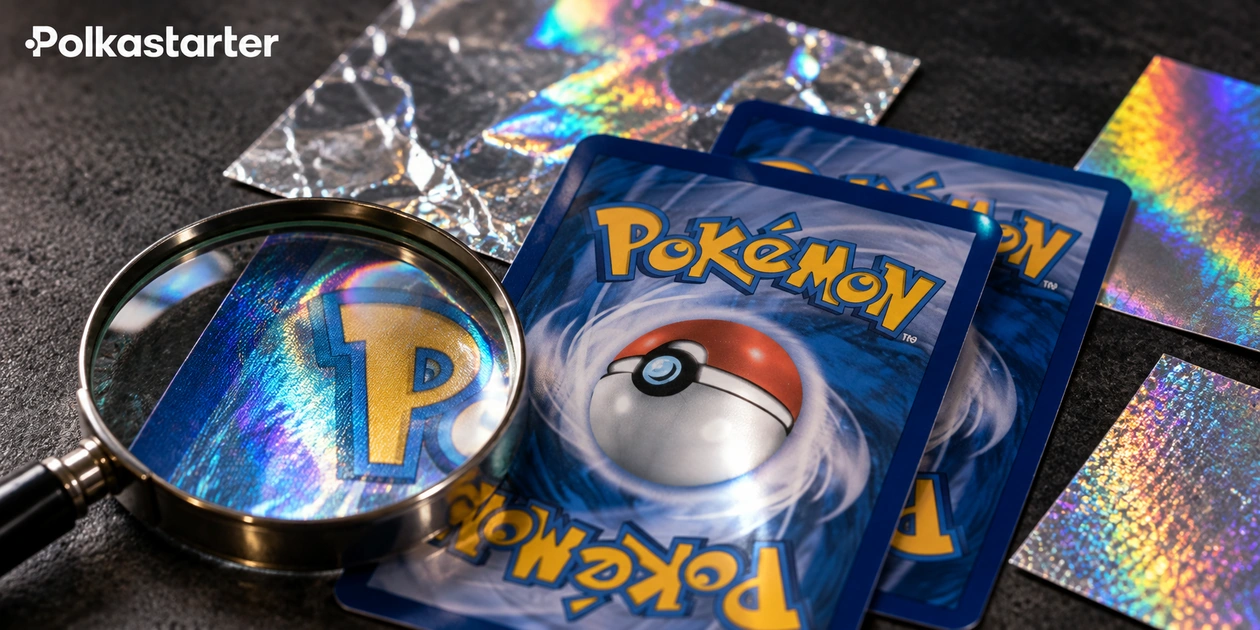
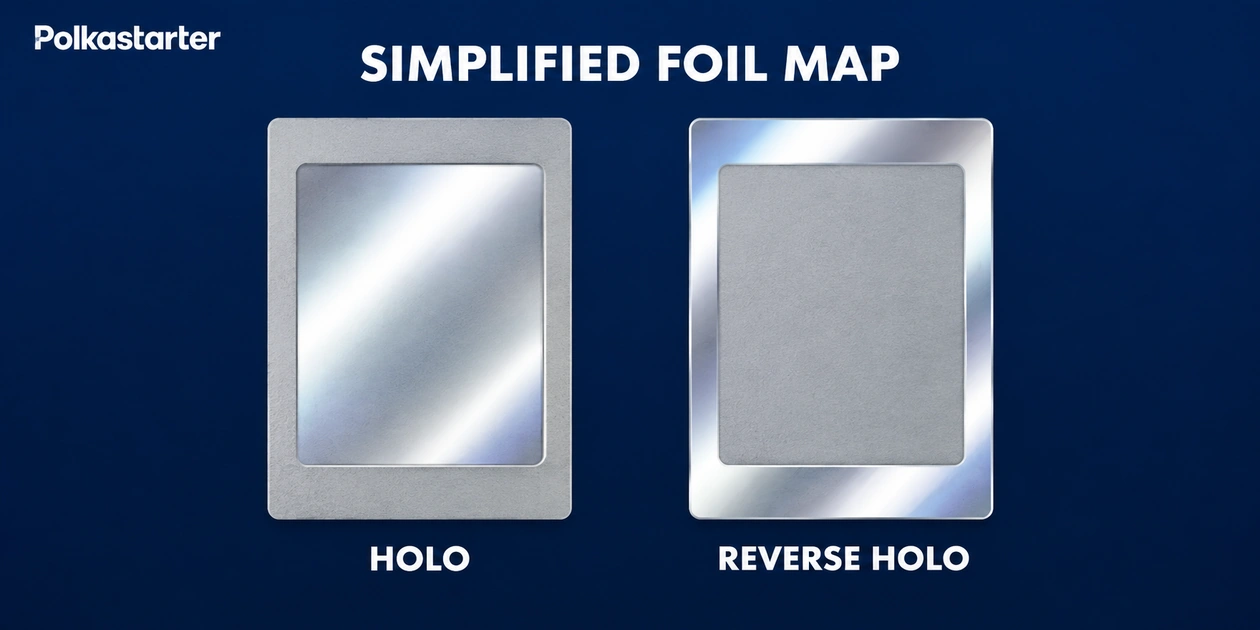
A reverse holo Pokémon card generally has foil around the artwork rather than only within the picture window. Pokémon also uses the term parallel foil. That is a useful starting point for identification, but the exact pattern depends on the series and printing. A shiny card is not automatically a rarer version of every card with the same name.
Look for Where the Light Moves
Tilt the protected card under ordinary light. Watch the area outside the illustration separately from the picture window. A flat photograph can conceal which part is reflective, especially when the sleeve creates its own glare.
Pokémon's Scarlet & Violet design explanation describes parallel-foil patterns surrounding the artwork and explains that the series introduced a Paldea tile-inspired pattern. That is an era-specific reference, not a promise that every older reverse holo looks identical.
Ask a seller for another angle if the finish cannot be seen. Do not remove a card from protection merely to perform a destructive authenticity test.
Finish and Rarity Are Separate Identification Fields
A card's rarity category and its surface finish answer different questions. The rarity-symbol guide explains those symbols. Use that alongside the finish rather than trying to replace it with one word.
A listing might identify the correct character and number while selecting the wrong foil version. Record expansion, collector number, language and finish before comparing prices or marking a binder position complete.
Do not assume that every numbered card in an expansion has every possible finish. Check the actual set reference. An empty position in a seller's checklist is not evidence that the missing variant was printed.
Use a Set Reference, Not a Universal Shiny-Card Rule
The official 151 checklist is an example of a set-specific reference. It separates checklist information by the expansion's own printed entries. Use the correct checklist for the card you are examining, not a different expansion whose layout happens to look similar.
For older or unusual releases, compare a documented example of that exact printing. A finish that does not resemble a modern Scarlet & Violet parallel should prompt further research, not an immediate claim that it is fake.
Our authenticity guide covers broader checks. Reverse-foil placement alone cannot establish whether a card is genuine.
What Makes a Reverse Holo Worth Comparing?
There is no single reverse-holo premium that applies across Pokémon. Demand attaches to the character, printing, condition and availability of matching copies. Identify the object before making a value claim.
Use completed transactions for the same language, number and finish. Separate raw cards from graded copies. Do not use a seller's highest asking price as a guaranteed sale outcome.
Surface condition deserves careful photographs. TCGplayer's conditioning guidance applies condition criteria to foil as well as non-foil cards and notes that some imperfections are more visible on foil. A reflective finish can make an angled image more informative than a straight-on shot.
Give Each Variant a Clear Place in Your Collection
If your project includes reverse holos, state that explicitly. A numbered card and its parallel may occupy separate positions even when their collector number is the same. The master-set guide covers the scope decision without treating any one collector's definition as universal.
For a small character collection, you may prefer just one printing. That is equally valid when the goal is clear. Buying a duplicate finish unintentionally is a bookkeeping problem, not a reason to expand the project.
Write the finish in your inventory and retain a reference photo. A brief record can be more useful than relying on a vague listing title after the listing disappears.
Read the Listing Before the Reveal
That identification habit also helps when exploring Lootboxes on the Polkastarter marketplace. Every Lootbox lists its contents, values, and chances before you open. Inspect the actual item descriptions rather than assuming that a familiar character name means a particular foil printing.
The current signup offer includes a free mystery pack, subject to its conditions. Choose the collecting experience for the entertainment and the items shown, not a promise that a shiny finish will appreciate.
Frequently Asked Questions
What does reverse holo mean on a Pokémon card?
It generally describes foil around the artwork rather than only inside the picture window. Exact patterns vary by series and printing, so use a set-specific reference.
Is reverse holo the same as rare?
No. Finish and rarity are separate identification fields. Check the card's rarity information alongside its exact foil printing.
Are reverse holo Pokémon cards worth more?
There is no universal premium. Compare completed transactions for the same card, language, printing and condition.
Facts and specifications checked September 14, 2026 as cited. Offers, stock and product details can change. Nothing here is financial or investment advice. Polkastarter is not affiliated with Pokémon, Nintendo, Bandai, Wizards, Topps, Panini or the other manufacturers named. Generated visuals are editorial illustrations, not official product photos or evidence of an actual shipment.
Sources
.png)


Ilknur Gubel is a social media manager at Polkastarter. Ilknur has spent the past four years working as a project manager, marketing manager, and social media strategist across Web3. She has held marketing and project management positions at several crypto companies, including Polygen, Nitro League, Kaizen.Finance, and ChainPort.
At Polkastarter she has covered trading card releases, collectible market pricing, and how token holders can spend crypto on real cards and videogames.
Based in Istanbul, Ilknur earned a bachelor's degree in sociology from Istanbul Aydın University.
You can connect with her on LinkedIn for more information.