.avif)
.png)
.avif)


Content
Sony Is Ending Physical PlayStation Games: What the Death of Discs Means for Collectors

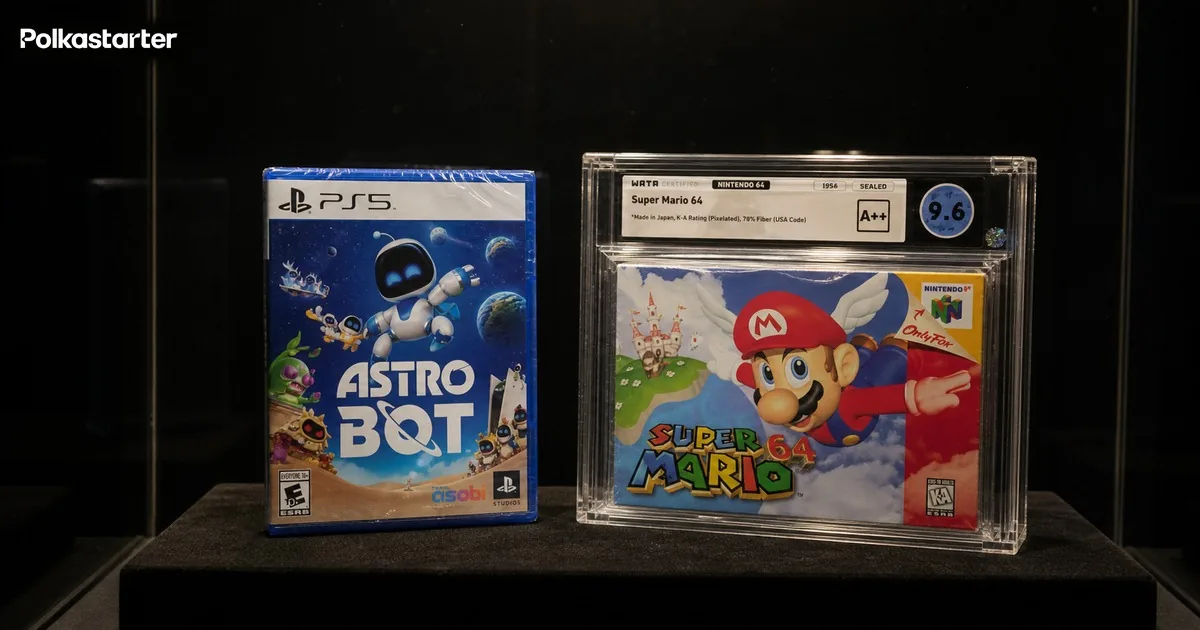
Sony has announced it will stop manufacturing physical PlayStation games, with new releases going digital only from January 2028. The backlash has been fierce, a five-day social media blackout, a lawsuit seeking roughly $450 million, and collectors asking the obvious question: what happens to physical games when no more get made? History has an answer, and it is more interesting, and more honest, than the panic.
What Sony Announced
On July 1, Sony said that from January 2028, new PlayStation games will be released in digital formats only, ending the manufacture of physical discs for new titles. The reaction was immediate and brutal enough that PlayStation's social media accounts went silent for five days, and when they returned, the first post was buried in replies about the disc decision within minutes.
Gaming retailers and preservation-minded publishers pushed back hard, with boutique physical publisher iam8bit calling physical games vital for game preservation, ownership, and consumer choice. The industry's satirists piled on too, but underneath the jokes is a real structural change: the biggest console platform in the world has put an end date on new physical games.
The Backlash and the $450 Million Lawsuit
The pushback is now legal. Dutch consumer group Stichting Massaschade and Consument is suing Sony for roughly $450 million, alleging that ending discs hands PlayStation a monopoly over its own digital game market, where prices are set on Sony's store rather than by retail competition.
Some collectors are reacting by selling, some by hoarding, and forums are full of both. Whatever the lawsuit's outcome, the announcement has already done one thing no court can undo: it has told the market that the physical PlayStation library is now finite.
What the End of Discs Means for Game Collectors
Here is the pattern collectors actually know. Sealed and graded games became one of the fastest-growing collectible categories of the past decade, and the value concentrated in eras after production ended, when supply became finite and nostalgia matured. A sealed Super Mario 64 sold for $1.56 million, and a sealed Pokemon Red has sold for around $84,000, decades after the last cartridge was made, as we covered in our most valuable Pokemon games guide and our most valuable N64 games guide.
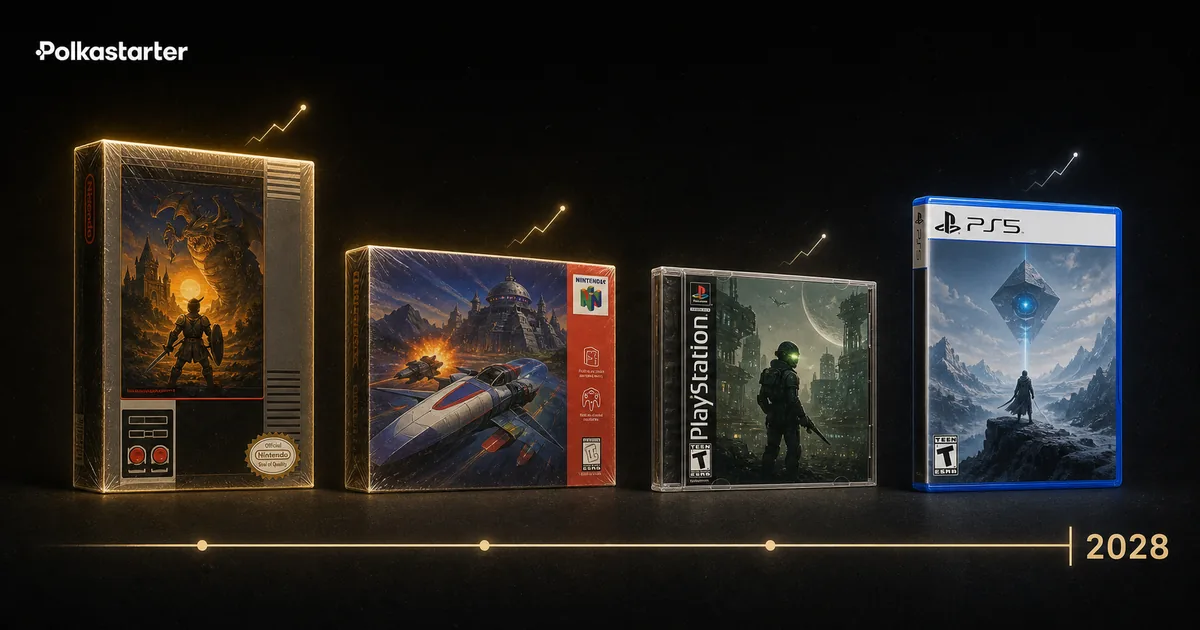
The 2028 cutoff does something no previous console transition did, it draws a hard line under the entire physical PlayStation era. Every disc printed between now and then belongs to the last physical PlayStation generation, and the final print runs, the limited physical editions from boutique publishers, and the sealed copies that survive in top condition are the candidates history says to watch.
The Honest Caveats
This is where we tell you what the hype posts will not:
- Most discs will never be valuable. Modern games are printed in the millions, and common sealed PS5 games are not rare just because production ends. Scarcity is about the specific print, not the format.
- The value concentrates narrowly. Limited physical runs, final-wave prints, special editions, and games that never got big printings are where collectibility has historically pooled. The everyday copy of a blockbuster is not that.
- Condition and grading decide everything. Sealed beats opened, and graded sealed, by the game-grading services WATA and VGA, beats raw. A played disc in a scuffed case is a used game, not an artifact.
- The timeline is decades, not months. The sealed NES and N64 grails took 20 to 30 years of maturing nostalgia to reach their records. Anyone promising quick returns on PS5 discs is selling you their inventory.
- Buy games you love. The collectors who won the last cycle were the ones who kept what they cared about in good condition, not the ones who speculated on pallets of shrink-wrap.
If you do collect, the moves are simple, keep special editions sealed, store them well, and when a game matters, consider grading. When you are ready to buy or sell, the Polkastarter marketplace covers rare cards and premium video games, with crypto payments across more than 10 Layer 1 and Layer 2 chains, including Solana, Polygon, and HyperLiquid, covered in our how to buy collectibles with crypto guide.
Frequently Asked Questions
When will Sony stop making physical PlayStation games?
Sony announced that from January 2028, new PlayStation games will be released in digital formats only, ending the manufacture of physical discs for new titles. Existing discs will still work, the change applies to new releases going forward.
Will PS5 games become valuable collectibles?
Most will not, modern print runs are in the millions and common sealed games do not become rare just because production ends. History says value concentrates in limited physical runs, final prints, special editions, and sealed copies in top condition, graded by WATA or VGA, and it takes decades of maturing nostalgia, not months. Collect what you love and keep it sealed, but treat quick-profit promises with suspicion.
Why is Sony being sued over ending discs?
A Dutch consumer group, Stichting Massaschade and Consument, is suing Sony for roughly $450 million, alleging that ending physical games hands PlayStation a monopoly over its own digital market, where prices are set by Sony's store rather than retail competition. The case is ongoing and its outcome does not change the 2028 cutoff Sony announced.
Where to Go From Here
The end of PlayStation discs closes the book on a physical era, and closed books are what collectors collect. The honest play is patience and selectivity, the last print runs and special editions kept sealed, not pallets of common games. Physical media just became finite, and finite is where collecting begins.
News content, the historical examples are real record sales but past performance of collectibles does not predict the future, and nothing here is investment advice.
Sources
- Push Square — Sony quits social media for 5 days after killing physical games
- Forbes — PlayStation crawls back to social media after disc-killing announcement
- TheGamer — Sony officially sued for $450 million over disc controversy
- Creative Bloq — PlayStation declared the death of physical games at the worst time for brand trust
- Push Square — Sony's social media still toxic two weeks after the debacle
.png)


Ilknur Gubel is a social media manager at Polkastarter. Ilknur has spent the past four years working as a project manager, marketing manager, and social media strategist across Web3. She has held marketing and project management positions at several crypto companies, including Polygen, Nitro League, Kaizen.Finance, and ChainPort.
At Polkastarter she has covered trading card releases, collectible market pricing, and how token holders can spend crypto on real cards and videogames.
Based in Istanbul, Ilknur earned a bachelor's degree in sociology from Istanbul Aydın University.
You can connect with her on LinkedIn for more information.